
Culture and etiquette in Nepal: temples, stupas, greetings, dress and festivals
Nepal is mostly Hindu, with a large Buddhist minority, and the two religions mix: many Nepalis worship at both temples and stupas, and the same shrine can be sacred to both. Religion is part of everyday life, and visitors are welcome at most places of worship if they follow a few simple customs.
Greetings and manners
- Greet people with "namaste", palms pressed together. Handshakes are common between men in the cities, but wait for a woman to offer her hand.
- Use your right hand to give, take and eat: the left is for washing. Giving something with both hands is polite.
- Don't touch people's heads, point your feet at people or at shrines, or step over someone sitting on the floor. Take your shoes off before entering homes, temples and monasteries.
- Public displays of affection are frowned on, especially outside Kathmandu and Pokhara.
- Dress modestly, especially at religious sites and in villages: cover shoulders and knees. Swimwear is for the pool, not for town.
- Losing your temper gets you nowhere in Nepal. Patience and a smile do.
Hindu temples
- Non-Hindus aren't allowed inside some temples, including the main temple at Pashupatinath, Nepal's holiest Hindu shrine. Signs or guards will tell you.
- Leather, including belts and bags, isn't allowed in some temples. Don't touch offerings or the images of the gods, and ask before taking photos inside.
- At Pashupatinath, Hindus are cremated on the ghats beside the Bagmati River, in the open. You can watch from the far bank, but this is a family's funeral: keep a respectful distance, be quiet, and don't photograph the mourners or bodies up close.
- Holy men, sadhus, in orange robes and face paint often pose for photos at Pashupatinath and in Durbar Square, and expect to be paid for it. Agree first.
- The cow is sacred to Hindus, and Nepal's national animal: let them wander, and don't harm one. Killing a cow is a serious crime in Nepal.
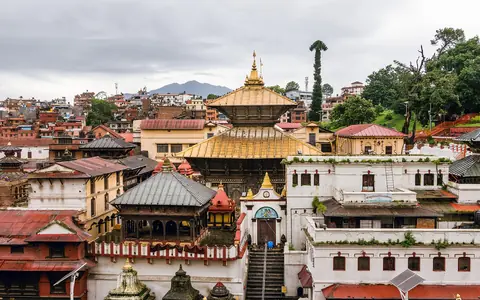
Pashupatinath Temple, Kathmandu
Nepal's holiest Hindu temple, dedicated to Shiva, on the banks of the Bagmati River.
Buddhist stupas and monasteries
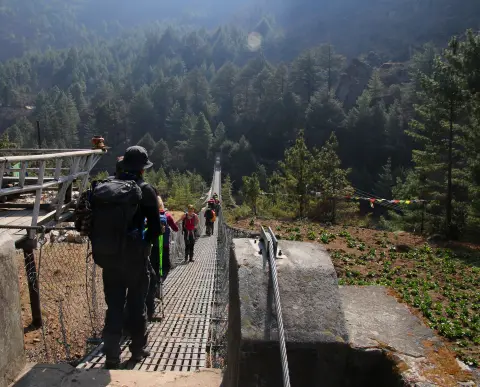
- Walk clockwise around stupas, such as Boudhanath and Swayambhunath, and around chortens and mani walls (walls of carved prayer stones) on the trails, keeping them on your right. Spin prayer wheels clockwise too.
- In monasteries, take your shoes off, don't sit with your feet pointing at the altar, and ask before taking photos, especially during prayers. A small donation is welcome.
- Don't sit on or climb on chortens or statues, and don't take down or step on prayer flags.

Boudhanath Stupa
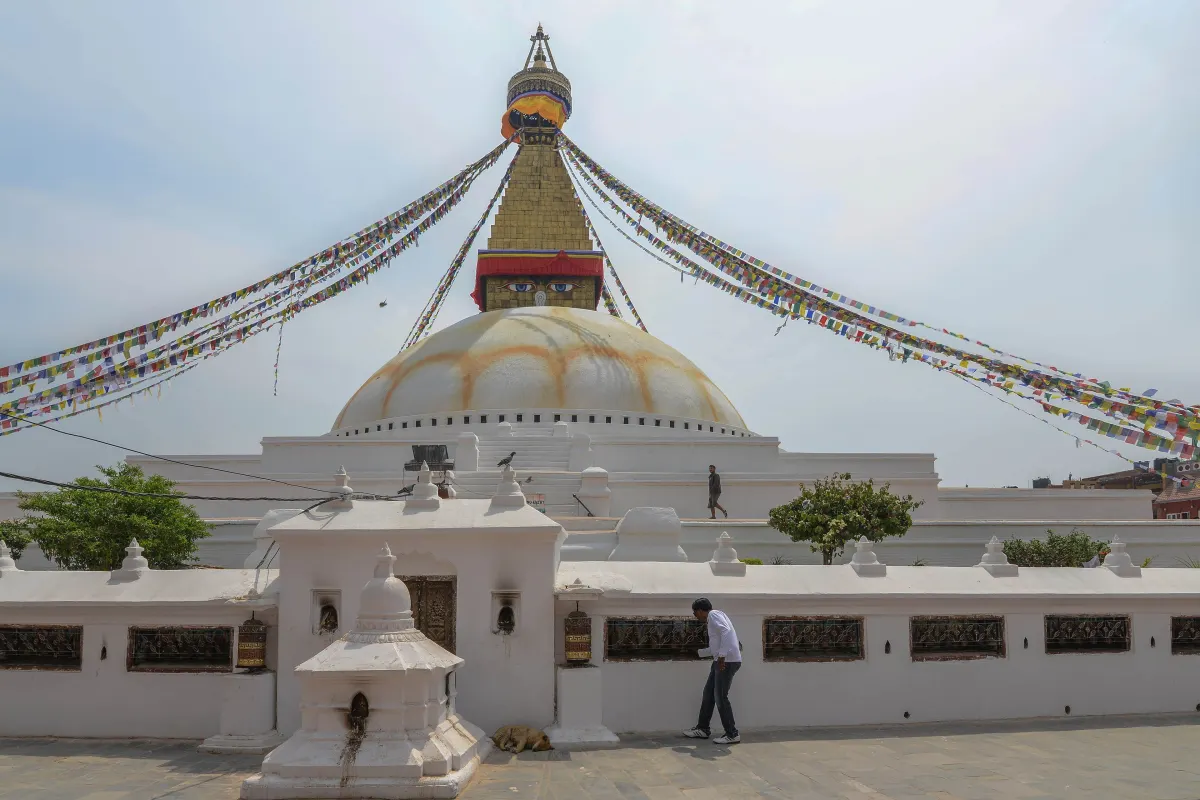
One of the largest stupas in the world, a great white dome with the all-seeing eyes of the Buddha painted on its tower, the centre of Tibetan Buddhis…
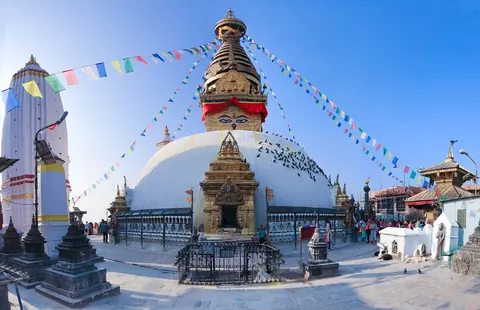
Swayambhunath (Monkey Temple), Kathmandu
An ancient stupa on a hill west of Kathmandu, painted with the all-seeing eyes of the Buddha and surrounded by shrines, prayer wheels and many monkeys.
Photos and people
- Ask before photographing people, especially women, older people and anyone at prayer, and respect a no.
- In the mountains, Sherpas and other peoples have their own languages, cultures and beliefs: some mountains are sacred, and many villages have rules for visitors posted at the entrance.
- Don't give sweets, money or pens to children who ask: it encourages begging. Give to a school or a local charity instead.
- Be very wary of "orphanage" visits and volunteering: the UK government warns that some orphanages in Nepal are run for profit, and contribute to the exploitation of children.
- Trying to convert people to another religion is illegal in Nepal.
Festivals
Nepal follows its own calendar, the Bikram Sambat, and its own festivals, which move from year to year in the Western calendar. Some of the biggest:
- Dashain (late September or October): the biggest Hindu festival, over two weeks, when families gather, elders give blessings and red tika on the forehead, and many goats and buffalo are sacrificed. Offices close and transport is packed.
- Tihar (October or November), the festival of lights: crows, dogs and cows are honoured with garlands, and houses are lit with oil lamps.
- Holi (February or March): the festival of colours, with coloured powder and water thrown in the streets. Wear old clothes and protect your camera.
- Indra Jatra (September), when the Kumari, Kathmandu's living goddess, is pulled through the streets in a chariot, and Bisket Jatra in Bhaktapur, at the Nepali New Year in April.
- Losar, the Tibetan and Sherpa new year (February or March), at Boudhanath and in the mountains, and Mani Rimdu at Tengboche monastery, usually in October or November, with masked dances.
For temples in the Kathmandu Valley, see Kathmandu Durbar Square, Patan Durbar Square and Bhaktapur, and for the Buddha's birthplace, Lumbini.
Comments
No comments yet.