
Turkish food and drink: what to try, from breakfast to kebabs, meze and baklava
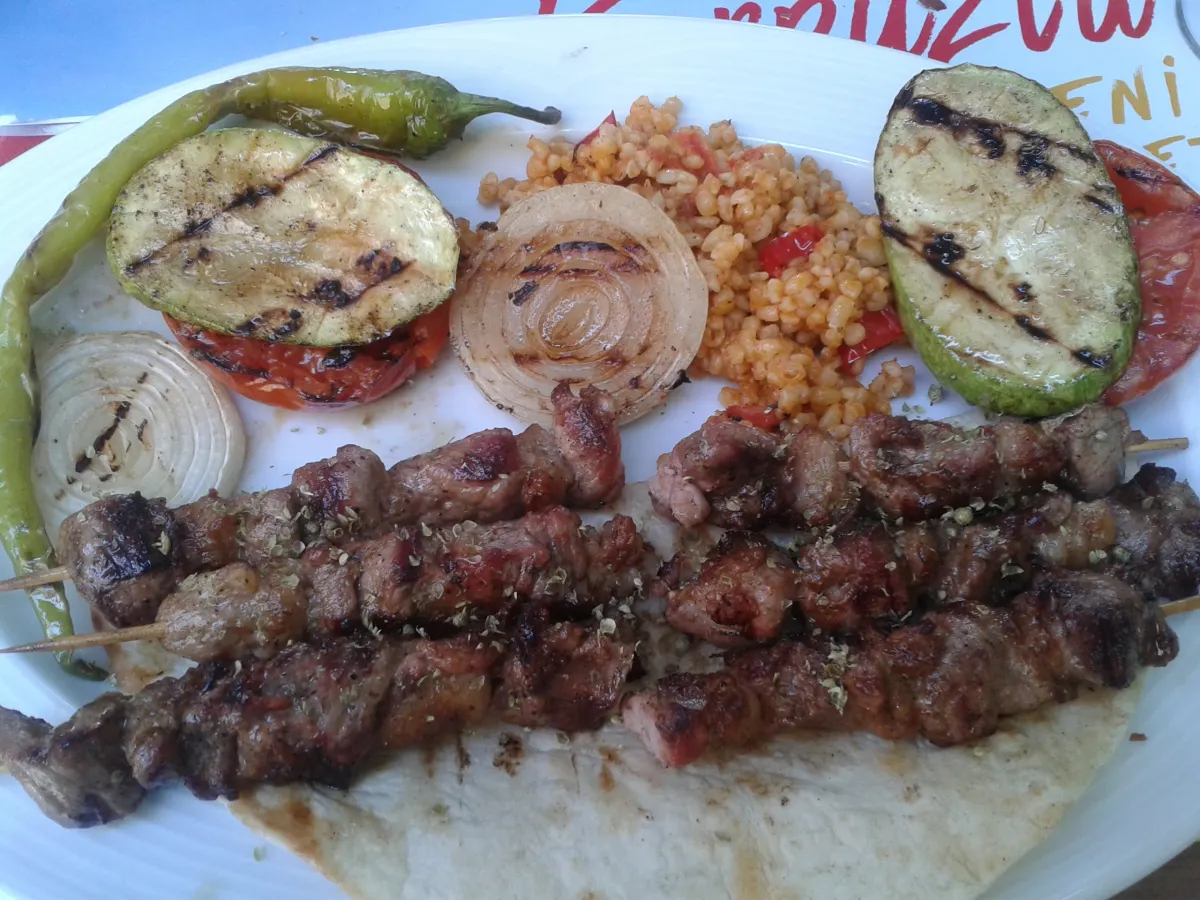
Turkish food is one of the world's great cuisines, and one of the best reasons to visit. Every region has its own dishes, from the fish of the Black Sea to the spicy kebabs and pistachio pastries of the southeast. Eat where the locals eat: the small family restaurants, the lokanta, are often the best.
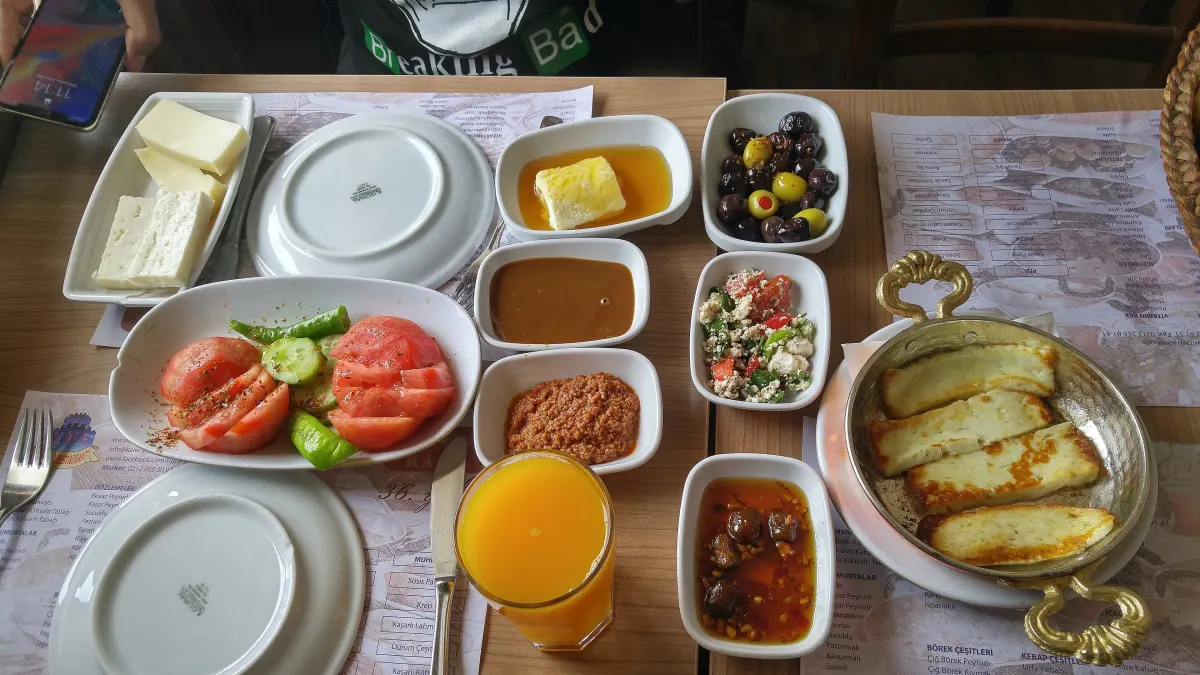
Breakfast
A Turkish breakfast (kahvaltı) is a feast: cheeses, olives, tomatoes, cucumbers, eggs, honey and clotted cream (bal kaymak), jams, bread and endless tea. Try menemen, eggs scrambled with tomatoes and peppers. On the go, grab a simit, a sesame bread ring, or a slice of börek, flaky pastry filled with cheese, spinach or meat.
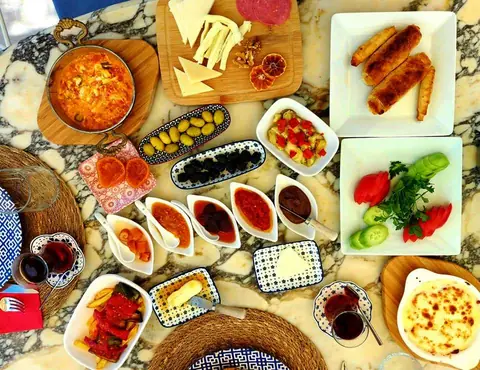
Turkish breakfast (kahvaltı)
A Turkish breakfast is a feast of many small plates: white cheese, olives, tomatoes, cucumbers, eggs (often menemen, scrambled with tomato and pepper…
Kebabs
- İskender kebab, from Bursa: thin slices of döner over bread, with tomato sauce, yoghurt and sizzling butter.
- Adana kebab: spicy minced lamb grilled on a wide skewer.
- Döner, in bread or a wrap, everywhere; cağ kebab in Erzurum; and in Cappadocia, testi kebab, cooked in a sealed clay pot that's broken open at the table.
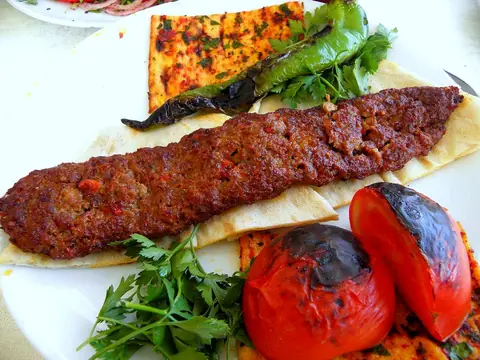
Adana kebab
Lamb minced by hand with a big curved knife, mixed with tail fat and red pepper flakes, pressed onto a wide, flat iron skewer and grilled over charco…

Kebapçı İskender, Bursa
The restaurant where İskender kebab was invented, run by the same family since 1867.
Bread, pastries and dumplings
- Pide, boat-shaped flatbread with toppings, and lahmacun, thin and crisp with spiced minced meat: roll it up with parsley and lemon.
- Gözleme, thin pastry filled and cooked on a griddle, often by women in village cafés.
- Mantı, tiny dumplings with yoghurt and chilli butter, especially in Kayseri.
Street food
In Istanbul, eat a balık ekmek, a grilled fish sandwich, by the water at Eminönü, midye dolma, mussels stuffed with spiced rice, and a baked potato loaded with toppings, a kumpir, at Ortaköy.
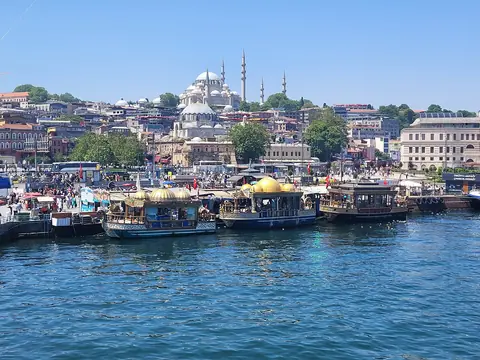
Balık ekmek at Eminönü, Istanbul
Istanbul's famous fish sandwich: a fillet of grilled mackerel in half a loaf of bread, with lettuce, onion and a squeeze of lemon.
Meze and rakı
An evening at a meyhane means sharing small plates, meze, such as stuffed vine leaves, aubergine purée, white cheese and melon, and fish, with rakı, the aniseed spirit that turns white when you add water. Take your time.
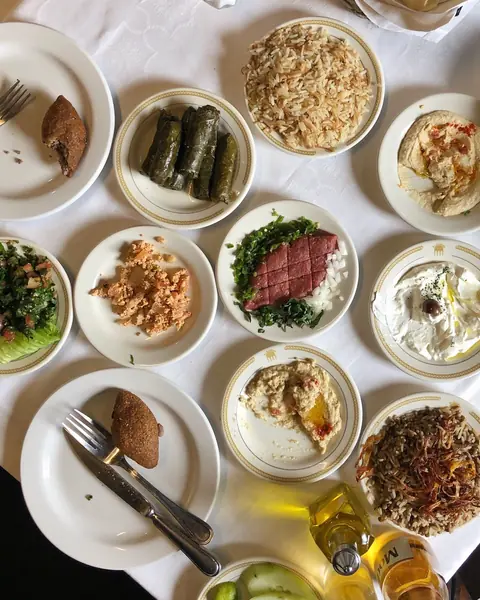
Meze and rakı
Small dishes shared over an evening at a meyhane (tavern): haydari (thick yoghurt with herbs), ezme (spicy tomato salad), stuffed vine leaves, auberg…
Sweets
- Baklava: the best is made with pistachios, in Gaziantep.
- Künefe: hot shredded pastry with melted cheese and syrup, from Hatay.
- Turkish delight (lokum) and Maraş dondurma, stretchy ice cream, whose sellers love to tease customers.
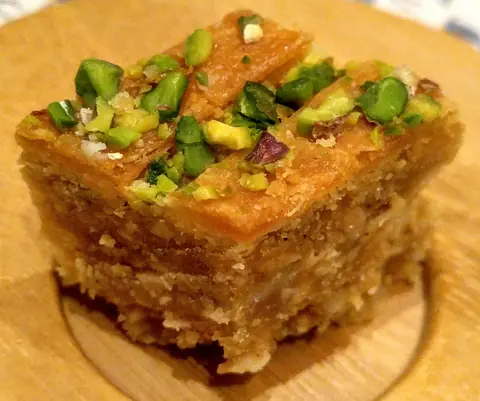
Baklava, Gaziantep
Layers of thin filo pastry filled with chopped pistachios or walnuts, baked and soaked in syrup.
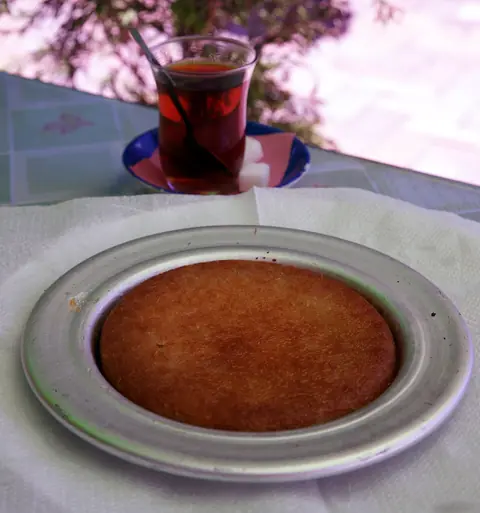
Künefe
A hot dessert of shredded pastry (kadayıf) layered with stretchy unsalted cheese, baked until golden, soaked in syrup and topped with pistachios.
Drinks
- Tea (çay) is drunk all day, in small tulip-shaped glasses, black and strong, with sugar. You'll be offered it in shops and homes: accept, it's part of the welcome.
- Turkish coffee is thick and strong: order it sade (no sugar), orta (medium) or şekerli (sweet), and don't drink the grounds.
- Ayran, a salty yoghurt drink, goes perfectly with kebabs. Fresh orange and pomegranate juice are sold on the streets.
- Alcohol is widely available in the cities and resorts, but expensive, as it's heavily taxed, and harder to find in conservative towns. Efes is the main beer, and Turkey makes good wine, especially in Cappadocia and on the Aegean. See Safety in Turkey about fake spirits.
Eating out
- Bread and water are often brought to the table without asking; the bread is usually free, but bottled water may be charged.
- In restaurants without prices on the menu, especially fish restaurants, ask the price before you order: fish is often sold by weight.
- Vegetarians do well with meze, lentil soup (mercimek çorbası), vegetables cooked in olive oil (zeytinyağlı) and pide, but check for meat stock. Ask for etsiz, "without meat".
- During Ramadan, many restaurants still serve food in the daytime in the cities and resorts: see Culture and etiquette.

Comments
No comments yet.