
Arriving in Turkey: visa-free stays, the e-Visa, passports and customs
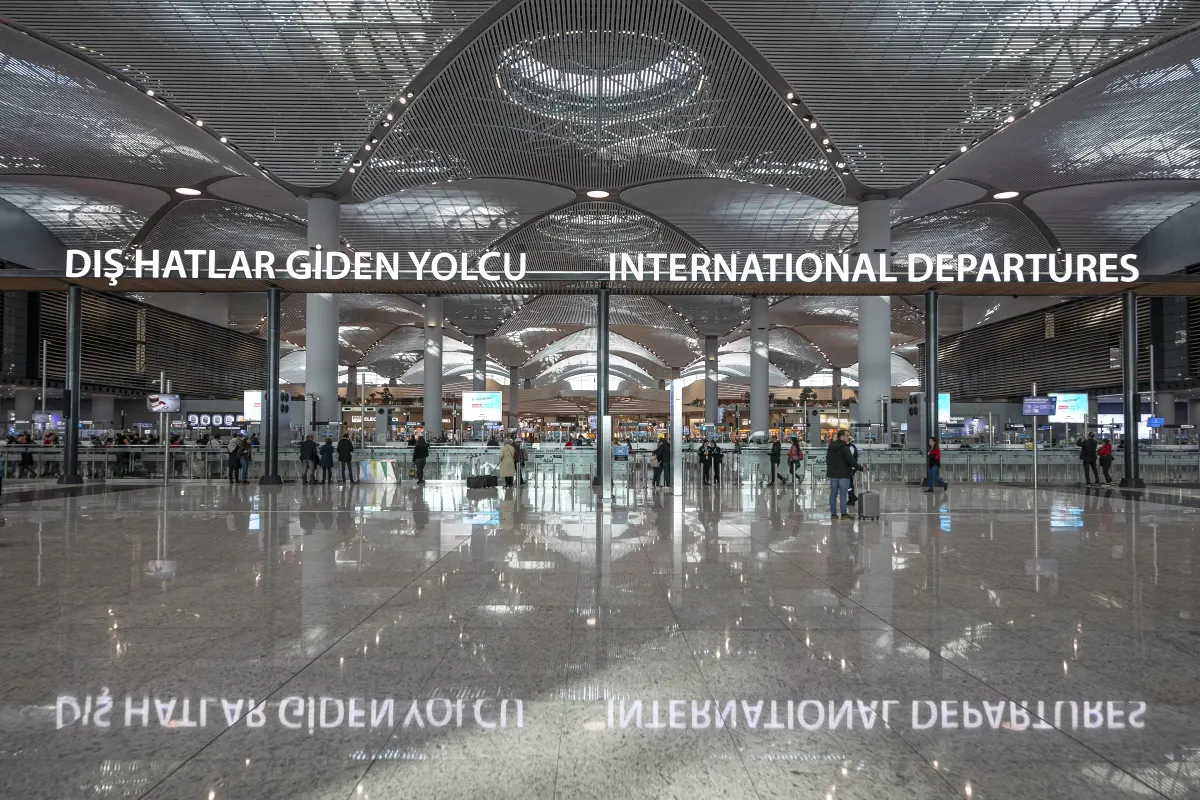
Most visitors from Europe, North America, Australia and New Zealand can now visit Turkey without a visa for up to 90 days. Others apply online for an e-Visa before they fly. The one thing that catches people out is the passport: it must be valid for longer than you might expect.
Do you need a visa?
Turkey's rules are set nationality by nationality, and they change, so check the Turkish Ministry of Foreign Affairs' visa information for foreigners before you book. In late 2026 it said:
- No visa, up to 90 days in any 180-day period, for tourism or business, with an ordinary passport: the UK, Ireland, the USA, Canada and Australia, and many countries of the European Union, such as the Netherlands, Belgium, Austria, Poland, Portugal and Spain. Canada's travel advice adds that once you've used your 90 days, you have to stay out of Turkey for 90 days before you can come back for another 90.
- No visa, up to 90 days: New Zealand, Germany and France, among others. Some other European countries have slightly different rules, such as 90 days within six months of your first entry: look up your own country.
- China: ordinary passport holders have been able to visit without a visa for up to 90 days in any 180 days since 2 January 2026.
- India: ordinary passport holders need a visa. If you hold a valid Schengen, US, UK or Irish visa or residence permit, you may be able to get a single-entry e-Visa for a month online, if you meet the conditions; otherwise apply at a Turkish embassy or consulate.
- Everyone else: check the Ministry's page. Many nationalities can get an e-Visa online; others need a visa from an embassy or consulate.
A visa-free stay or an e-Visa is for tourism and business visits only. To work, study or stay longer, you need a different visa or a residence permit.
The e-Visa
- If you need one, apply on the official site, evisa.gov.tr, before you travel. It takes a few minutes, and you pay by card.
- Many other websites look official and charge more for the same e-Visa, or for nothing at all. Use only evisa.gov.tr.
- Print it, or keep it on your phone: airlines may ask to see it before you board.
Your passport
- Turkish law says your passport must be valid for at least 60 days beyond the end of your stay. For a 90-day visa-free stay, that means 150 days from the day you arrive, which is what the British and Canadian governments tell their travellers. The Ministry of Foreign Affairs goes further and advises six months, so if your passport runs out within six months, renew it first.
- The UK government says your passport needs at least one blank page.
- Citizens of some European countries can enter with a national identity card instead of a passport: check the Ministry's page for your country.
- If you arrive by land, make sure the border officer stamps your passport.
Landing
- Most visitors arrive at Istanbul Airport (IST), the big new airport northwest of the city, or Sabiha Gökçen (SAW), on the Asian side. There are also direct international flights to Antalya, Dalaman, Bodrum and İzmir, especially in summer. See Getting around Turkey for getting into Istanbul.
- There's no arrival card to fill in. Passport control is often busy at Istanbul Airport, so leave plenty of time if you have a connecting flight.
- Carry your passport, or a copy and the original nearby: by law you must carry photo ID in Turkey. See Safety in Turkey.
Customs and money
- There's no limit on the foreign currency or lira you can bring in. The UK government says you mustn't take more than the equivalent of US$5,000 in lira out of the country, and you should declare other cash over that amount.
- Don't buy or try to take out antiquities, old coins or fossils: it's a serious crime, with prison sentences of several years. Keep receipts for carpets and other antiques you buy, and ask the shop for the export paperwork.
- Bring prescription medicines in their original packaging, with a copy of the prescription: some common medicines are controlled in Turkey. See Health in Turkey.
- If you're bringing a phone from abroad, see Phones and apps: foreign phones can be used with a Turkish SIM card for only a limited time.
Before you fly
- Check your government's travel advice for Turkey, such as the UK's: see Safety in Turkey.
- Get travel insurance with medical cover: the UK's GHIC and the EU's EHIC aren't valid in Turkey.
- Book the Hagia Sophia gallery, the Cappadocia balloon and the high-speed trains ahead in busy months. See Money in Turkey for museum passes.





Comments
No comments yet.