
A week in south-west South Korea: Jeonju, Gwangju, Damyang, Suncheon and Yeosu
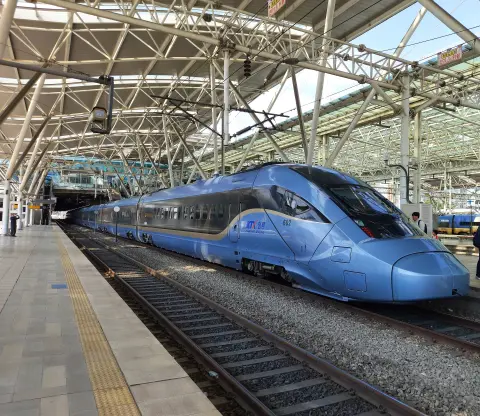
The south-west of Korea, the old provinces of Jeolla, sees far fewer foreign visitors than Seoul and Busan, but Koreans know it for having the country's best food, along with bamboo forests, tea fields, wetlands and a beautiful coast. This week starts and ends with the KTX from Seoul.
Map of the route
Seoul (Yongsan) to Jeonju by KTX, about 237 km
Jeonju, Damyang, Gwangju, Boseong, Suncheon and Yeosu by road, about 276 km
Back to Seoul by KTX, about 155 km
Click a dot for the place. Labels show where you stay. The train back to Seoul is dashed as far as Jeonju, where it joins the line you came on. Route from OpenStreetMap (© OpenStreetMap contributors, ODbL).
Before you go
- When: spring for green tea and flowers, and October and November for the reeds of Suncheon Bay and the autumn leaves of Naejangsan. Summer is hot and wet: see Weather and seasons.
- Transport: the KTX from Seoul's Yongsan station to Jeonju takes under two hours, and from Yeosu back to Seoul about three. In between, intercity buses connect all the towns, and local buses go to the sights. A hire car makes Boseong and the countryside easier: see Getting around.
- English is less widely spoken here than in Seoul: have Naver Map and Papago ready: see Phones and apps.
Days 1 and 2: Jeonju
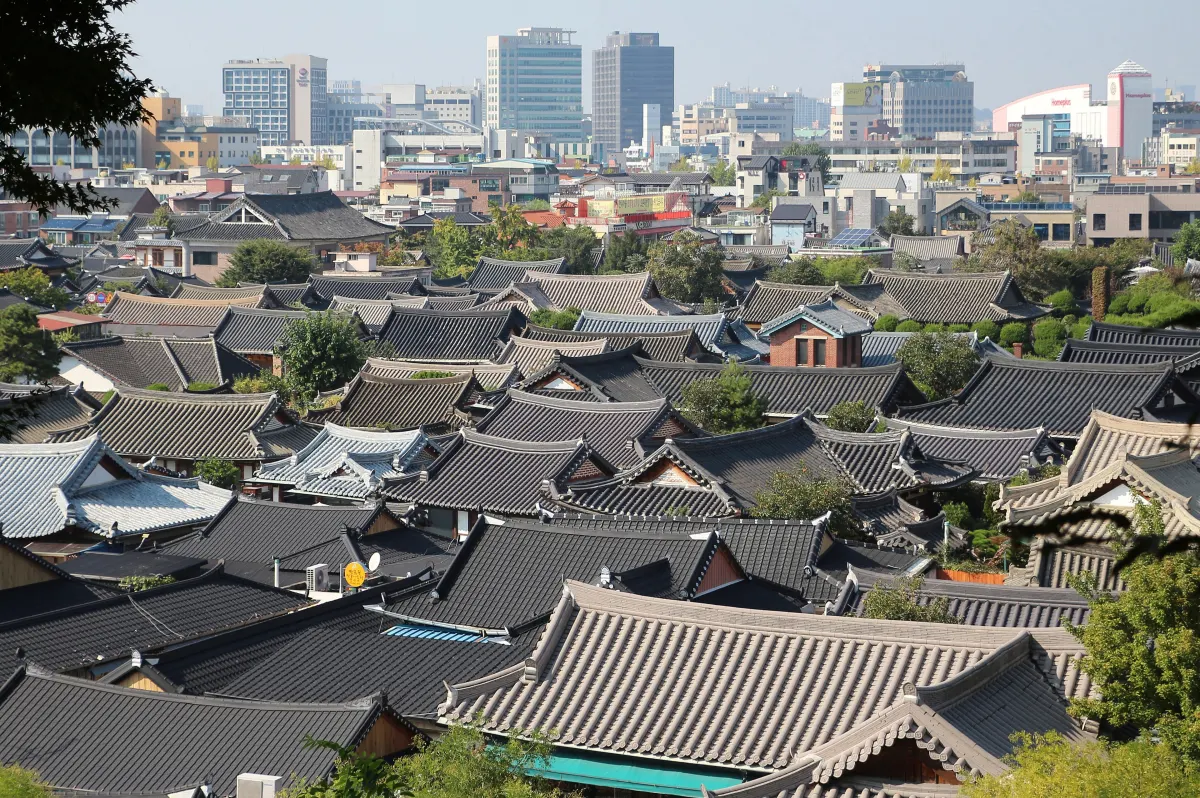
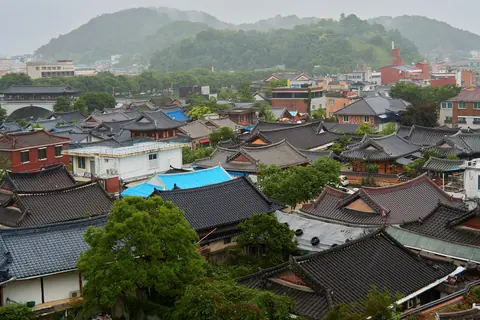
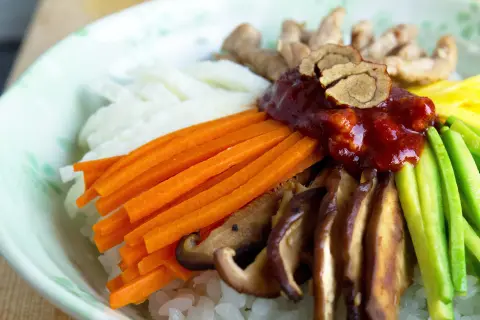
Take the KTX from Yongsan to Jeonju. Stay in a hanok guesthouse in Jeonju Hanok Village, a neighbourhood of hundreds of traditional houses, with the shrine of Gyeonggijeon, where the portrait of the founder of the Joseon dynasty is kept. Eat bibimbap, which Jeonju is famous for, and drink makgeolli in one of the bars where each kettle comes with a table of free side dishes. Visit Nambu Market at night for food stalls.
Jeonju Hanok Village
More than 700 traditional tiled-roof houses, called hanok, crowded together in the centre of Jeonju, the largest hanok neighbourhood in Korea.
Day 3: Damyang
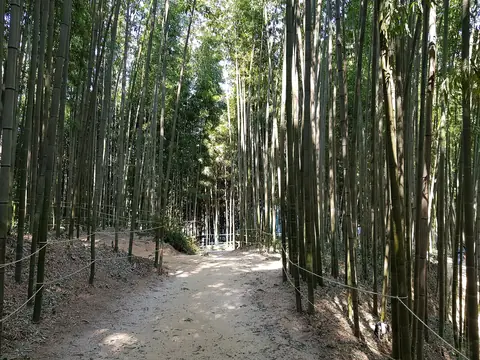
Take a bus to Damyang and walk through the tall bamboo of Juknokwon, and along the avenue of dawn redwoods (metasequoia) nearby. Eat tteokgalbi, grilled minced beef ribs, a Damyang speciality, then carry on to Gwangju for the night.
Juknokwon bamboo forest, Damyang
A hillside forest of tall, swaying bamboo in Damyang, Korea's bamboo town, with about 2 km of paths winding through the green stems.
Day 4: Gwangju
Gwangju is a lively city, known for the democracy uprising of May 1980, when hundreds of people were killed by the army. Visit the May 18th National Cemetery and the May 18 sites in the city centre, and the Asia Culture Center. Hike on Mudeungsan, the city's mountain, and in the evening eat a Namdo hanjeongsik, a feast of dozens of dishes.
Day 5: Boseong and Suncheon
Head south to the green tea fields of Boseong, rows of tea bushes on steep hillsides, and drink green tea or eat green tea ice cream at the plantation. Carry on to Suncheon for the night.

Boseong green tea fields
Korea's largest tea-growing area, where rows of bright green tea bushes curve around the hillsides like terraced waves, lined with tall cedar trees.
Day 6: Suncheon
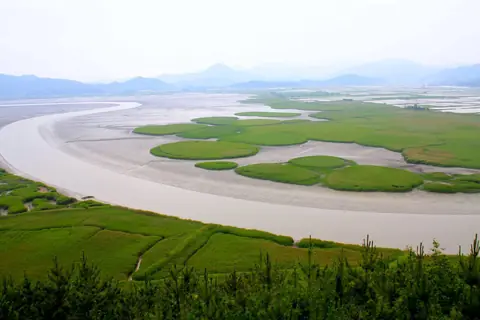
Walk the boardwalks through the reed beds of Suncheon Bay, one of the world's great coastal wetlands, and climb to the viewpoint for the sunset over the bay. Visit the garden next to it, or the walled village of Naganeupseong, where people still live in thatched houses inside the walls, or the old temple of Seonamsa in the hills.
Suncheon Bay wetland
One of the world's best-preserved coastal wetlands, where vast golden reed beds and mudflats spread out at the mouth of a river on Korea's south coast.
Day 7: Yeosu
Take a bus to Yeosu, on the coast. Ride the cable car over the sea, walk to the island of Odongdo, and eat seafood, especially gejang, raw crab marinated in soy sauce. Yeosu's harbour is lit up at night. Take the KTX back to Seoul the next morning.
With more time
- Stop at Naejangsan National Park, between Jeonju and Gwangju, in late October or early November for some of Korea's best autumn leaves.
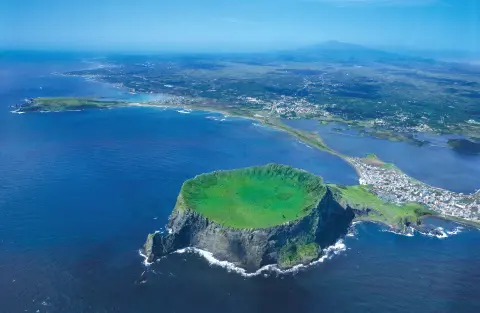
- From Mokpo or Wando, take a ferry to the islands of Dadohaehaesang National Park, or to Jeju.
- Carry on east along the south coast to Tongyeong and Hallyeohaesang National Park, and on to Busan.
See also: Korean food and drink and two weeks in South Korea.
Comments
No comments yet.