
Getting around South Korea: KTX trains, express buses and flights to Jeju
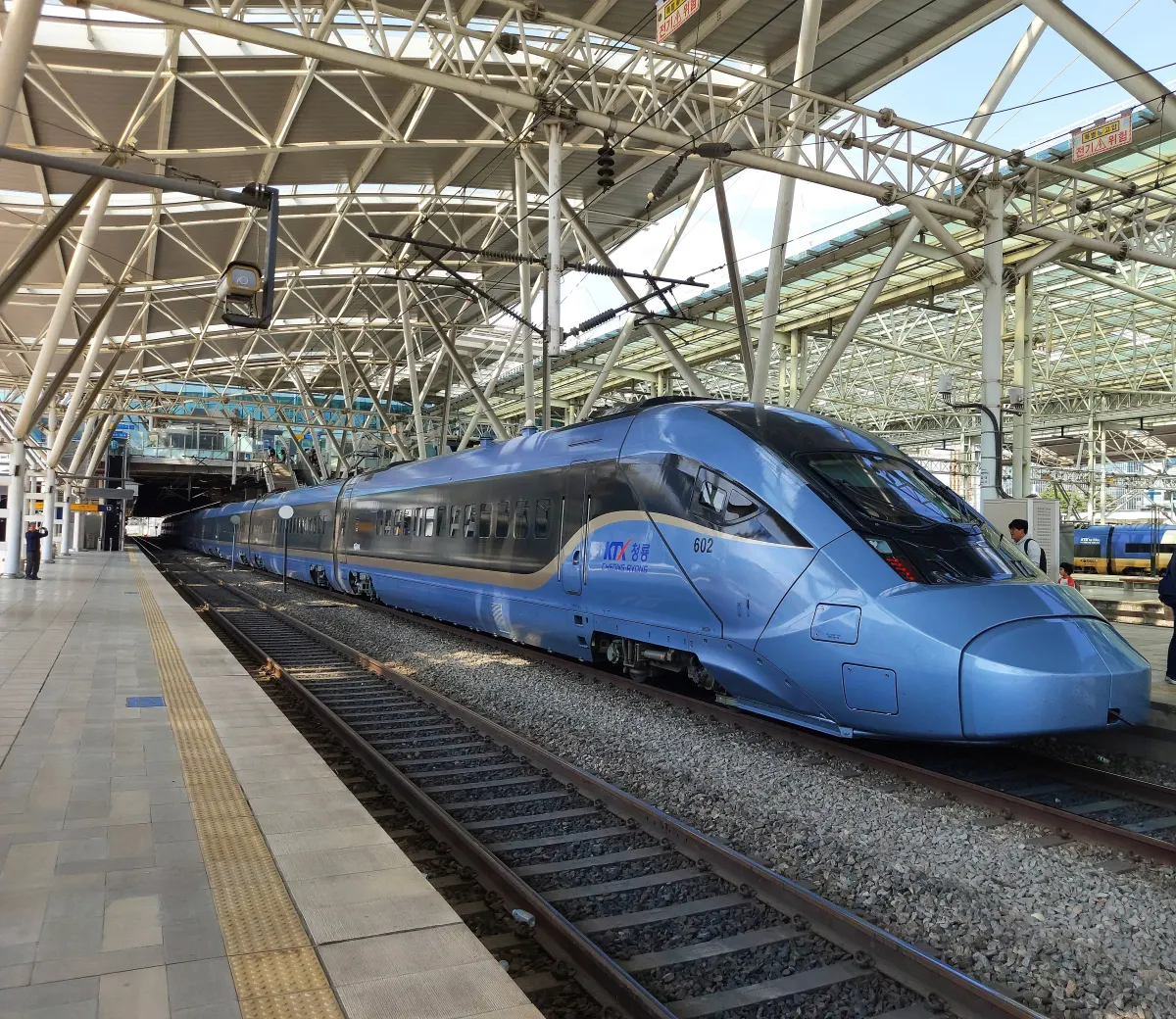
South Korea is small and its transport is fast, cheap and punctual. The KTX bullet train takes you from Seoul to Busan in under three hours, and where the trains don't go, an express bus almost certainly does. You only need to fly to reach Jeju.
KTX: the fast trains
- KTX trains run on high-speed lines from Seoul to Daejeon, Daegu, Gyeongju (Singyeongju station), Ulsan and Busan, and to Gwangju, Mokpo, Jeonju, Suncheon and Yeosu in the south-west, Gangneung on the east coast, and Andong and other cities in between. Seoul to Busan takes between about two and a half and three hours.
- In Seoul, KTX trains leave from Seoul Station (the Gyeongbu line to Busan), Yongsan (the lines to the south-west) and Cheongnyangni (east, to Gangneung and Andong). Trains from Suseo, in southern Seoul near Gangnam, used to be a separate company's SRT, but since September 2026 they've been run as KTX trains too, and are booked the same way.
- Check which station your train leaves from: Seoul Station and Suseo are about 40 minutes apart on the subway. Busan's main station is Busan Station, and Gyeongju's is Singyeongju, outside the city.
Booking trains
- Tickets go on sale about a month ahead. Book early for weekends, and as soon as you can for the big holidays, Seollal (Lunar New Year) and Chuseok, when trains sell out within hours.
- Book on the Korail website, korail.com, which has an English version, in the Korail+ app (which replaced the old Korail Talk and SRT apps in 2026), at ticket machines, or at the counter in any station with your passport. Payment with foreign cards in the app has been unreliable for some travellers: if it fails, use the website on a computer or buy at the station.
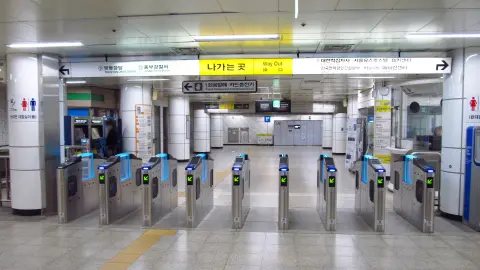
- Your ticket is on your phone, or printed. Seats are numbered, and there are no ticket gates: just find your car and seat, and a conductor may check your ticket on the way.
- If the train you want is full, look for a standing or "free seat" ticket, or a slower train.
- The Korail Pass for foreign visitors gives 2, 3, 4 or 5 days of travel within 10 days on Korail's trains, including the KTX, with up to two seat reservations a day. Check whether it covers the trains you want, and compare it with buying single tickets: for a simple trip like Seoul–Gyeongju–Busan, single tickets are often cheaper.
Slower trains
ITX and Mugunghwa trains are slower and cheaper, stop at more stations, and reach places the KTX doesn't. They're booked the same way. Korail also runs scenic tourist trains, such as the ones along the east coast and through the mountains of Gangwon.
Express and intercity buses
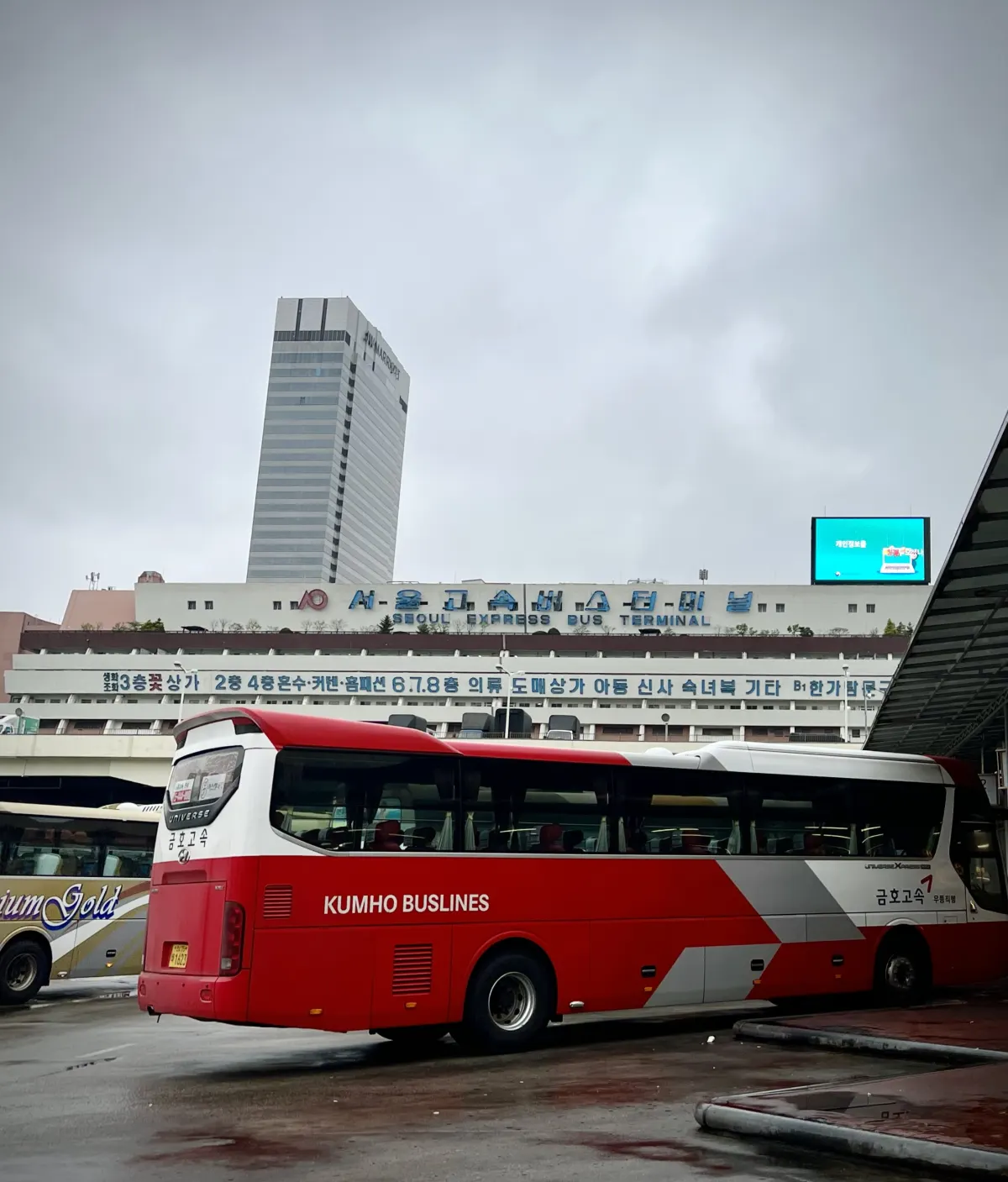
- Buses go almost everywhere, often every few minutes on busy routes, and are cheaper than the KTX. Express buses (gosok) go non-stop between big cities; intercity buses (sioe) stop in towns on the way.
- Premium buses have 21 wide, reclining seats, and are very comfortable for long trips.
- In Seoul, the main terminals are the Express Bus Terminal (Gangnam), Central City next to it, Dong Seoul (east) and Nambu (south). Check which terminal your bus leaves from.
- Buy tickets at the terminal or in the bus companies' apps (the T-money GO and Bustago apps for express and intercity buses), which may need a Korean phone number. Buses stop at a motorway service area for 15 minutes on longer trips.
Flying to Jeju
- Jeju, the volcanic island off the south coast, is about an hour's flight from Seoul (Gimpo), Busan and most other airports, with flights every few minutes on the busiest days. Korean Air, Asiana and several low-cost airlines fly there, and fares are low if you book ahead.
- Domestic flights need your passport. Low-cost airlines charge extra for checked bags.
- Car ferries go to Jeju from Mokpo, Wando and other ports in the south, and take several hours.
Ferries
Ferries go to the islands of Hallyeohaesang and Dadohaehaesang national parks, to Ulleungdo, and from Jeju to Udo. Sailings are cancelled in bad weather, especially in the typhoon season and in winter, so don't plan an island trip for the day before you fly home. Bring your passport: it's needed to buy a ticket.
Driving
- You need an International Driving Permit of the 1949 Geneva type as well as your licence, and must be at least 21 to rent a car, sometimes older. Get the permit in your home country before you go.
- Korea drives on the right. Roads are good, but traffic in the cities is heavy, and drivers can be aggressive. Speed cameras are everywhere, and the drink-driving limit is very low: don't drink at all if you're driving.
- Driving is worth it mainly on Jeju and in the countryside. Use Naver Map or KakaoMap for directions: see Phones and apps.
See also: Getting around Seoul and other cities, and the itineraries: 7 days from Seoul to Busan, two weeks with Jeju and the south-west.


Comments
No comments yet.