
Aboriginal and Torres Strait Islander culture for visitors
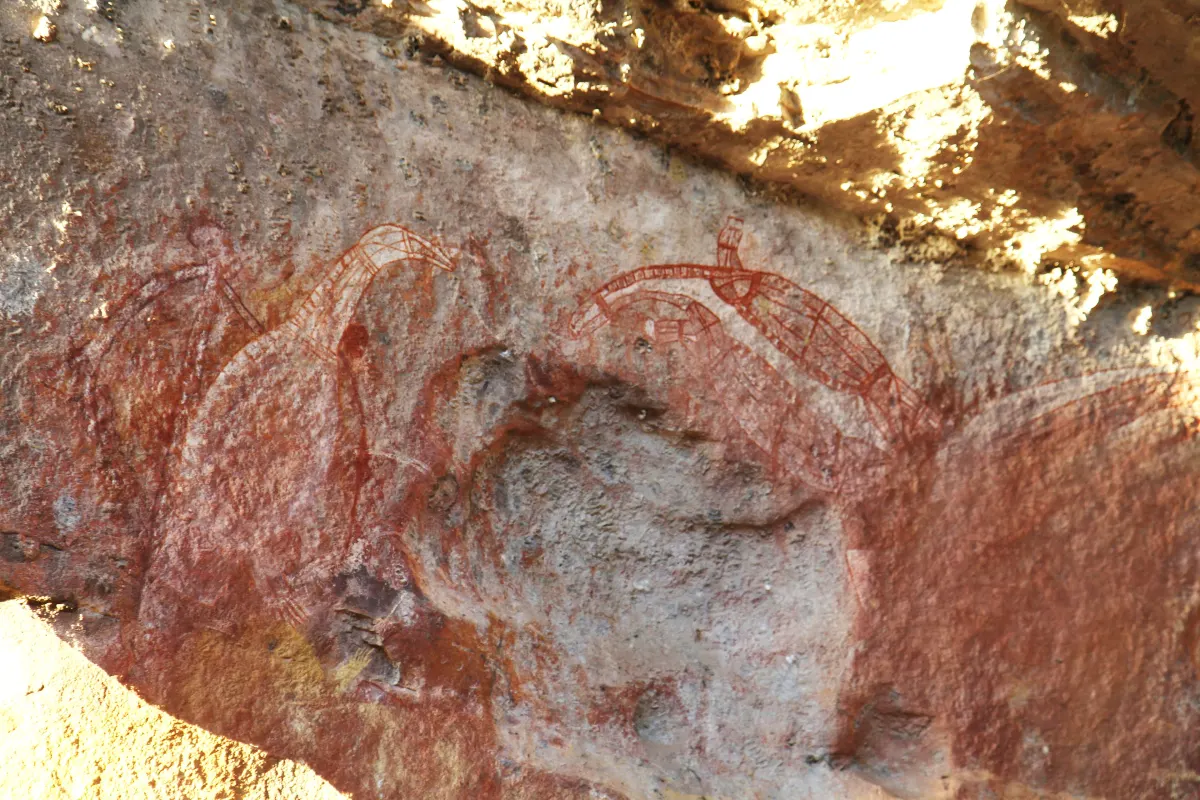
Aboriginal and Torres Strait Islander peoples have lived in Australia for more than 60,000 years, the oldest continuing cultures in the world. Their culture is everywhere once you know where to look: in rock art, place names, ceremonies at public events, art galleries and the land itself. Here's what to expect as a visitor, how to be respectful, and where to learn more.
Many peoples, many countries
- There isn't one Aboriginal culture or language. Before 1788 there were more than 250 languages and many more dialects, and hundreds of different nations, each with its own land, which Aboriginal people call Country: not just the land, but its waters, sky, plants, animals and stories, and their responsibility to care for it.
- Torres Strait Islanders, from the islands between Cape York and Papua New Guinea, are a separate people with their own cultures.
- Most Aboriginal and Torres Strait Islander people today live in cities and towns, not in the remote outback.
- Words: "Aboriginal and Torres Strait Islander peoples", "First Nations" or "Indigenous Australians" are all used; many people prefer to be known by their own nation, such as Wiradjuri, Noongar or Yolŋu. Don't use "Aborigines" or "Aboriginals", which are now considered outdated.
- The AIATSIS map of Indigenous Australia shows the general areas of the language groups.
Welcome to Country and Acknowledgement of Country
At the start of many events, conferences, concerts and tours, you'll hear one of these:
- A Welcome to Country is given by a Traditional Owner, an Aboriginal or Torres Strait Islander person from that place, to welcome visitors to their land. It may be a speech, a song, a dance or a smoking ceremony, where native plants are burned to cleanse and protect the people there.
- An Acknowledgement of Country can be given by anyone, recognising the Traditional Owners of the land where the event is taking place. You'll also see written acknowledgements in airports, museums, hotels and on websites.
As a visitor you don't need to do anything except listen respectfully. Reconciliation Australia explains both.
Uluru: why you can't climb it
For the Aṉangu, the Traditional Owners of Uluru, it's a sacred place, and climbing it is not generally permitted under Tjukurpa, Aṉangu law and culture. For decades they asked visitors not to climb, and the climb closed permanently on 26 October 2019. Climbing it now is against the law, and you can be fined. Instead, walk around the base (about 10 km), join a ranger or Aṉangu-guided walk, and start at the Cultural Centre to learn about the Tjukurpa stories of the places you'll see.
Around Uluru and Kata Tjuta, some places are sacred sites, which you're asked not to enter or photograph. Signs show where photography isn't allowed: please respect them, and the same goes for sacred and restricted places elsewhere in Australia.
Being a respectful visitor
- Follow signs and closures at cultural sites, and stay on the paths. Don't touch rock art: the oils on your hands damage it.
- Don't take anything, such as stones, sand or artefacts, from sites.
- Ask before you photograph people, and don't photograph ceremonies without permission.
- People who have died: in many communities, the names and images of people who have died aren't used for a time. That's why museums, TV programmes and books sometimes warn that they contain images or names of deceased people.
- Aboriginal land: much of the Northern Territory, and parts of other states, is Aboriginal-owned land. You can drive on the public highways and roads through it, but to leave them, or to visit a community, you usually need a permit from the land council (in the Northern Territory, the Northern or Central Land Council). For example, you need one to visit Arnhem Land beyond Kakadu. Allow time to get one. Communities sometimes close to visitors, for ceremonies or "Sorry Business" after a death, so check before you go.
- Alcohol: many remote communities, and some areas around them, are "dry", and it's an offence to take alcohol into them. Signs tell you where.
Places to learn and experience culture
The best way is with an Aboriginal guide, on tours run or approved by Traditional Owners. Some places to start:
- Uluru-Kata Tjuta National Park, jointly managed by the Aṉangu and Parks Australia, and its Cultural Centre.
- Kakadu National Park, with the rock art galleries at Ubirr and Burrungkuy (Nourlangie), and Aboriginal-guided tours and cruises.
- Nitmiluk (Katherine Gorge), owned by the Jawoyn people.
- Mossman Gorge in the Daintree, with Dreamtime walks led by Kuku Yalanji guides.
- Budj Bim in Victoria, where the Gunditjmara built eel traps thousands of years ago: a World Heritage site.
- Mungo National Park, where some of the oldest human remains in Australia were found, and Murujuga, one of the world's largest collections of rock art.
- Museums and galleries: the National Museum of Australia and National Gallery in Canberra, the Australian Museum and Art Gallery of New South Wales in Sydney, the National Gallery of Victoria and Melbourne Museum's Bunjilaka centre, and the Museum and Art Gallery of the Northern Territory in Darwin.
- Bush tucker: native foods such as wattleseed, finger limes, quandongs and kangaroo, on tours and on menus. See bush tucker.
- NAIDOC Week, in early July, celebrates Aboriginal and Torres Strait Islander history and culture with events all over the country.
Buying Aboriginal art
Much of the "Aboriginal" art and souvenirs sold in tourist shops isn't made by Aboriginal people. To make sure the artist is paid fairly, buy from community-owned art centres (there are many in the Northern Territory, the Kimberley and the desert), public galleries' shops, or dealers who are members of the Indigenous Art Code, and ask for a certificate showing who made the work.
See also: the Red Centre itinerary, which includes Uluru and Kata Tjuta.



Comments
No comments yet.