
Weather and typhoons in the Philippines: seasons, PAGASA signals and what to do
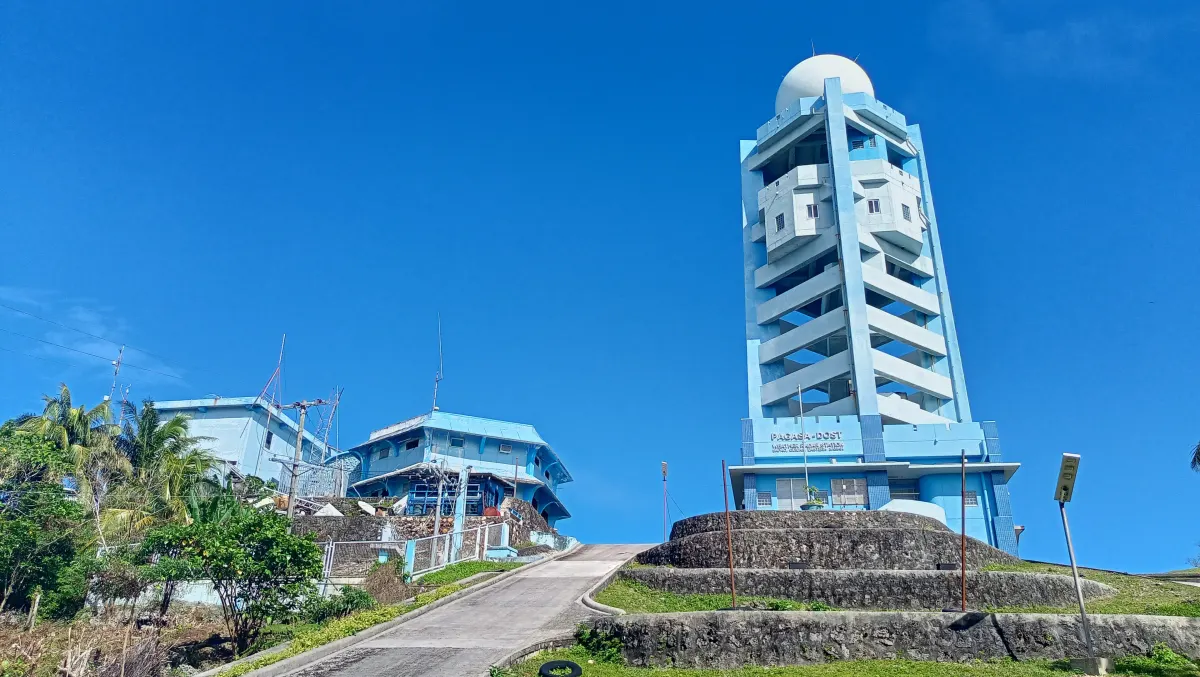
The Philippines is hot all year, with a dry season and a wet one, and it's hit by more typhoons than almost anywhere else. Most visitors come in the dry season, but you can travel at any time if you're flexible and keep an eye on the forecast.
The seasons
- Dry season, December to May: the best time for most of the country. December to February is a little cooler and breezier; March to May is hot, often over 35°C, and the seas are calmest. Christmas, New Year, Chinese New Year and Holy Week (Easter) are the busiest times, with higher prices and full flights and ferries: book ahead.
- Wet season, June to November: the southwest monsoon, the habagat, brings heavy rain and thunderstorms, especially to the western side of the country, including Manila and Palawan. It doesn't rain all day, every day, and prices are lower, but boat trips are often cancelled.
- The northeast monsoon, the amihan, from about November to March, brings cooler air, and rain and rough seas to the east- and north-facing coasts, such as Siargao, eastern Samar and Catanduanes, while the west is dry.
- The weather varies a lot between regions: check the island you're going to, not just "the Philippines".
Typhoons
- About 20 tropical cyclones enter the Philippine Area of Responsibility each year, and eight or nine of them make landfall. They can come at any time, but most come between June and November, and the strongest usually come later in the season, from about August to November.
- The worst hit the eastern side of the country, which faces the Pacific: Eastern Visayas, Bicol and northern Luzon. Super Typhoon Haiyan (Yolanda) killed more than 6,000 people in Leyte and Samar in November 2013.
- Even a typhoon that doesn't hit you can bring heavy rain, floods, landslides and stopped boats over a wide area, as it pulls in the monsoon.
- Each typhoon has an international name and a Philippine one: PAGASA uses the local name, such as Yolanda for Haiyan, so check both when you read the news.
PAGASA's tropical cyclone wind signals
PAGASA, the national weather service, issues a Tropical Cyclone Wind Signal for each province or part of a province that a storm threatens. The higher the number, the stronger the winds expected:
- Signal No. 1: strong winds (about 39 to 61 km/h) expected within 36 hours. Small boats usually stop.
- Signal No. 2: gale-force winds (about 62 to 88 km/h) within 24 hours. Most ferries stop, and flights may be cancelled.
- Signal No. 3: storm-force winds (about 89 to 117 km/h) within 18 hours.
- Signal No. 4: typhoon-force winds (about 118 to 184 km/h) within 12 hours.
- Signal No. 5: winds of 185 km/h or more within 12 hours: a super typhoon.
PAGASA also issues rainfall warnings (yellow, orange and red) for heavy rain and flooding, and local governments may order evacuations, close schools and suspend work.
If a typhoon is coming
- Follow the forecast: PAGASA's website and Facebook page, local radio and TV, and your hotel. The NDRRMC, the disaster agency, sends emergency text alerts to Philippine phone numbers.
- Change your plans early. Once a signal is raised, the Coast Guard usually suspends boats, ports fill with stranded passengers, and flights are cancelled. If you're on a small island, leaving a day or two early is often better than being stuck there. Airlines usually let you rebook free when they cancel.
- Stay somewhere solid, away from the beach, rivers and steep slopes, in a building that isn't made of light materials. Ask your hotel what it does in a typhoon.
- Have water, food, a torch, a charged power bank and some cash, as power, phone signal and ATMs can be off for days after a big storm.
- Follow evacuation orders from local officials immediately.
- Don't walk or drive through flood water: apart from the danger of being swept away, it can carry leptospirosis. See Health.
- Make sure your travel insurance covers natural disasters and cancellations, and register with your embassy's travel alerts if it has them.
Earthquakes and volcanoes
The Philippines sits on the Pacific Ring of Fire. Earthquakes are common, and some are strong: one of magnitude 6.9 hit northern Cebu in September 2025. In an earthquake, drop, cover and hold on; on the coast, move to high ground straight away if the shaking is strong or long, in case of a tsunami. PHIVOLCS, the volcano and earthquake agency, sets alert levels for active volcanoes such as Mayon and Taal, and closes the areas around them. Check before you go near one.
See also: Getting around for ferry cancellations, and Which islands to choose.


Comments
No comments yet.