
9 days in Hamburg and the north: Bremen, Lübeck, Schwerin, Stralsund and the chalk cliffs of Rügen
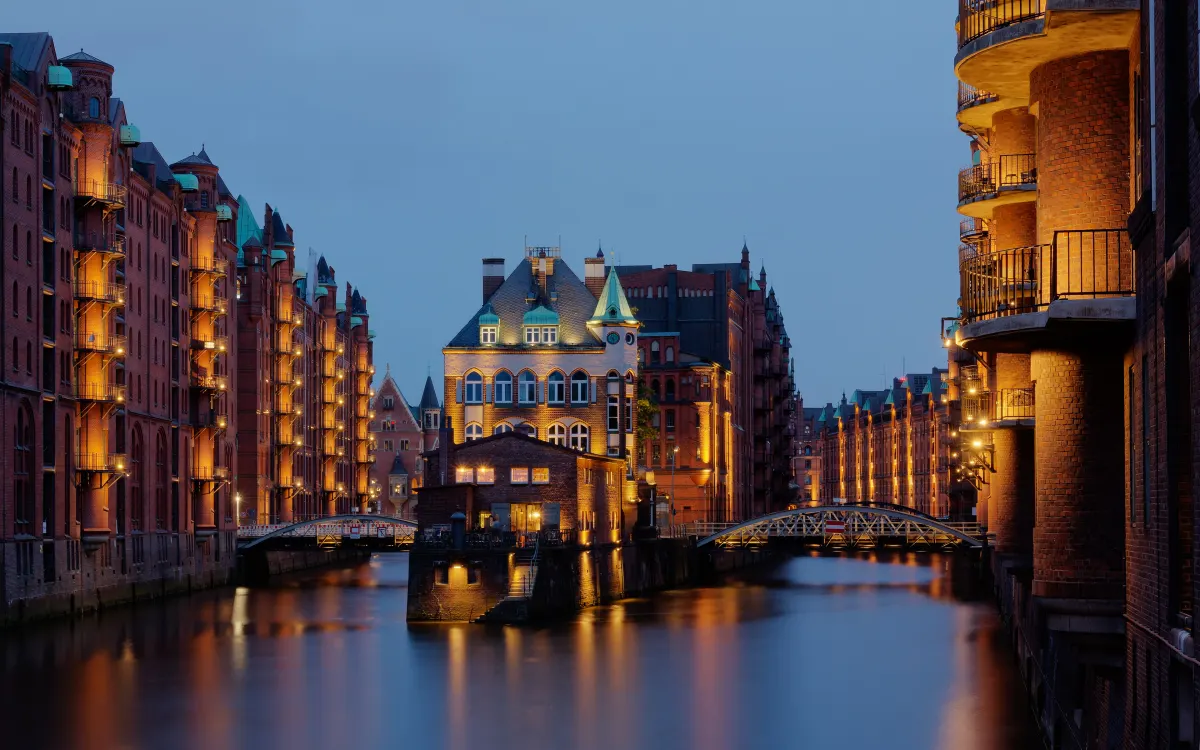
The north is brick churches, big skies, herring rolls and ships. This trip goes from Bremen through Hamburg and the old Hanseatic towns to the white cliffs of Rügen, the island in the Baltic. It's all by train.
Map of the route
Train from Bremen to Hamburg, about 115 km
Harbour ferry 62, about 6 km
Train from Hamburg to Lübeck, about 63 km
Train from Lübeck to Travemünde, about 20 km
Train from Lübeck to Schwerin by Bad Kleinen, about 78 km
Train from Schwerin to Stralsund by Rostock, about 159 km
Train from Stralsund to Sassnitz and Binz, about 64 km
Train to Binz, about 5 km
Walk or bus from Sassnitz to the Königsstuhl, about 8 km
Click a dot for the place. Labels show where you spend each night. The dashed line is the harbour ferry. Rail distances are approximate. Route from OpenStreetMap (© OpenStreetMap contributors, ODbL).
Before you go
- When: late May to September. Rügen is full in July and August, when you must book well ahead. The wind can be cool in any month.
- Trains in 2027: no trains to Rügen from 3 April to 14 May, and gaps on the way to Stralsund from 11 September to 15 October, as reported in November 2026. See Getting around.
- Nearly every leg is on regional trains, so a Deutschland-Ticket or the Niedersachsen and Mecklenburg-Vorpommern day tickets work well.
- Book: Miniatur Wunderland, and a concert at the Elbphilharmonie if you want one.
Day 1: Bremen
See the market square and town hall, with the giant statue of Roland and the Town Musicians (touch the donkey's legs), the brick fantasy of Böttcherstraße, and the crooked lanes of the Schnoor.

Bremen Market Square and Town Hall
Bremen's main square is surrounded by gabled merchants' houses, the Gothic cathedral and the ornate Town Hall, whose Renaissance façade and great hal…
Days 2 to 4: Hamburg
The train from Bremen takes about an hour.
- Day 2: the town hall and the lakes, then the red-brick warehouses of the Speicherstadt and the Chilehaus, the Miniatur Wunderland, and the Plaza of the Elbphilharmonie (€5) at sunset.
- Day 3: from Landungsbrücken, take the public ferry 62 to Finkenwerder on an ordinary hvv ticket, the cheapest harbour tour there is. Walk through the Old Elbe Tunnel under the river, and see the stairs and villas of Blankenese.
- Day 4: if it's Sunday, be at the Fischmarkt before 9 am. Then the Kunsthalle or the emigration museum, BallinStadt. In the evening, St Pauli: see Safety first.
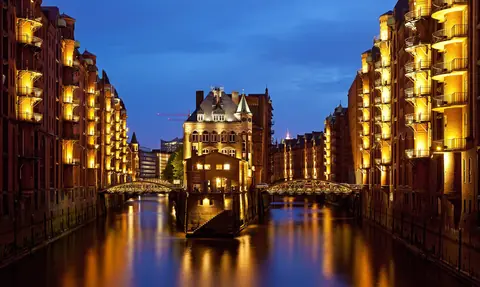
Speicherstadt, Hamburg
The world's largest warehouse district, red-brick Gothic buildings on canals, a World Heritage site.

Miniatur Wunderland, Hamburg
The world's largest model railway, filling several floors of an old warehouse with incredibly detailed miniature worlds: Hamburg, the Alps, Scandinav…

Elbphilharmonie, Hamburg
Hamburg's concert hall, opened in 2017: a glass wave-like structure built on top of an old brick warehouse at the tip of the HafenCity docks.
Day 5: Lübeck
It's 45 minutes by train. Go through the Holstentor into the old town on its island: the brick Marienkirche, the Hospital of the Holy Spirit, the hidden courtyards (Gänge), the European Hansemuseum and, of course, marzipan. Swim at Travemünde, 20 minutes on, and stay the night.
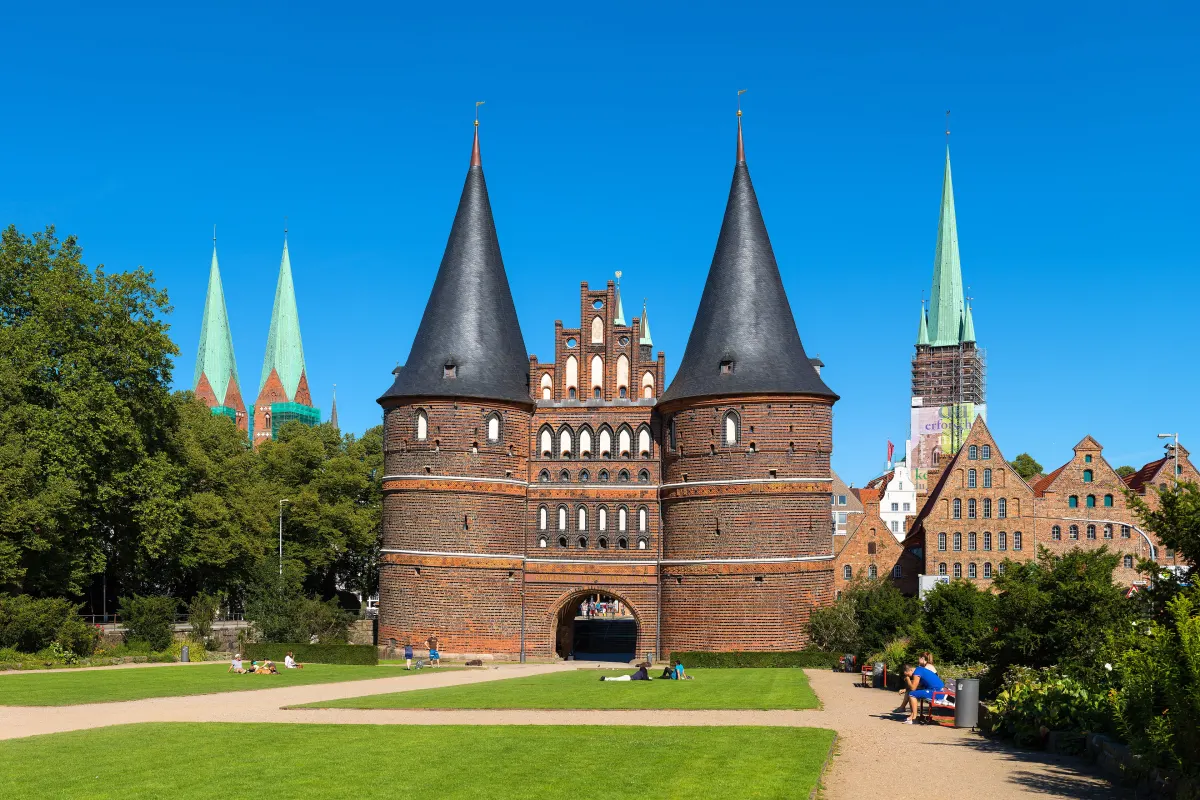

Holstentor and Lübeck Old Town
Lübeck was the 'Queen of the Hanseatic League', the medieval trading network of the Baltic, and its old town, on an island ringed by water, is a UNES…
Day 6: Schwerin
Take the train (a little over an hour, usually with a change at Bad Kleinen) to Schwerin, whose palace, all towers, sits on its own island in a lake. It became a World Heritage Site in 2024. Stay here, or go on to Wismar, half an hour away, a Hanseatic port with one of the biggest market squares in the north.
Day 7: Stralsund
Go on by train through Rostock to Stralsund (about 2½ hours). See the brick town hall, as lacy as a church, climb St Mary's tower, and visit the Ozeaneum aquarium on the harbour.
Days 8 and 9: Rügen
Take the train over the causeway to Binz or Sassnitz (about an hour). Walk the long beach below Binz's white villas, and ride the steam train, Rasender Roland, to Sellin's pier. On the last day, go to the Königsstuhl cliffs: from Sassnitz the high path through the beech woods of Jasmund National Park takes about three hours, with a bus back. Parts may be closed after cliff falls, so ask at the centre. Keep back from the edge, and off the beach below after rain or frost.
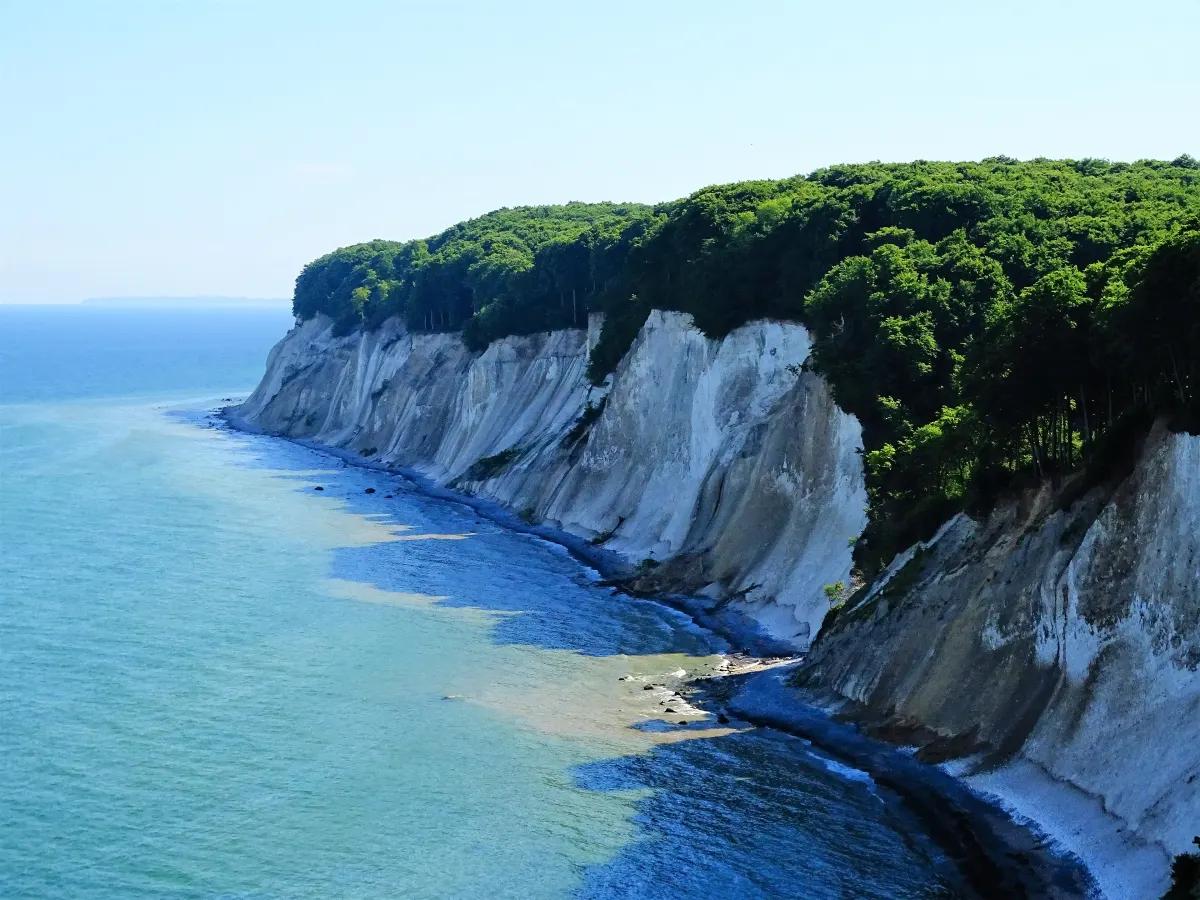

Königsstuhl chalk cliffs, Rügen
Brilliant white chalk cliffs rising 118 m above the Baltic Sea, edged with ancient beech forest, in Jasmund National Park on the island of Rügen.
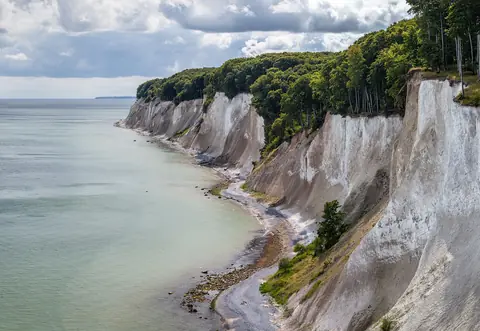
Jasmund National Park, Rügen
White chalk cliffs and old beech forest (World Heritage) on Rügen, painted by Caspar David Friedrich.
With more time
- The North Sea: Sylt, three hours by train from Hamburg over the Hindenburg causeway, or Cuxhaven, for guided walks over the Wadden Sea mud flats.
- Hiddensee, a car-free island, by ferry from Stralsund or Schaprode.
- Lüneburg, an old salt town half an hour from Hamburg, and the heath, purple in August and September.
- Copenhagen: direct trains from Hamburg.
- Trains from Stralsund go to Berlin, for Berlin, Dresden and Saxon Switzerland.




Comments