
Phones and the internet in Italy: eSIMs, SIM cards, roaming, plugs and useful apps
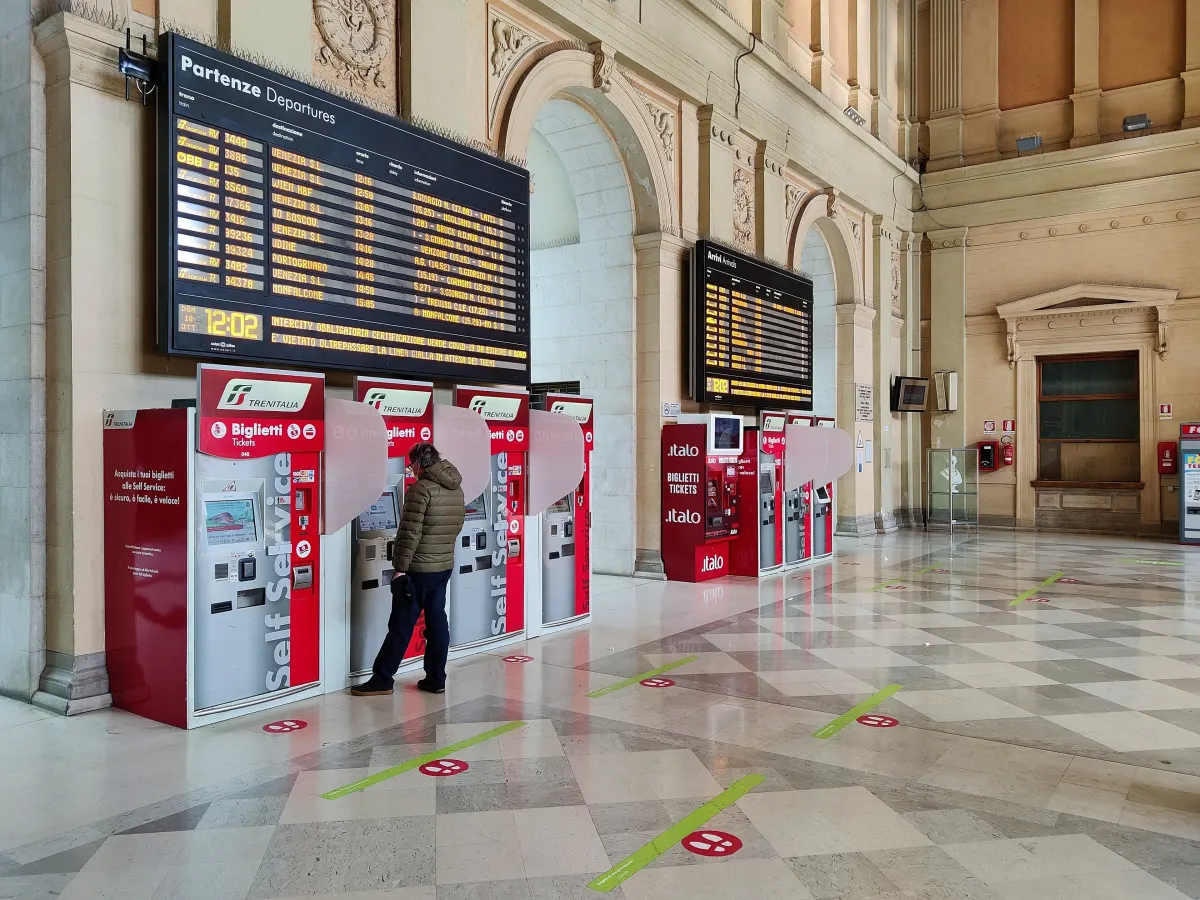
You'll have a good 4G or 5G signal almost everywhere in Italy, except in some mountain valleys, on small islands and on long stretches of railway tunnel.
Roaming
- With a phone plan from the EU (or Iceland, Liechtenstein, Norway, Moldova or Ukraine) you pay the same as at home, within a fair use limit.
- With a UK, Swiss, US, Canadian, Australian or New Zealand plan, it depends on your operator. Check before you leave: daily charges add up.
- Be careful on ferries: at sea a phone can connect to the ship's own expensive network. Use flight mode.
eSIMs and SIM cards
- A travel eSIM, bought online before you come, is easiest for a short trip if your phone supports it. One for all of Europe is useful if you're going on.
- For a local number, the main networks are TIM, Vodafone, WindTre and Iliad. Go to a shop in town: airport desks charge more. You must show your passport, and registering can take a little time.
- Ask for the total: plan, card and activation. Many offers renew every month until you stop them.
Dialling
- Italy's code is +39. Keep the zero at the start of a landline number: Rome is +39 06. Mobile numbers start with 3 and have no zero.
- Numbers starting with 800 are free inside Italy, and 89 and 199 can be expensive.
- Emergency: 112. See Safety.
Wifi
- Hotels, cafés, most fast trains and many town squares have free wifi. Some public networks want a phone number to send a code to.
- Don't bank or shop on open networks without a VPN.
Plugs
The power is 230 V, with round-pin sockets: the thin two-pin type C plug fits everywhere, and there's also Italy's own type L, with three pins in a row. A German-style type F (Schuko) plug doesn't always fit, so bring an adaptor with a slim plug.
Apps worth having
- Trenitalia and Italo for trains, and Moovit or Google Maps for city buses.
- FREE NOW, itTaxi or appTaxi for licensed taxis.
- WhatsApp: nearly every guesthouse and restaurant uses it.
- Where Are U: the 112 app, which sends your position to the emergency centre. It works in many regions, though not all.
- EasyPark for parking, and offline maps and the Italian language in a translation app.
- The Travel to Europe site for EES and ETIAS news: see Arriving in Italy.
IT-alert
IT-alert is Italy's public warning system. In a serious emergency, such as a volcanic, flood or industrial one, phones in the area make a loud sound and show a message. You don't need an app, and it also works on foreign phones.
See also Getting around Italy and Money.



Comments
No comments yet.