
Getting around Italy: high-speed and regional trains, validating tickets, buses, ferries, taxis and strikes
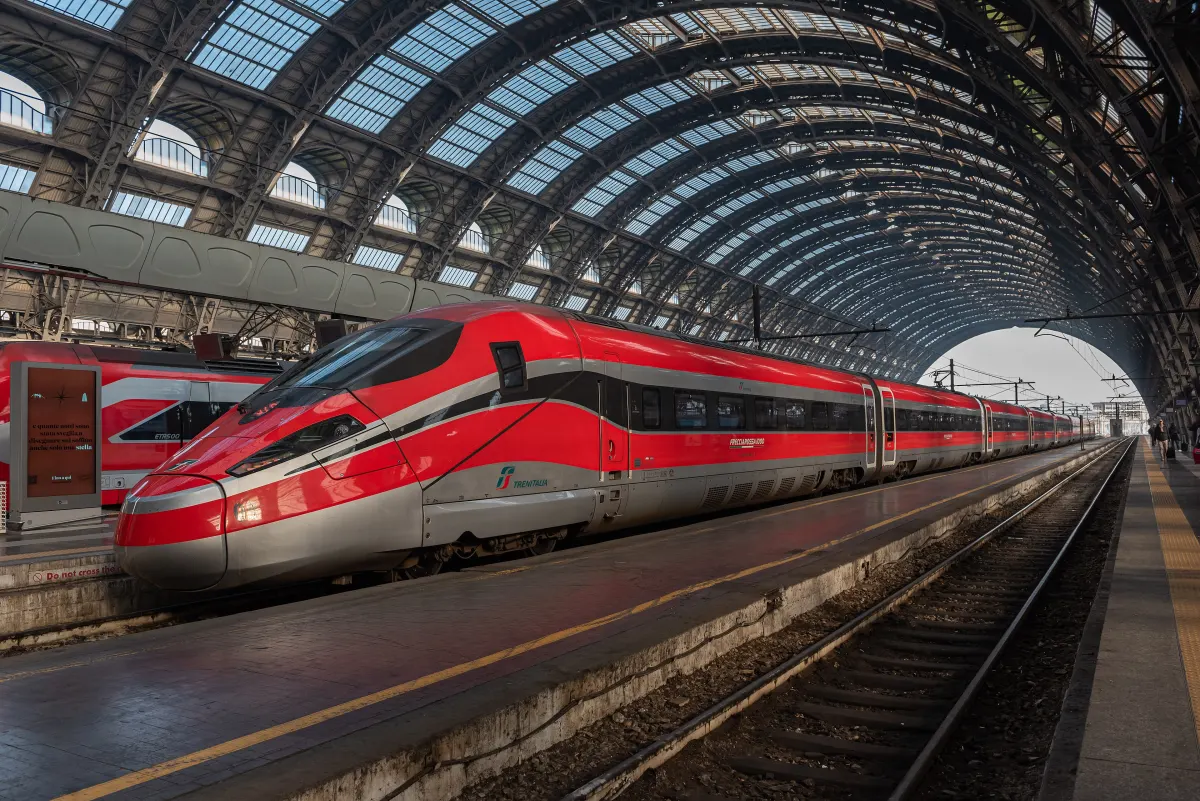
Italy's trains are the best way to travel between the cities: fast, frequent and, if you book ahead, cheap. Buses and ferries reach the places that trains don't. You rarely need a car, and in the old cities you don't want one.
High-speed trains
- Two companies compete: Trenitalia, the state railway, whose fast trains are called Frecce (Frecciarossa and Frecciargento), and the private Italo. Both run Turin–Milan–Bologna–Florence–Rome–Naples–Salerno and Milan–Verona–Venice. Compare the two.
- Typical times: Rome to Florence about 1½ hours, Rome to Naples 1¼, Florence to Venice 2¼, Milan to Rome a little over 3.
- Book early: the cheapest fares go on sale weeks ahead, sell out, and usually can't be changed or refunded. A ticket bought on the day can cost several times as much.
- Every fast train needs a seat reservation, which is part of the ticket. It's good for that train only.
- Intercity trains are slower and cheaper, and Intercity Notte sleepers run from Milan and Rome to the south. The sleepers to Sicily go onto a ferry, with the passengers, across the Strait of Messina.
- Check the station: Roma Termini and Tiburtina, Milano Centrale and Porta Garibaldi, Firenze Santa Maria Novella and Campo di Marte, Venezia Santa Lucia (the island) and Mestre (the mainland).
Regional trains and validating your ticket
Regionale and Regionale Veloce trains stop in the smaller places, such as Pisa, Lucca, Siena, Orvieto, Assisi and the Cinque Terre. Fares are fixed and there's no need to book ahead. What you do with the ticket depends on its kind, and inspectors fine people who get it wrong.
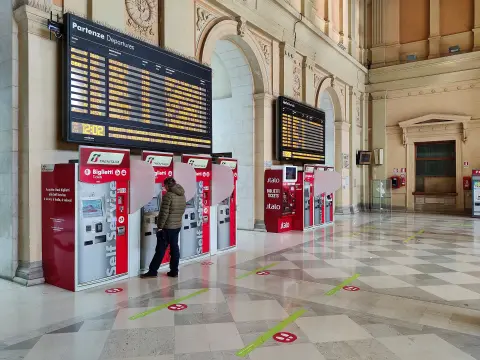
- Paper ticket from a machine, counter or shop: stamp it in the machine on the platform before you get on. Once stamped, you have four hours to finish the journey, with a few exceptions.
- Digital regional ticket, bought online or in the app: it's in your name and for the train you chose. Trenitalia now checks it in automatically at the scheduled departure time. Before that, you can change to another train free of charge. Show the screen with the moving green bar, and your ID if asked.
- If the platform machine is broken, find the conductor as you board, before they find you.
- Tap and Tap, with a contactless card at station readers, works on some routes only.
Luggage
- Italo has no charge for luggage. In Smart class each piece can be up to 75 x 53 x 30 cm; bigger cases fit in the other classes.
- Trenitalia announced limits for the Frecce in 2024 and then suspended them. Check its rules if you have very big cases or a bicycle.
- Keep an eye on bags at stations, and take valuables to your seat. Most big stations have a left luggage office.
City buses, trams and metros
- Buy tickets before boarding from a tobacconist (tabacchi, with a T sign), newsstand, machine or app, then stamp them on board or at the gate.
- Many cities take contactless cards. In Rome you can tap on buses and at metro gates: a ride is €1.50, valid 100 minutes, with one trip by metro. A 24-hour ticket is €8.50. Milan, Florence and Naples have contactless too. Use the same card each time, and one for each person.
- Rome has three metro lines, Milan five and Naples two main ones. In the old centres you'll mostly walk.
Venice by boat
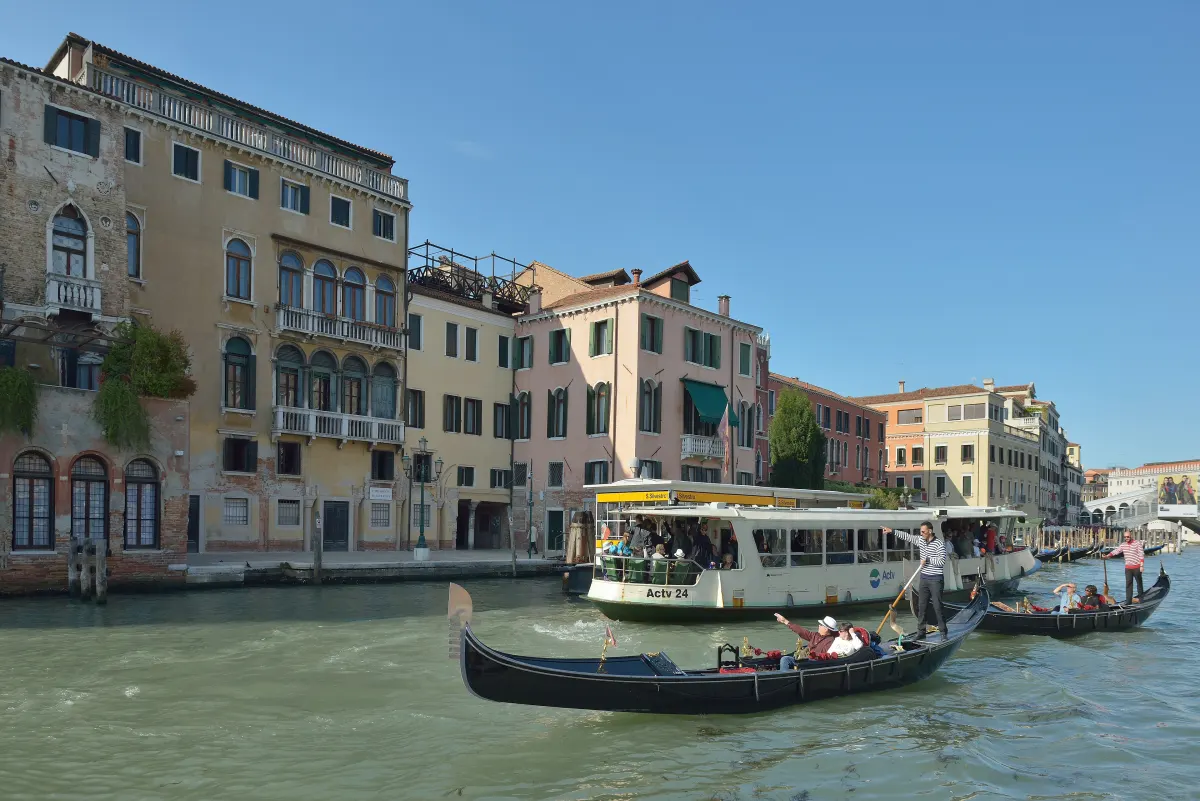
- The vaporetti are water buses. A single ticket, valid 75 minutes, costs €9.50, so the passes soon pay: €25 for 24 hours, €35 for 48, €45 for 72 and €65 for seven days (November 2026 prices). People aged 6 to 29 can get a 72-hour ticket for €27 with a Rolling Venice card.
- Touch the ticket on the reader every time you get on. Line 1 is the slow one down the Grand Canal; line 12 goes to Murano, Mazzorbo and Burano.
- To cross the Grand Canal between bridges, use a traghetto, a plain gondola with no frills, for a couple of euros.

Grand Canal by vaporetto, Venice
The best way to see Venice's main waterway is from vaporetto line 1, the slow water bus that stops at every landing between Piazzale Roma and the rai…

Burano
A fishing island in the Venetian lagoon, famous for its brightly painted houses, in every colour, lining the canals, and for lace-making.
Coaches and country buses
- FlixBus, Itabus and others are the cheapest way between cities, and the best way to some places in the south, such as Matera.
- Buses are quicker than trains from Florence to Siena, and the only public transport to San Gimignano and Volterra. In Sicily they're often better than trains.
- SITA Sud buses run along the Amalfi Coast, and get very full in summer.
- Sundays and holidays have far fewer buses. Buy your return ticket before you go.
Ferries
- Naples and Sorrento for Capri and Ischia; Milazzo for the Aeolian Islands; Piombino for Elba; Palau for La Maddalena; and big overnight ferries from Genoa, Livorno and Civitavecchia to Sardinia, and from Naples to Palermo.
- Timetables are much thinner from November to March, and hydrofoils are cancelled in rough seas. Don't cut it fine before a flight.
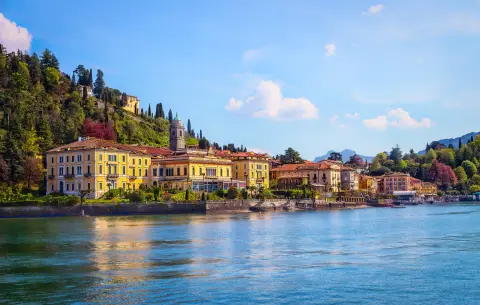
- Ferries on the lakes link the villages: see a week on the northern lakes.
Taxis
- Licensed taxis are white, with a TAXI sign and a number. Take one from a rank, phone, or use an app such as FREE NOW, itTaxi or appTaxi. They don't usually stop in the street.
- Uber mostly offers licensed taxis or expensive black cars.
Strikes
- A strike is a sciopero. They're common, often on a Friday, and announced days ahead.
- Some services are guaranteed. On working days, regional trains usually run from 6 to 9 am and from 6 to 9 pm, along with a published list of long-distance trains. Cities set their own hours.
- Check the transport ministry's list (mit.gov.it/calendario-scioperi) a few days before you travel. If your train is cancelled you can have a refund or take another.
See also Driving in Italy and Safety.
Comments
No comments yet.