
Provence and the Riviera in 10 days: Avignon, the Pont du Gard, the Calanques, the Luberon, Verdon and Nice
Roman ruins, hilltop villages, lavender, the deepest gorge in Europe and the Mediterranean: the south fits more into ten days than anywhere else in France. You need a car in the middle, but Marseille and Nice are best without one.
Map of the route
Avignon to the Pont du Gard and Nîmes, and back, about 100 km
Avignon to Saint-Rémy, Les Baux and Arles, about 54 km
Arles to Marseille and Cassis, about 115 km
Cassis to Aix, Fontaine-de-Vaucluse, Gordes and Roussillon, about 147 km
Roussillon to Valensole and Moustiers, about 99 km
Moustiers to the Gorges du Verdon, Castellane and Nice, about 136 km
Nice to Èze by bus, about 11 km
Click a dot for the place. Labels show the day you are there. Distances are by road and approximate. Route from OpenStreetMap (© OpenStreetMap contributors, ODbL).
Before you go
- Getting there: the TGV from Paris takes about 2¾ hours to Avignon and 5½ to Nice. Pick up the car in Avignon and return it in Nice. It costs more one way: compare.
- When: May, June, September and early October. Lavender blooms from late June to mid-July. July and August are hot, crowded and dear, with a fire risk: paths can be closed, so check each morning, in particular for the Calanques. See Safety.
- Parking: leave nothing in the car, anywhere.
- Driving times are without stops. See Driving.
Day 1: Avignon
Walk round the ramparts, and see the Palais des Papes and the Pont d'Avignon, the half bridge of the song. Cross the Rhône for the view from Fort Saint-André at Villeneuve. Stay two nights.

Palais des Papes, Avignon
The largest Gothic palace in the world, built in the 14th century when the popes lived in Avignon instead of Rome.

Pont Saint-Bénézet (Pont d'Avignon)
The bridge of the famous children's song 'Sur le pont d'Avignon'.
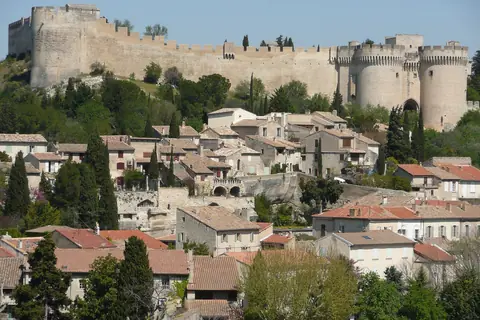
Fort Saint-André, Villeneuve-lès-Avignon
A 14th-century fortress on a hill across the Rhône from Avignon, built by the French kings to watch over the papal city.
Day 2: Pont du Gard and Nîmes (about 1¾ hours of driving)
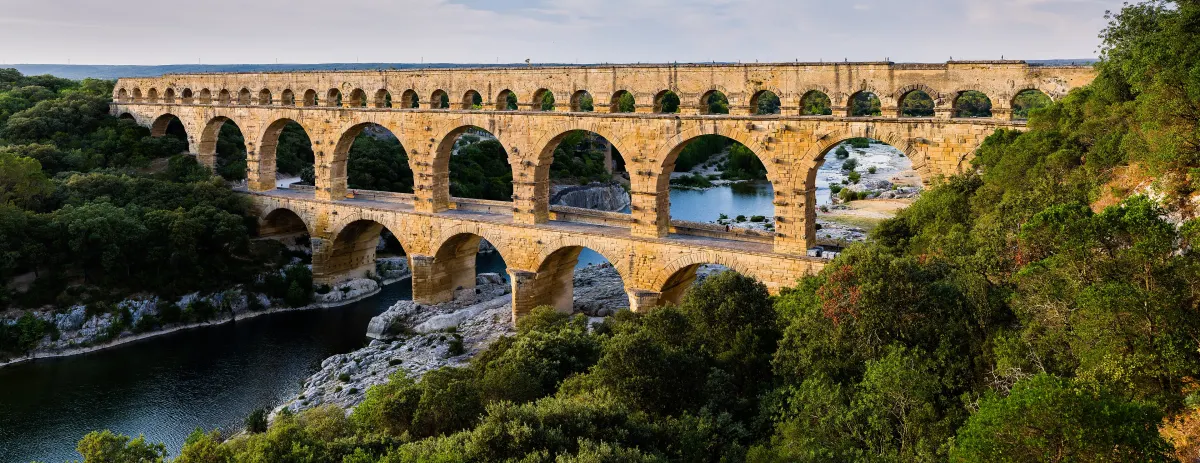
Go first to the Pont du Gard, a Roman aqueduct in a gorge where you can swim in summer. Go on to Nîmes, whose Roman amphitheatre is one of the best preserved, and its gardens and Tour Magne. Return to Avignon.
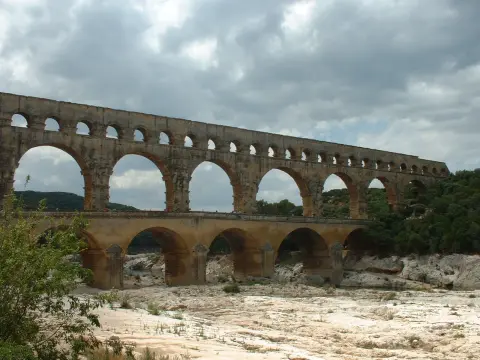
Pont du Gard
A Roman aqueduct bridge built in the 1st century AD to carry water across the Gardon river to Nîmes.

Arènes de Nîmes
One of the best-preserved Roman amphitheatres in the world, built around 70 AD and seating about 24,000 people.
Day 3: Saint-Rémy, Les Baux and Arles (about 1¼ hours)
See the Roman town of Glanum outside Saint-Rémy, where Van Gogh painted at the asylum, and the village of Les Baux. Montmajour Abbey stands above the plain near Arles. Stay in Arles for its Roman arena and Van Gogh walk.

Glanum
The ruins of a Greek and Roman town at the foot of the Alpilles hills, with temples, baths, a forum and houses.

Montmajour Abbey
A great Benedictine abbey on a rocky hill outside Arles, with a Romanesque church, a cloister with carved capitals and a fortified tower.
Day 4: Marseille (about 1¼ hours)
Drive to Marseille, park, and take the metro. See the Vieux-Port, MuCEM and the old Panier quarter, take the boat to Château d'If, and eat bouillabaisse. Take care of your phone and bag at night. Stay in Cassis or Marseille.
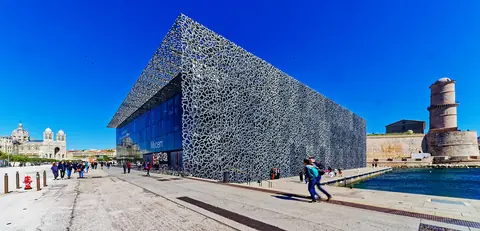
MuCEM, Marseille
The Museum of European and Mediterranean Civilisations, in a cube wrapped in concrete lace, linked by a footbridge to Fort Saint-Jean.

Château d'If
A fortress on a tiny island in the bay of Marseille, built by François I and later a prison, made famous by Alexandre Dumas's The Count of Monte Cris…

Bouillabaisse, Marseille
Marseille's fish stew of rockfish and seafood in a saffron broth, served with rouille and croutons, then the fish separately.
Day 5: Cassis and the Calanques (about 30 minutes)
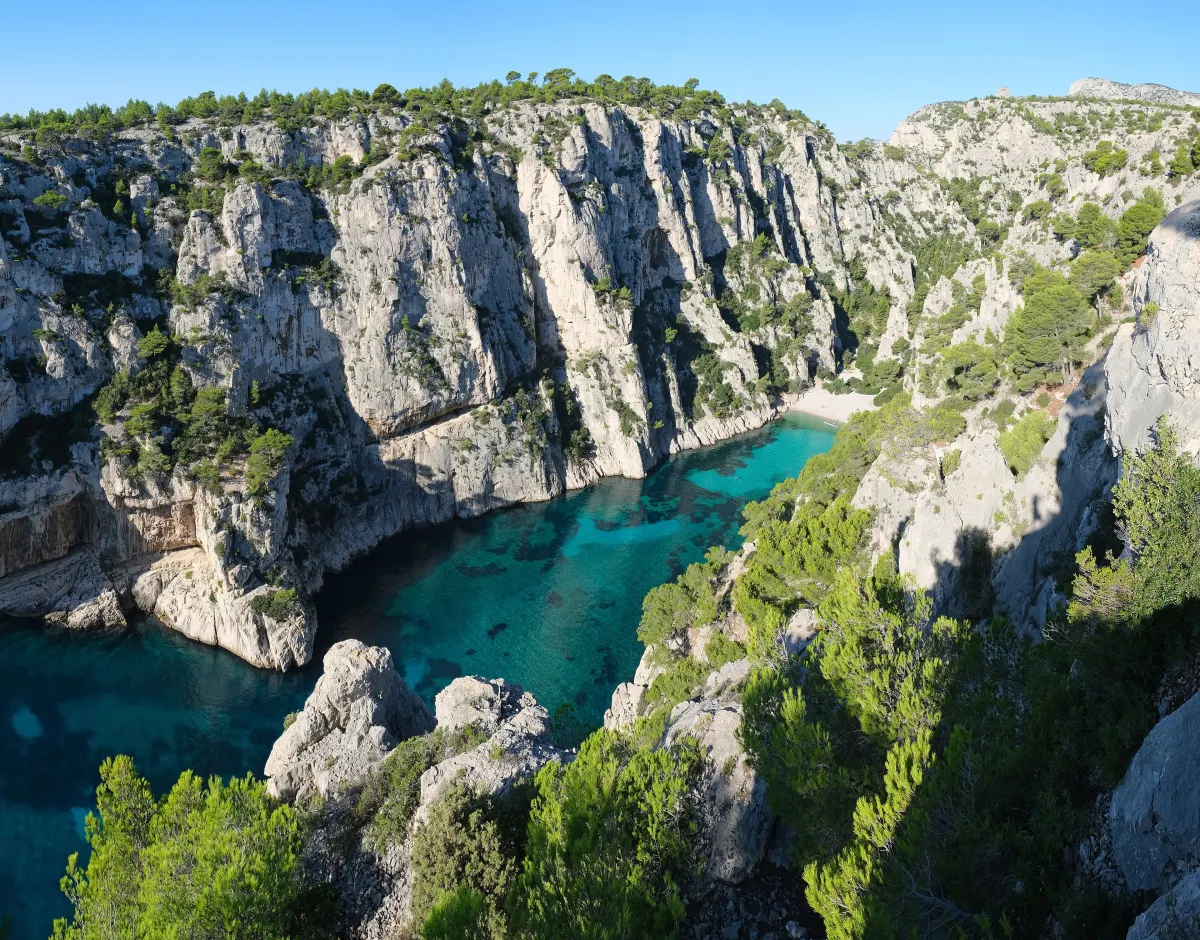
Walk to En-Vau (about 1½ hours each way, steep), or take a boat from Cassis harbour. In summer, check the national park's fire-risk map; Sugiton needs a free booking on some days from June to mid-September. In the late afternoon, drive the Route des Crêtes over Cap Canaille if it's open.

Calanque d'En-Vau, Cassis
The most beautiful of the calanques, the narrow limestone inlets of the Calanques National Park between Marseille and Cassis.

Route des Crêtes and Cap Canaille, Cassis
A spectacular road along the top of the highest sea cliffs in mainland France, from Cassis to La Ciotat.
Day 6: The Luberon (about 2¼ hours)
Drive north by Aix-en-Provence, with Montagne Sainte-Victoire behind it, to the Luberon's hill villages. See the ochre cliffs of Roussillon, Gordes and Fontaine-de-Vaucluse. Stay in or near Roussillon.

Roussillon and the Ochre Trail
A hilltop village in the Luberon, painted in every shade of red, orange and yellow from the ochre quarried here for centuries.

Fontaine-de-Vaucluse
The mysterious source of the River Sorgue, a deep pool at the foot of a 230-metre cliff, one of the largest springs in the world.
Day 7: Valensole to Moustiers (about 1¾ hours)
Cross the Valensole plateau, purple with lavender in late June and July, to Moustiers-Sainte-Marie, a village under a star hung between two cliffs. Swim or hire a boat on the Lac de Sainte-Croix.

Valensole lavender fields
The Valensole plateau in Provence is covered with lavender fields that turn the land purple from about late June to mid-July, with rows stretching to…
Day 8: Gorges du Verdon to Nice (about 3 hours, more with the Route des Crêtes)
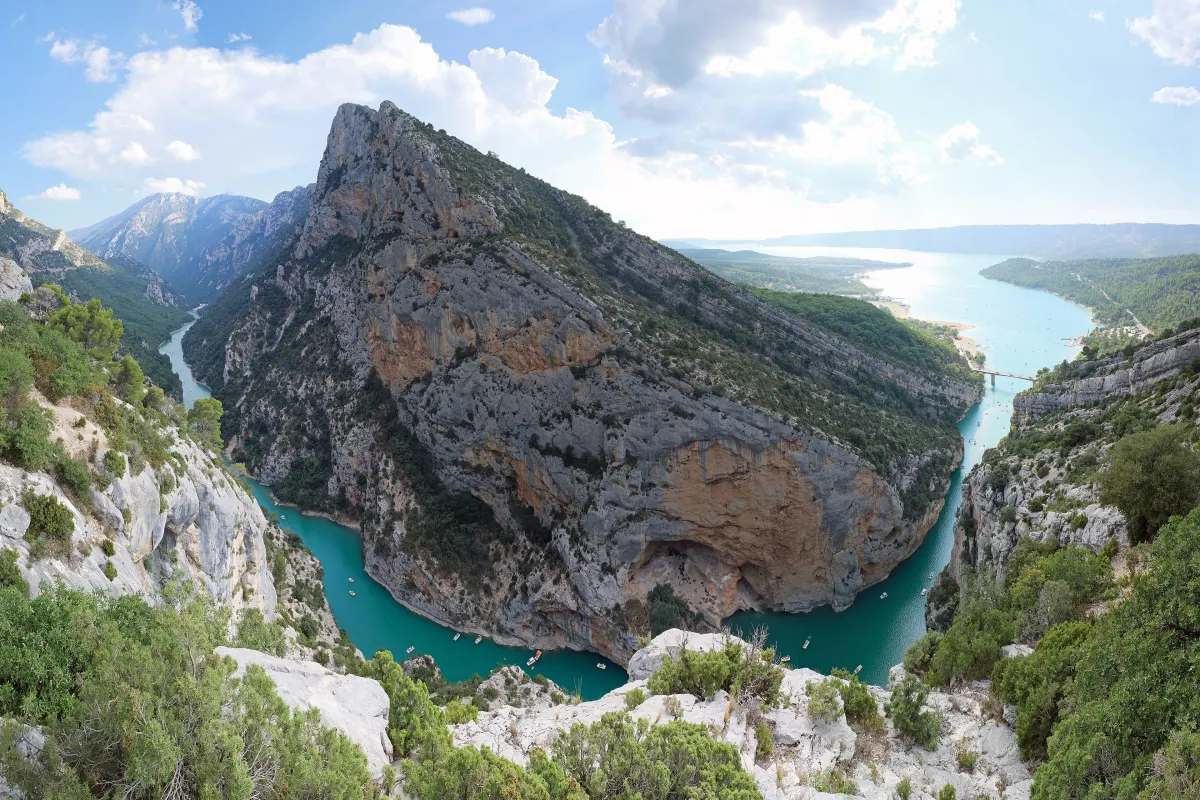
Drive the rim of the Gorges du Verdon, with stops at the viewpoints of the Route des Crêtes from La Palud. Go slowly on bends. Then go on by Castellane to Nice, about 2 hours more. Return the car there.

Gorges du Verdon
Europe's largest canyon, up to 700 m deep, carved by the turquoise Verdon river through the limestone of Provence.
Day 9: Nice
Walk the Promenade des Anglais and the Old Town, up Castle Hill, and eat socca and ratatouille. The beaches are of pebbles: bring shoes.
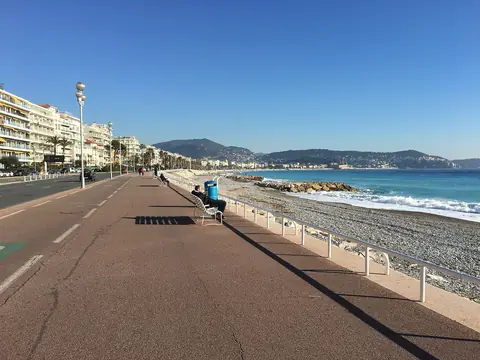
Nice: Promenade des Anglais and Old Town
Nice's famous seafront promenade curves for 7 km along the Baie des Anges, lined with palm trees and grand hotels such as the Negresco.
Day 10: Èze and the coast
Take a bus to the perched village of Èze, and walk down the Nietzsche Path, or the train to Villefranche, Monaco and Menton. The Trophy of Augustus at La Turbie has the widest view. Fly home from Nice, or take the train.
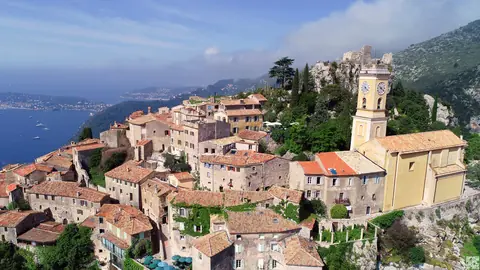
Èze village
A medieval village perched on a rocky peak 427 m above the Mediterranean, between Nice and Monaco.
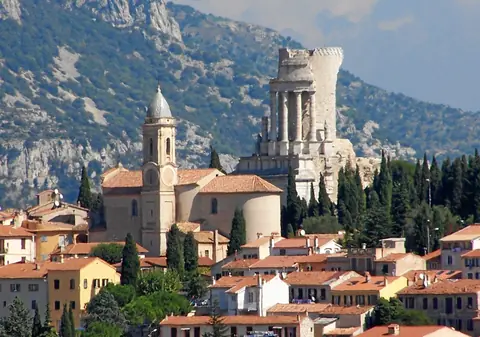
Trophy of Augustus, La Turbie
A huge Roman monument raised in 6 BC on a pass above Monaco to celebrate Emperor Augustus's conquest of the Alpine tribes, whose 45 names are carved …
With more time
- Islands: Porquerolles and Port-Cros, from Hyères.
- The Esterel: the red rocks and cliff road of the Estérel, between Saint-Raphaël and Cannes.
- The Camargue: Aigues-Mortes, its ramparts, flamingos and salt flats.
- The Mercantour in the mountains behind Nice, for walking.






Comments
No comments yet.