
9 days in Normandy and Brittany by car: Étretat, the D-Day beaches, Mont-Saint-Michel and the coast of Brittany
Normandy and Brittany have the cliffs, tides, beaches, history and seafood. The loop starts in Paris and ends near Vannes, about 1,250 km of driving over nine days; it's cooler than the south even in August. Pack a waterproof.
Map of the route
Paris to Giverny and Étretat, about 211 km
Étretat to Honfleur and Bayeux, about 138 km
The D-Day beaches, about 76 km
Bayeux to Mont-Saint-Michel, about 121 km
Mont-Saint-Michel to Cancale and Saint-Malo, about 67 km
Saint-Malo to Cap Fréhel, Ploumanac'h, Barnenez and Morlaix, about 235 km
Morlaix to Crozon, about 82 km
Crozon to the Pointe du Raz and Carnac, about 243 km
Carnac to Quiberon, Locmariaquer and Vannes, about 76 km
Click a dot for the place. Labels show the day you are there. Distances are by road and approximate. Route from OpenStreetMap (© OpenStreetMap contributors, ODbL).
Before you go
- Getting there: drive from Paris, or take the train to Rouen, Caen or Rennes and hire there. Leave by TGV from Vannes or Rennes (about 2 hours from Rennes to Paris).
- When: May to September. Book for July, August and the Ascension weekend. Monet's garden opens from about April to October.
- Tides rule here. Look them up before any walk on sand or to a tidal island.
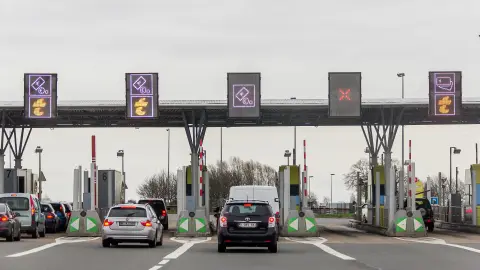
- Tolls on the A13 have no barriers, and the Saint-Cloud tunnel is closed towards Normandy until the end of August 2027: see Driving.
Day 1: Paris to Étretat by Giverny (about 3 hours)
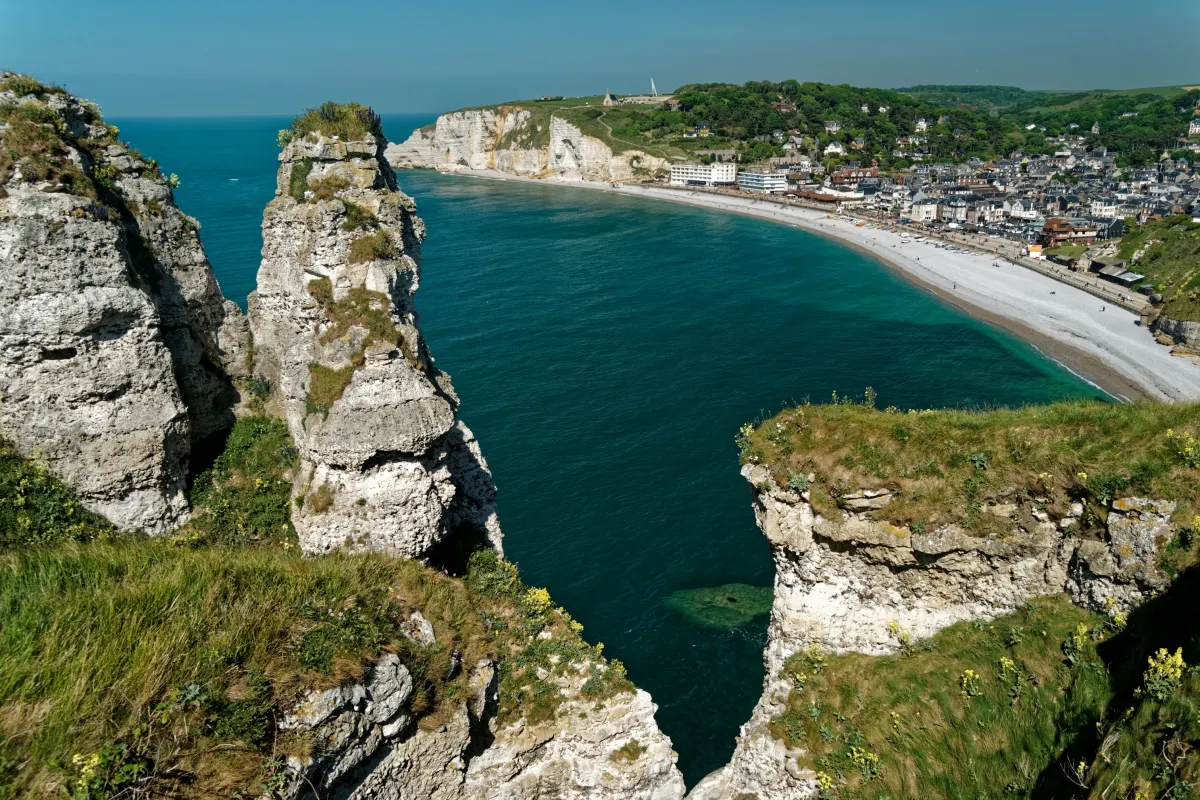
Stop at Monet's house and garden at Giverny, an hour from Paris, then drive to the chalk arches of Étretat. Walk up on both sides of the beach for the views, well back from the edge. Stay here or in Honfleur.
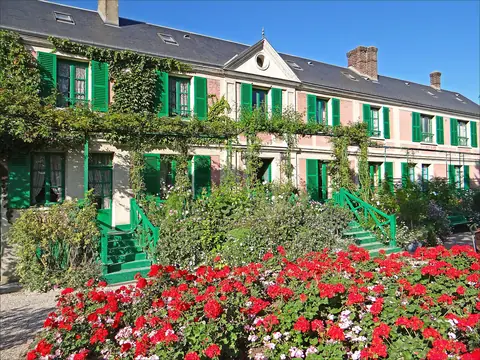
Monet's House and Gardens, Giverny
The house where Claude Monet lived for 43 years, and the gardens he created and painted again and again: a flower garden bursting with colour, and ac…

Étretat cliffs
Dramatic white chalk cliffs on the Normandy coast, with natural arches and a needle of rock standing in the sea, painted by Monet and Courbet.
Day 2: To Bayeux (about 2 hours)
Cross the Seine by the Pont de Normandie (toll) to the harbour town of Honfleur. Go on to Bayeux, which has a Norman cathedral. Note that the Bayeux Tapestry is away, as its museum is closed until autumn 2027. Two nights in Bayeux.
Day 3: The D-Day beaches (about 1¾ hours)
See the beaches and the American cemetery above Omaha, then Pointe du Hoc, Arromanches and the Juno Beach Centre. A guided tour is worthwhile. Keep your voice down at the cemeteries.

D-Day beaches and Normandy American Cemetery
On 6 June 1944, Allied forces landed on five beaches along this coast in the largest seaborne invasion in history.
Day 4: Mont-Saint-Michel (about 1½ hours)
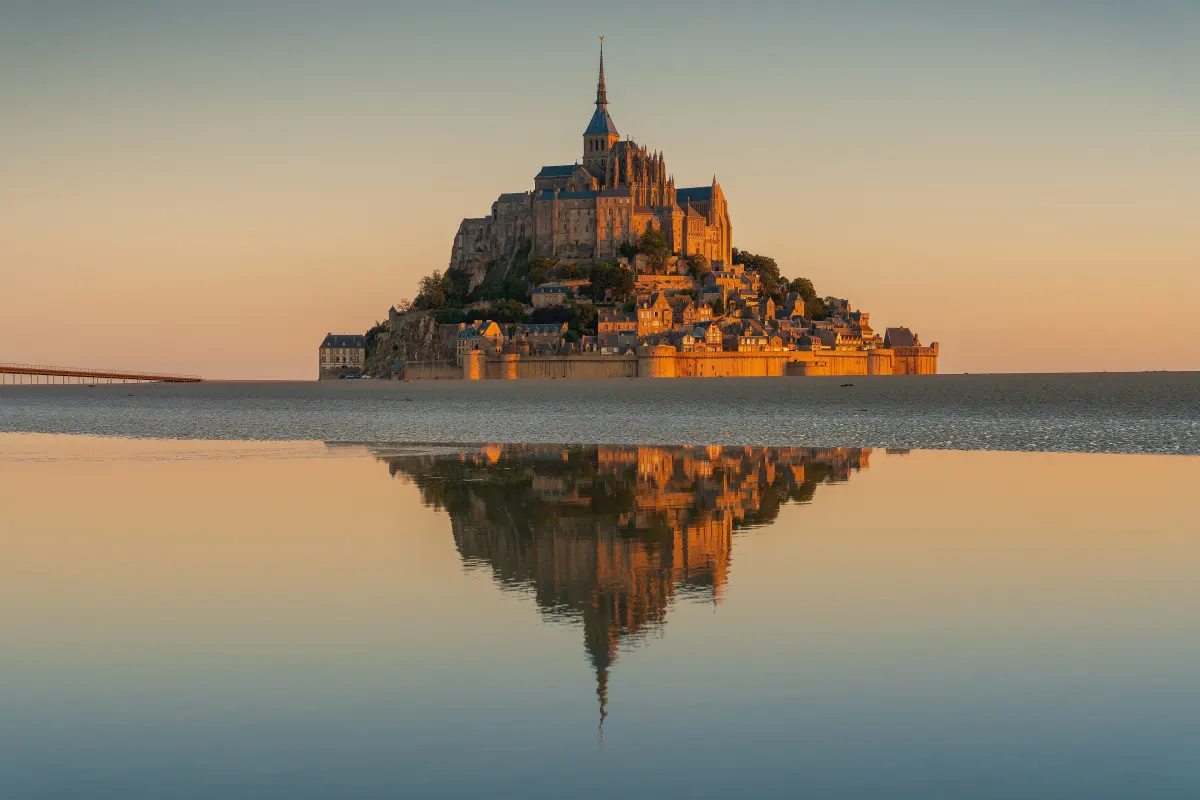
Drive to Mont-Saint-Michel. Park on the mainland and take the shuttle or walk. See the abbey late in the day, when the crowds thin out, and stay on the island or the mainland for the sight of it at night. Walk in the bay only with a guide.

Mont-Saint-Michel
A rocky tidal island in the bay between Normandy and Brittany, crowned by a Benedictine abbey begun in the 8th century and rebuilt over the following…
Day 5: Cancale and Saint-Malo (about 1¼ hours)
Eat oysters at Cancale's harbour, then walk the ramparts of Saint-Malo. At low tide, you can walk to the Grand Bé.
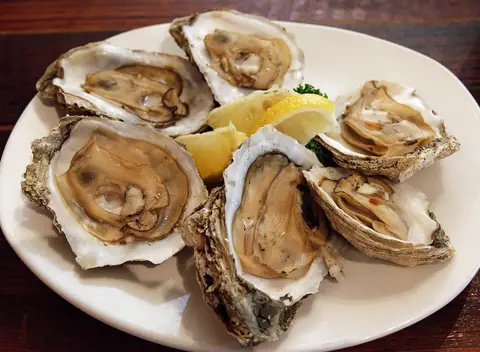
Oysters of Cancale and Arcachon
Eat fresh oysters by the sea at Cancale's harbour stalls, or at shacks in the villages of Arcachon Bay near the Dune du Pilat, with a glass of white …
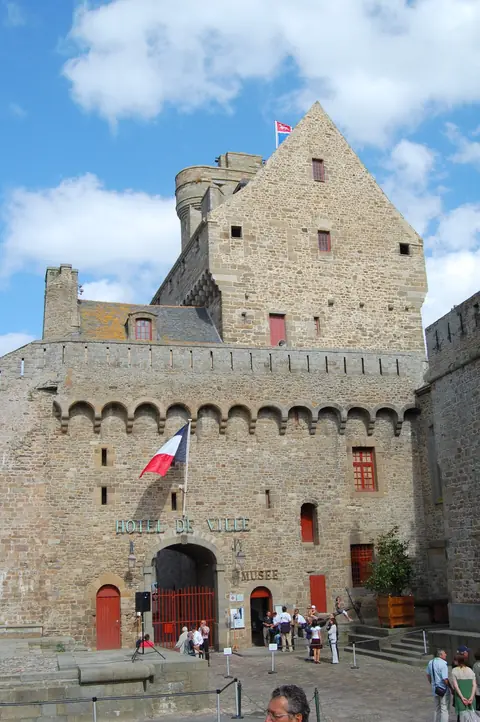
Saint-Malo ramparts
Saint-Malo, the walled corsair city on the Brittany coast, was largely rebuilt after the Second World War, and its granite ramparts make a complete w…
Day 6: Cap Fréhel and the north coast (about 4½ hours)
Walk the cliffs of Cap Fréhel, between the lighthouse and Fort la Latte, then go on to the pink granite coast at Ploumanac'h and the prehistoric Cairn de Barnenez. Stay near Morlaix.

Cap Fréhel and Fort la Latte
A spectacular headland on Brittany's Emerald Coast, with pink and grey sandstone cliffs over 70 metres high, purple heather and gorse, and colonies o…

Cairn de Barnenez
One of the oldest monuments in the world: a long stepped mound of stone built around 4,500 BC, older than the pyramids of Egypt, on a headland above …
Day 7: Crozon (about 1½ hours)
Drive to the Crozon peninsula, with cliffs, coves and sea caves, for a day of walking and beaches. Eat a galette.
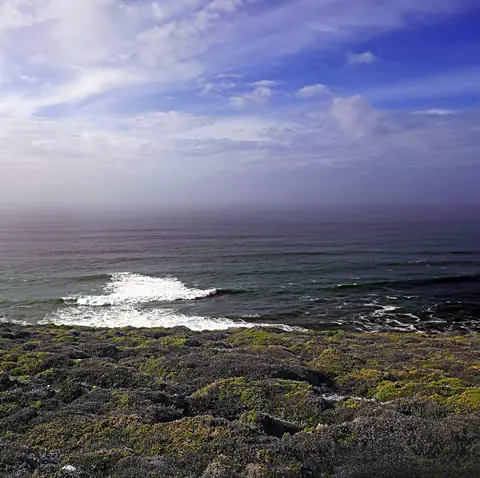
Crozon peninsula
A cross-shaped peninsula in Finistère with some of Brittany's most spectacular coast: the cliffs of Cap de la Chèvre, the Pointe de Penhir with its r…
Day 8: Pointe du Raz to Carnac (about 4 hours)
Go out to the wild Pointe du Raz, the western tip, then drive along the south coast by Quimper to Carnac.

Pointe du Raz
A dramatic rocky point at the western tip of Brittany, jutting into the Atlantic, with the lighthouses of La Vieille and Ar Men in the swirling curre…
Day 9: Carnac and Quiberon, then home (about 1½ hours)
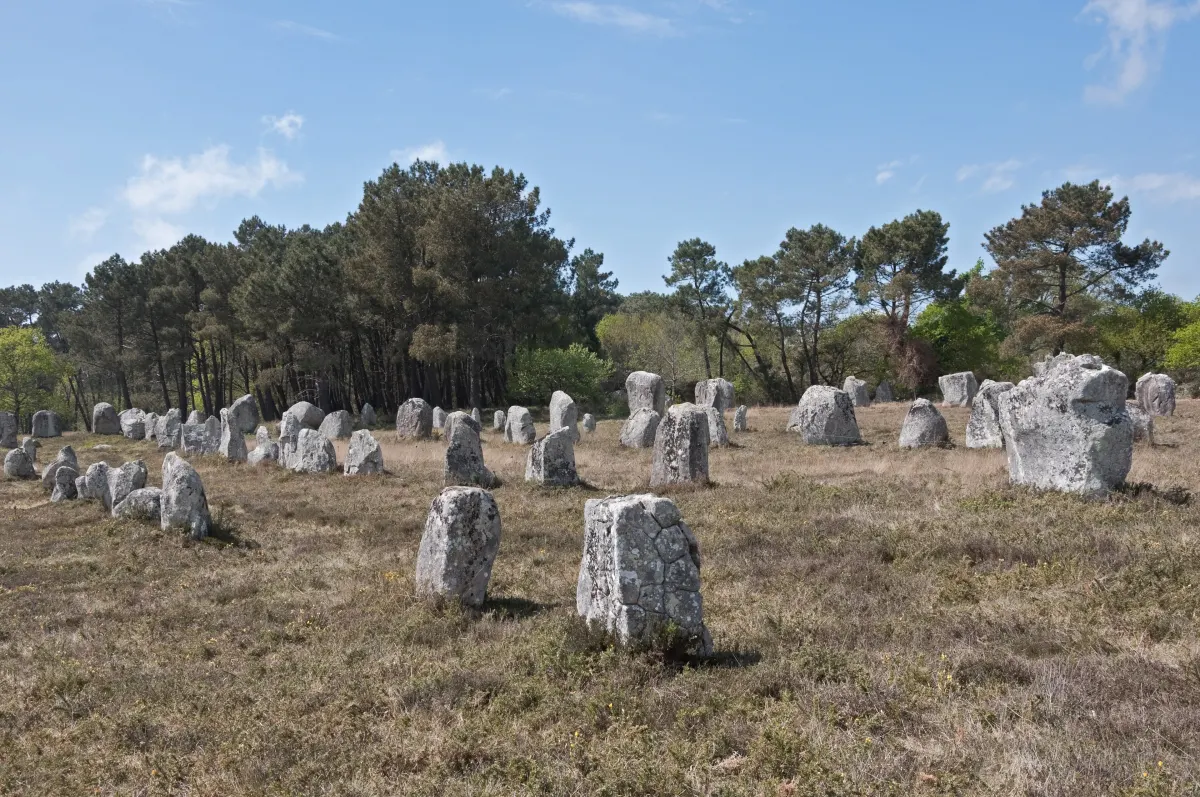
See the rows of standing stones and the Locmariaquer megaliths. If you can, walk the Côte Sauvage on the Quiberon peninsula. Return the car in Vannes, and take the train.

Carnac standing stones
More than 3,000 prehistoric standing stones, set up in long rows over 4 km of countryside by people living here between about 4500 and 3300 BC.
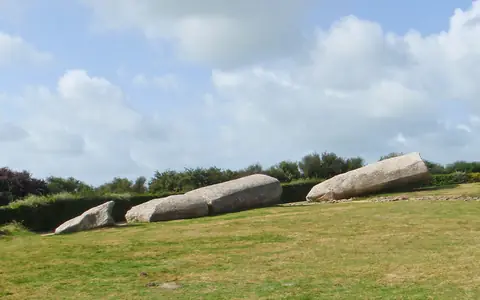
Locmariaquer megaliths
A remarkable group of Neolithic monuments near the Gulf of Morbihan: the Great Broken Menhir of Er Grah, once over 20 metres tall and the largest sta…

Côte Sauvage, Quiberon
The wild western shore of the Quiberon peninsula, where Atlantic waves crash against granite cliffs, arches and coves.
With more time
- In Normandy, Cap de la Hague, the tip of the Cotentin.
- In Brittany, Belle-Île, by ferry from Quiberon.



Comments
No comments yet.