
Driving in France: priority to the right, tolls without barriers, low-emission stickers and speed cameras
Driving is the best way to see the countryside, and the roads are good. Cars drive on the right. Cities are another matter: park at the edge and use the tram.
Documents and what to carry
- EU and UK licences are fine. Licences from elsewhere are generally accepted for a short visit, but if yours isn't in French, carry an international driving permit or an official translation as well, as hire companies often ask for it.
- Carry the insurance and registration papers, a warning triangle and a reflective jacket you can reach without getting out of the car.
- Seat belts are compulsory. Children under 10 go in the back, in a child seat if they're small enough.
- Hands-free only: holding a phone or wearing earphones is an offence, even at a red light. So is using a device that detects speed cameras.
Speed limits
- Motorways: 130 km/h, 110 in rain. Dual carriageways with a central barrier: 110, 100 in rain.
- Other roads: 80 km/h, unless signs say 90: each département can raise it. Towns: 50, and 30 in most of Paris and many other cities. In fog with under 50 m visibility, it's 50 everywhere.
- There are many cameras, including average-speed ones and unmarked cars. The limit counts from the town's name sign and ends at the sign with the name crossed out. Fines reach hire-car drivers at home.
Priority to the right
- Unless signs say otherwise, traffic coming from the right has priority, even from a small side street in a town. A yellow diamond sign means your road has priority; a crossed-out diamond means it no longer does.
- At most roundabouts, traffic already on the roundabout has priority. At Paris's Arc de Triomphe, it's the other way round: cars entering have priority.
- Give way to pedestrians who are crossing or about to cross.
Alcohol
The limit is 0.5 g per litre of blood, lower than in England, and 0.2 for new drivers. Police do random breath tests, and for drugs too. If you're going to drink, don't drive.
Tolls
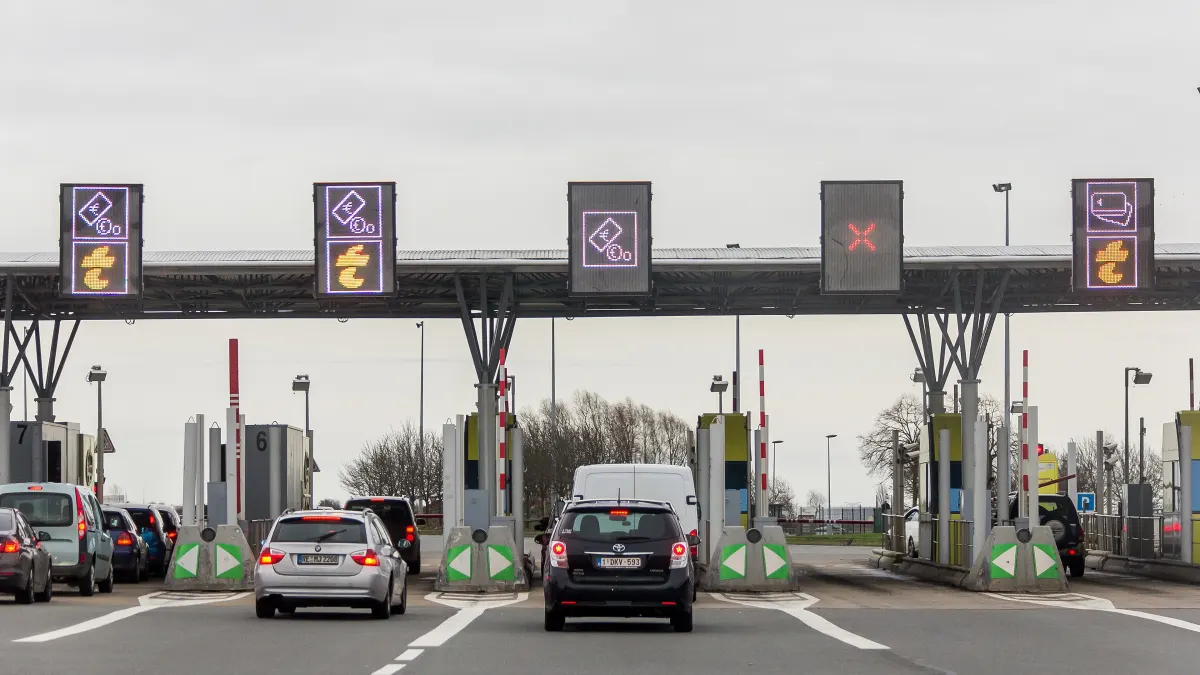
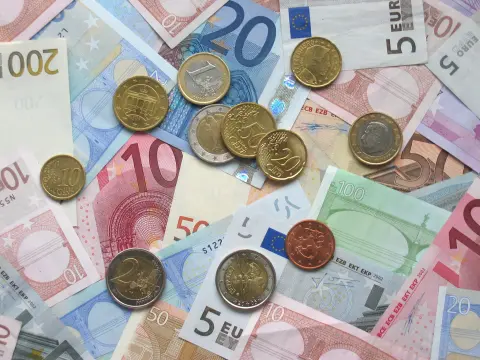
- Most motorways (autoroutes, marked A) charge. Take a ticket at the first barrier, and pay at the last by card, in cash or with a tag (télépéage). Keep the lane for cards or coins, not the orange "t", which is for tags only.
- Free-flow roads have no barriers. Cameras read your number plate on the A13 and A14 between Paris and Normandy and the A79 in the Allier, and on a few other stretches. Pay within 72 hours on the operator's website (sanef.com for the A13 and A14), or at a tobacconist or newsagent displaying Nirio. If you don't, you get a bill with €90 added, €10 if you pay within 15 days, and a €375 fine if you still don't.
- In a hire car, pay within the time yourself, as the company will add its own fee if the bill comes to it. Ask whether the car has a tag, and what it costs.
- Beware of fake texts and emails demanding a toll. Go to the operator's website yourself.
- Non-toll roads are slower and prettier. Many of Brittany's roads are free.
- A13 tunnel: the Saint-Cloud tunnel out of Paris towards Normandy is closed from 16 November 2026 to the end of August 2027, and the Saint-Cloud viaduct is planned to close in both directions in July and August 2027. Follow the signs, and check Bison Futé before you set out.
Low-emission stickers (Crit'Air)
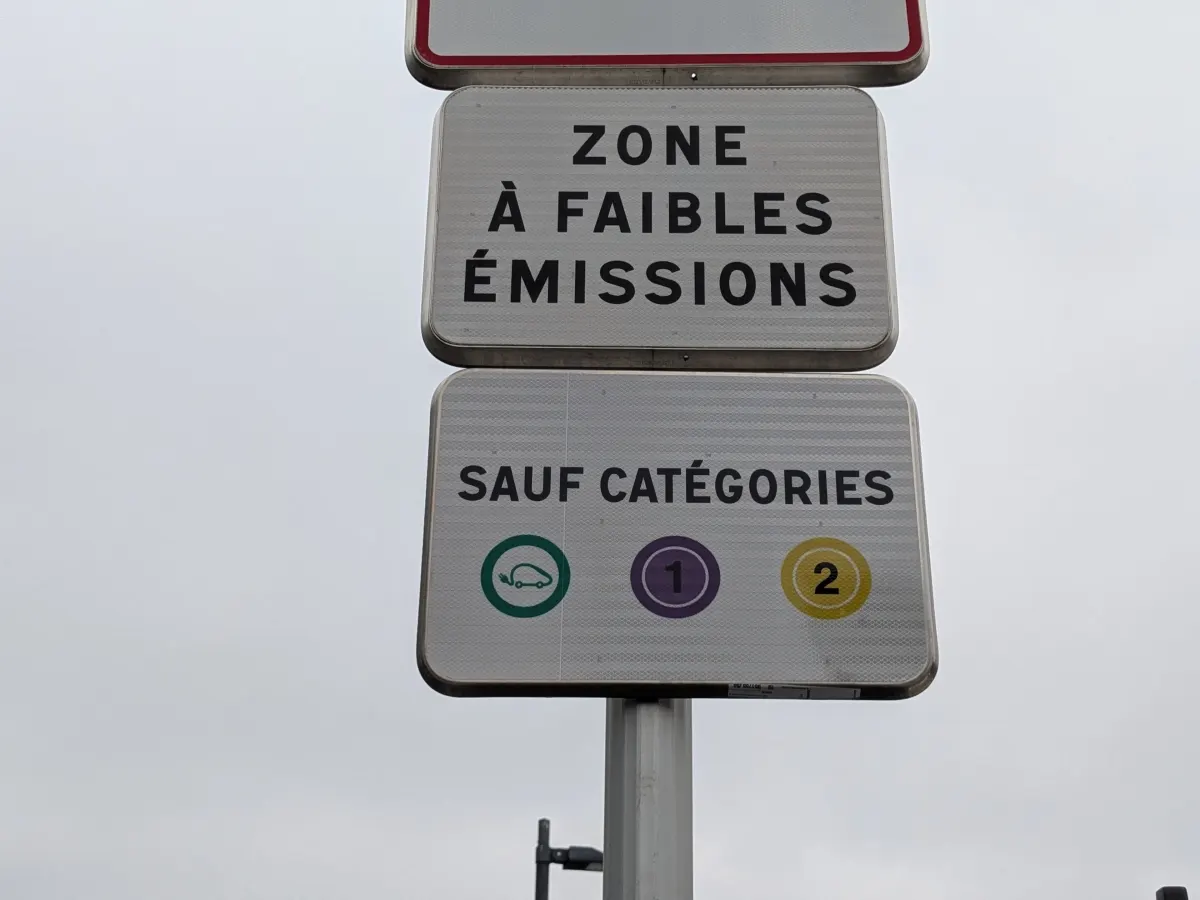
- Many cities have a low-emission zone (ZFE), and every car that drives in one must show a Crit'Air sticker, including foreign cars and even electric ones. It costs a few euros from the official website, and can take 10 days or more to arrive by post. Order it before you leave home, and beware of copycat websites. Hire cars in France already have one.
- Paris: cars with Crit'Air 3, 4 or 5, or none, can't drive in Greater Paris from 8 am to 8 pm, Monday to Friday, apart from public holidays. Drivers of Crit'Air 3 cars have had warnings rather than fines, until the end of 2026. Lyon and Grenoble are already strict, and other cities tighten their rules in 2027.
- Parliament voted to abolish the zones, but in May 2026 the Constitutional Council struck that down, so they still apply. This could change again: check just before you go.
- Fines start at €68.
- Paris's limited traffic zone (ZTL): through traffic has been banned from central Paris (roughly the 1st to the 4th arrondissements) since November 2024. Driving to a hotel, shop or car park inside is allowed, but keep a booking as proof. Other cities have similar zones, with signs saying zone à trafic limité.
Parking
- Pay at a machine or with an app such as PayByPhone, and enter your number plate. Parking is often free from noon to 2 pm and on Sundays, but check the sign. A dashed yellow line means no parking.
- Paris charges visitors with heavy cars (SUVs) three times as much to park on the street. Use an underground car park.
- In blue zones you need a cardboard parking disc (from a tobacconist), with your time of arrival on it.
- Leave nothing in sight, not even a coat, and unload at your hotel before you go sightseeing. Break-ins are common at beaches, viewpoints and motorway rest stops: see Safety.
Winter and mountains
- From 1 November to 31 March, cars in mountain areas must have winter tyres marked 3PMSF or carry chains or snow socks for two wheels. The rule covers parts of 34 départements, marked with signs: check with your hire company.
- High passes such as the Galibier and the Iseran close in winter and often stay shut until May or June.
Fuel and other things
- Petrol is SP95-E10 or SP98, and diesel is gazole or B7: don't mix them up. Unstaffed supermarket pumps are cheapest. They put a temporary hold of up to about €150 on your card.
- Electric charging is good on motorways. Foreign cards work at most fast chargers, but slow ones may need an app.
- In the south, the mistral can make a car hard to hold: slow down. Traffic is worst on the summer "black Saturdays": check Bison Futé, which is the government's traffic forecast.
- If you break down on a motorway, use the orange emergency phone. You'll be towed by an approved garage.

Comments
No comments yet.