
Getting around France: trains and how to book them, the Paris metro and Navigo, buses and flights
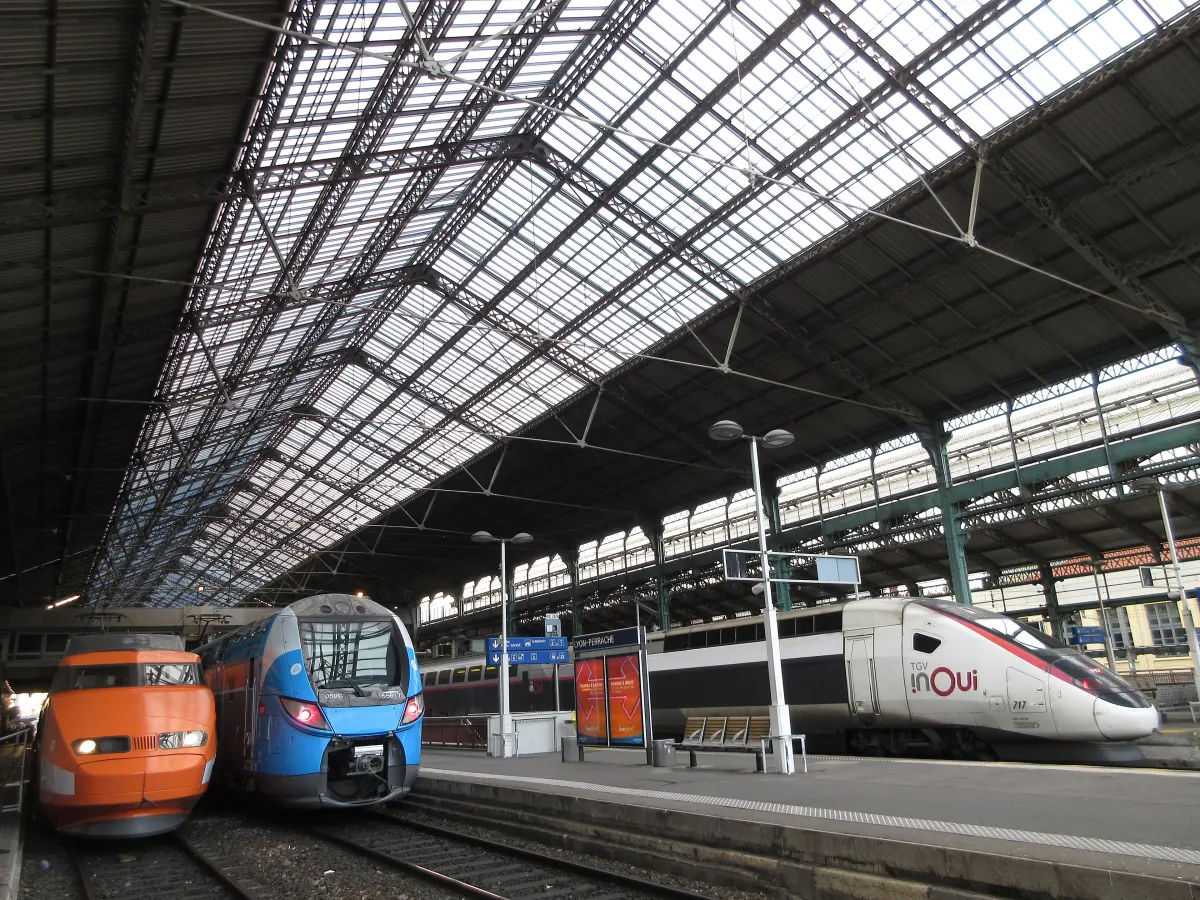
Fast trains make France easy without a car. Paris to Lyon takes 2 hours, to Marseille a little over 3 and to Bordeaux just over 2. You need a car only for the countryside, such as the Luberon, the Dordogne or the far west of Brittany. See Driving.
Types of train
- TGV INOUI: the ordinary high-speed trains. You must book a seat, and the price rises as the train fills.
- OUIGO: SNCF's cheap high-speed and slower trains, on fewer routes and sometimes from less convenient stations. Seats are tighter and extras cost more.
- Intercités: long-distance trains on lines without a TGV, such as Paris to Limoges. Most need a booking.
- TER: regional trains run by each region, such as Nice to Menton, or Strasbourg to Colmar. Tickets are mostly a fixed price, so there's no need to book early and they don't sell out.
- Trenitalia runs its own fast trains between Paris, Lyon and Marseille, and Spain's Renfe between Barcelona, Madrid, Lyon and Marseille. They can be cheaper, so compare.
Booking
- Book on SNCF Connect (website and app, in English) or at a station. Tickets usually go on sale three to five months ahead, in blocks; the cheapest go first, especially for Fridays, Sundays and school holidays.
- Changing your mind: TGV INOUI and Intercités tickets can be exchanged or refunded free up to 7 days before. After that, TGV INOUI takes off €19 for each person and trip. OUIGO tickets aren't refundable and cost €19 to change.
- Download your ticket to your phone. For TER paper tickets, validate them in the yellow machine on the platform before you board.
- Platforms are shown only about 20 minutes before the train leaves. Doors close two minutes before departure, and OUIGO asks you to be there 30 minutes ahead.
- With an Interrail or Eurail pass, you still need a seat reservation on TGVs, from about €10. Places for pass holders are limited, so book early. Regional trains don't need one.
- On strike days check the train the evening before. If SNCF cancels it, you can have a refund or a free exchange.
Luggage
- TGV INOUI and Intercités: two bags of up to 70 x 90 x 50 cm and one bag of up to 40 x 30 x 15 cm are included, plus one special item, such as skis. Label everything. There are charges of €50 or more for bags over the limit.
- OUIGO: the included bags are smaller and bigger ones cost extra, much less if you pay online. Check the sizes when you book.
- Lockers and left-luggage offices at the big stations need an X-ray check, so leave time.
Night trains
Intercités de nuit run from Paris to Nice, Toulouse, the Pyrenees, Briançon in the Alps and Aurillac. You sleep in a couchette (four or six to a compartment) or a reclining seat. Couchettes go quickly, and timetables are often cut by track work. Some trains only run at weekends or in the holidays.
Getting around Paris
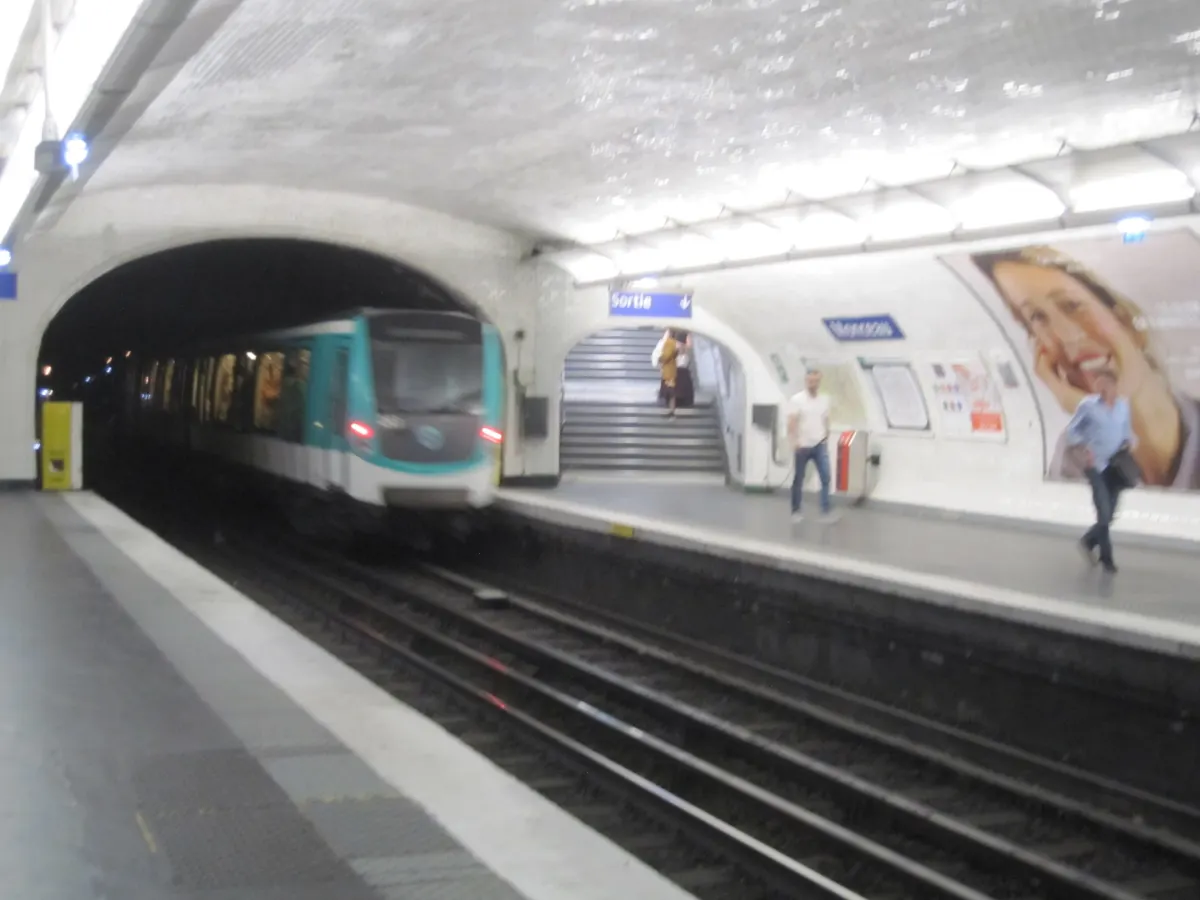
- The metro is quickest, the RER goes faster and further, to Versailles, Disneyland Paris and the airports, and buses give you the view. The metro runs from about 5.30 am to 1.15 am, an hour later on Friday and Saturday nights. Night buses (Noctilien) cover the rest.
- A Metro-Train-RER ticket costs €2.55 in 2026, whatever the distance in the Paris region, except the airports. It includes changes between lines for two hours. A Bus-Tram ticket costs €2.05. They are separate: a metro ticket doesn't let you change on to a bus.
- Paper metro tickets have been withdrawn. Buy a Navigo Easy card for €2 (one for each person, they can't be shared) and load tickets on it at a machine, or load them on your phone with the Île-de-France Mobilités or Bonjour RATP app. The airport ticket can't go on the same Navigo Easy card as ordinary metro tickets.
- Navigo Day (Navigo Jour) costs €12.30 for everything except the airports. A weekly Navigo costs €32.40, plus €5 for a Navigo Découverte card with your photo, and runs Monday to Sunday only. It includes the airports, so it's good value for a stay that starts on a Monday.
- Bank cards: buses take contactless, at €2.55, which covers that one ride only. The metro doesn't, except at the Orly exit of line 14 and the Montmartre funicular (€3.35 and €2.55). Line 1 is due to have readers in July 2027.
- Keep your ticket until you're out of the station, on the RER too. Inspectors fine people without one on the spot.
- Children under 4 travel free; children under 10 pay half price.
- Bikes: Vélib' hire bikes are everywhere, and the cycle lanes are good. Ride on the road, not the pavement.
- Taxis and apps: take official taxis with a lit sign on the roof, or book with G7, Uber or Bolt.
Other cities
Lyon, Marseille, Toulouse, Lille and Rennes have a metro, and Lyon, Nice, Bordeaux, Strasbourg and many others have trams. Validate your ticket when you get on, or tap your bank card: most of these cities let you. A tap usually stops charging you after a day's worth of rides.
Coaches
FlixBus and BlaBlaCar Bus link the cities more cheaply than trains, but slowly, and Paris to Nice is most of a day. BlaBlaCar is also a popular car-sharing app. Most villages have only a school-day bus, and no Sunday service.
Corsica and flights
- Car ferries cross to Corsica from Marseille, Toulon and Nice, in 6 to 12 hours, often overnight, and from Italy. Book ahead for summer.
- Flying within France is only worth it for Corsica, or for a long crossing such as Nice to Nantes. A few short routes, such as Paris Orly to Lyon and Bordeaux, have been banned since 2023 because the train is quick enough.
See also Museums and sights and 5 days in Paris.


Comments
No comments yet.