
Safety in Israel: current travel warnings, rocket alerts, shelters and the West Bank
Before you plan a trip to Israel, read your own government's travel advice, and keep reading it until you leave: it has changed often since the war began in October 2023, and the situation can change in hours. This article sums up the advice as of late November 2026.
What governments advise
- UK (gov.uk, updated 18 November 2026): advises against all travel to Gaza and within 500 metres of the Gaza border; to the far north, roughly north of Route 89 between Nahariya and Dalton, and north of Route 91 across the Golan Heights (the roads themselves excepted), and within 500 metres of the ceasefire line in the Golan; to Sheba'a Farms and Ghajar; and to the Tulkarm, Jenin and Tubas areas of the West Bank. It advises against all but essential travel to the rest of the West Bank, except East Jerusalem, the Bethlehem area, Ramallah, Jericho and the areas south of it, and the main roads between Jerusalem and Tel Aviv. The rest of Israel isn't covered by a warning, but the UK says there's a risk of rocket, missile and drone attacks throughout Israel.
- USA (travel.state.gov): Israel is at Level 3, Reconsider travel, because of terrorism and civil unrest, with higher levels for some areas.
- Australia (smartraveller.gov.au, updated 15 October 2026): Reconsider your need to travel to Israel overall, and Do not travel to the border areas with Gaza, Lebanon and Syria.
- The West Bank and Gaza have their own advice pages (the UK's is called the Occupied Palestinian Territories, Australia's Palestine): read those too if you plan to visit Bethlehem, Jericho or anywhere else there.
- Your travel insurance may not cover you if you go against your government's advice, and many policies exclude war, so check yours before you book.
Why
- Israel was in open conflict with Iran in early 2026, until a ceasefire on 8 April 2026, and a cessation of hostilities with Hezbollah in Lebanon was announced on 16 April 2026, though the UK says fighting continues. The Houthis in Yemen keep firing missiles and drones at Israel: drones hit Eilat in September 2025.
- Missiles and drones can reach most of the country, and intercepted missiles can drop fragments.
- Flights can be cancelled and the airspace can close with little warning, and land borders can close too, so you could be stuck for days. Have a plan, extra money and medicine for that.
- Governments describe the threat of terrorism as high, with shootings, stabbings and car rammings in recent years, including in Jerusalem and Tel Aviv.
Rocket and missile alerts
When rockets, missiles or drones are fired at Israel, sirens sound in the areas at risk and phones there get an alert. Depending on how close you are to where they're fired from, you have from a few seconds to a few minutes to reach shelter.
- Install the Home Front Command app before you go (search for "Home Front Command" in your app store; it works in English), and set it to the areas you're in. The Home Front Command's site, oref.org.il, explains what to do, and its hotline is 104.
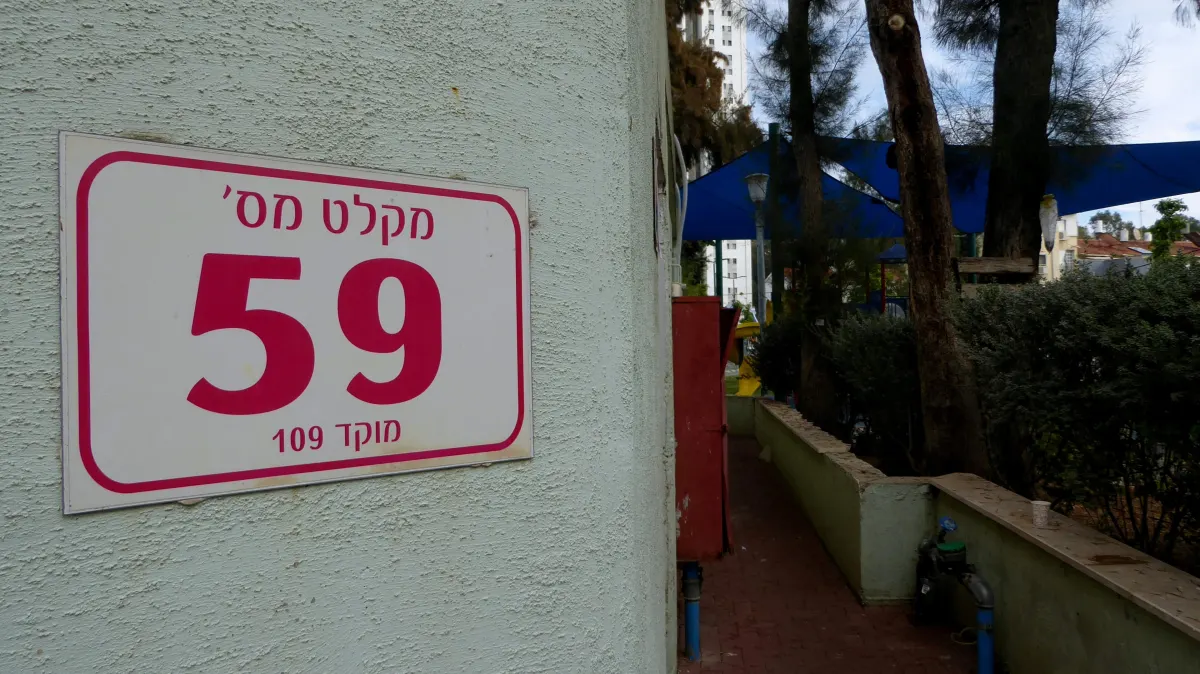
- Know where you'd shelter wherever you stay. Most homes and many hotels have a reinforced room, called a mamad (in a flat) or a mamak (on each floor), and there are public shelters, marked with signs, in towns and cities (and concrete shelters at bus stops in some areas). Ask your host or hotel when you arrive.
- If there's no shelter, go to a stairwell with no windows or outside walls and stay in the middle of it. Outdoors, go into a building if you can, or lie down and cover your head. In a car, stop at the side of the road and get out to a building or lie down.
- Stay in shelter for about 10 minutes after the siren, or until the app says you can leave.
- Don't touch fragments of missiles or drones, or any unusual object.
- There are no sirens in Gaza, or in the West Bank outside Israeli settlements.
The West Bank
- Many visitors take a day trip to Bethlehem or Jericho, but the West Bank has separate travel advice (see above), and parts of it are under all-travel warnings. Attacks, settler violence and military operations have increased, and checkpoints can close without warning, particularly on holidays and when tension is high.
- You need your passport and entry slip to cross. Israeli rental car insurance doesn't usually cover the West Bank, so tour groups and Palestinian taxis are the usual way in.
Day to day
- Protests: avoid demonstrations, which are bigger on Thursday and Saturday evenings, after Friday prayers, and around anniversaries and religious holidays. Tension in Jerusalem's Old City often rises during Ramadan.
- Security checks are normal: expect bag checks at shopping centres, stations, museums and the Western Wall, and armed soldiers and police in the streets. Follow their instructions, and don't leave bags unattended.
- Don't hitchhike.
- Don't drive into ultra-Orthodox neighbourhoods of Jerusalem on Shabbat: cars have been stoned. See Shabbat and holidays.
- GPS signals are often jammed, so map apps can show you somewhere else entirely: see Phones and apps.
- Ordinary crime is low, but watch for pickpockets in crowded markets and on beaches.
Emergency numbers
- Police: 100
- Ambulance (Magen David Adom): 101
- Fire: 102
- Home Front Command: 104
Register with your embassy's travel alert service if it has one (the UK's FCDO email alerts, the US STEP, Australia's Smartraveller subscriptions), so you hear about changes.
See also: Arriving in Israel and Health in Israel.


Comments
No comments yet.