Historic sites
Temple of Heaven, Beijing
Beijing
A Ming dynasty complex where emperors prayed for good harvests, with the circular, triple-roofed Hall of Prayer for Good Harvests, a masterpiece of C…
Nearly 500 Buddhist cave temples carved into a cliff in the desert near Dunhuang, an oasis on the Silk Road, with murals and statues painted over a t…
A valley in the mountains of northern Sichuan with lakes of astonishing blue and green, waterfalls and Tibetan villages, a UNESCO World Heritage Site.
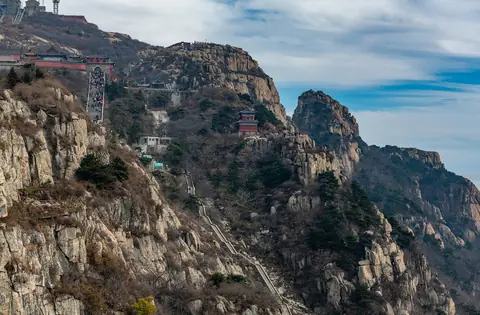
The most revered of China's five sacred Taoist mountains, where emperors came for more than 2,000 years to perform sacrifices to heaven and earth.
A range of granite peaks rising above a sea of clouds, with twisted pine trees growing from the rocks, which inspired centuries of Chinese painting a…
The former winter palace of the Dalai Lamas, a huge red and white building rising up the Red Hill above Lhasa, at 3,700 m, a UNESCO World Heritage Si…
Thousands of towering sandstone pillars rising from forested valleys, often wrapped in mist, which inspired the floating mountains in the film Avatar.
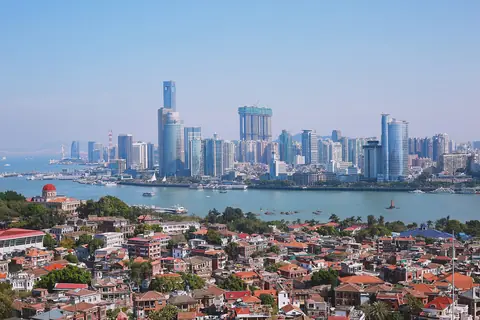
A small, car-free island across a narrow channel from Xiamen, where foreign consulates, merchants and wealthy overseas Chinese built villas, churches…
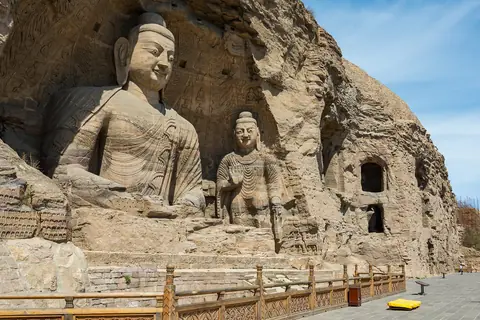
More than 250 caves carved into a sandstone cliff about 1 km long, with about 51,000 Buddhist statues, made in the 5th century under the Northern Wei…
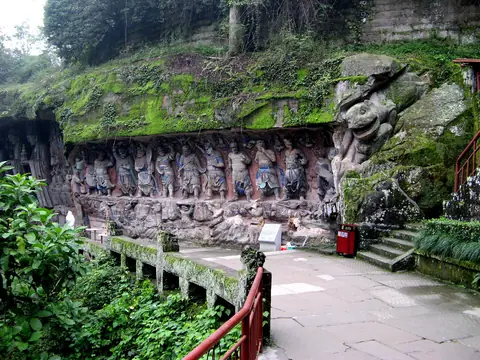
A large collection of Buddhist, Taoist and Confucian rock carvings in the hills west of Chongqing, made mainly between the 9th and 13th centuries.
Suzhou's classical gardens, a UNESCO World Heritage Site, are miniature landscapes of ponds, rocks, pavilions and windows framing views.
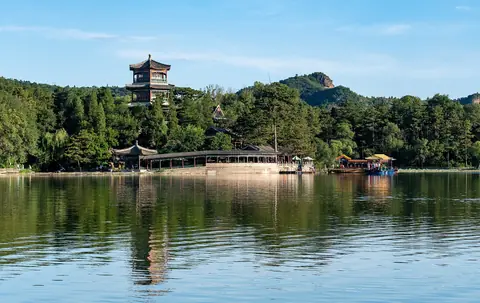
The vast summer retreat of the Qing emperors, in the hills about 230 km north-east of Beijing, with palaces, lakes, pavilions and a large walled park.
A landscape of red sandstone cliffs, rounded peaks and clear rivers in the north of Fujian, and the home of famous oolong teas such as Da Hong Pao.
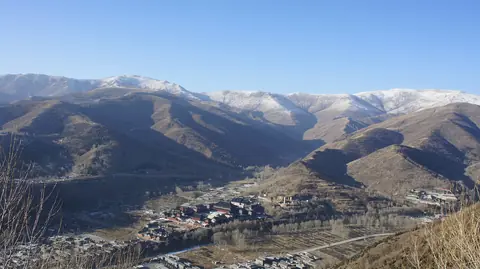
One of the four sacred mountains of Chinese Buddhism, a cluster of five flat-topped peaks with dozens of temples in the valley of Taihuai between them.
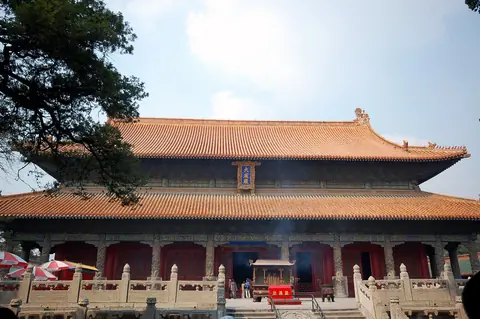
The home town of Confucius, the philosopher whose teachings have shaped Chinese life for 2,500 years.
A famous lake surrounded by hills, pagodas, temples and gardens, celebrated by poets for centuries, a UNESCO World Heritage Site.
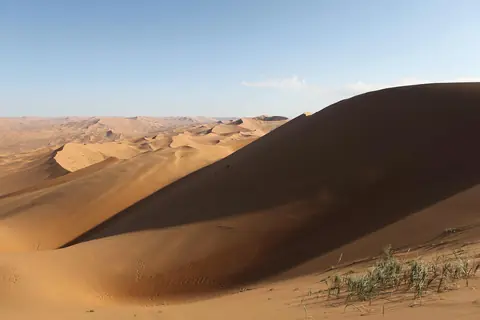
A desert in western Inner Mongolia that has some of the tallest stationary sand dunes on earth, up to about 500 m high, with more than 100 small lake…
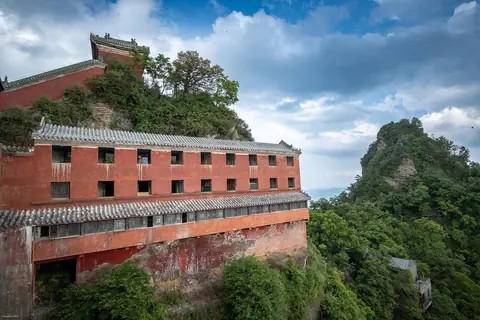
A range of forested peaks in northern Hubei that is one of the holiest places of Taoism and the home of Wudang tai chi and martial arts.
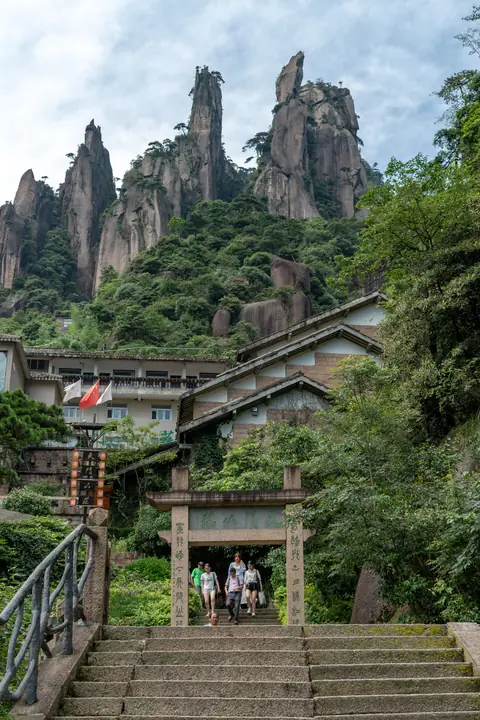
A Taoist mountain in north-eastern Jiangxi with granite pillars and peaks shaped like people and animals, rising out of forest and cloud.
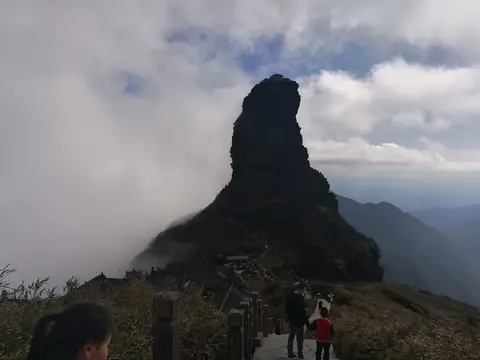
The highest peak of the Wuling Mountains in north-eastern Guizhou, a sacred Buddhist mountain since the Ming dynasty and a UNESCO World Heritage Site…
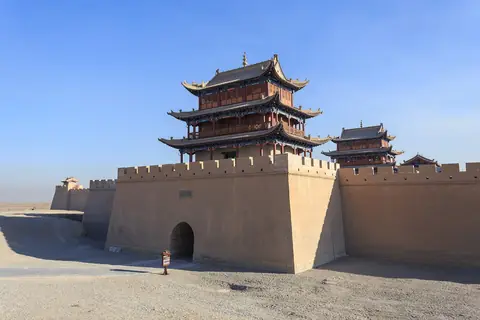
The great fortress at the western end of the Ming Great Wall, built in 1372 in a narrow pass between the snow-capped Qilian Mountains and the Black M…
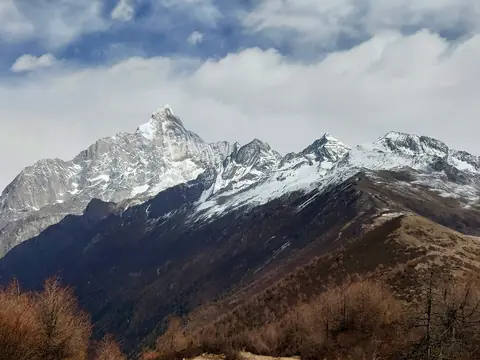
Four snowy peaks, the highest 6,250 m, rising above wide valleys of meadows, forest and streams in western Sichuan, often called the "Alps of the Eas…
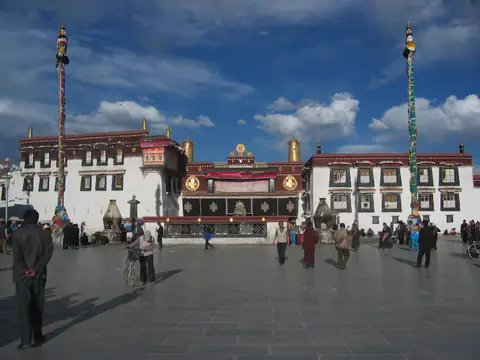
The most sacred temple in Tibet, built in the 7th century by King Songtsen Gampo, possibly for his Chinese and Nepali wives.
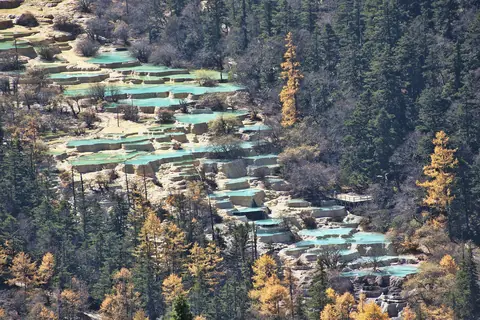
A valley in the mountains of northern Sichuan where mineral-rich water has built thousands of terraced pools, rimmed in yellow and cream travertine, …
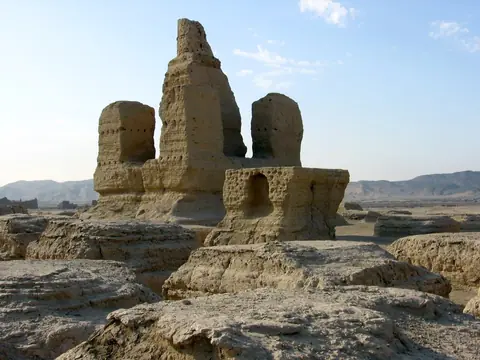
The ruins of an ancient city built on a long, narrow island of land between two rivers, about 30 m above the valley floor, west of Turpan.
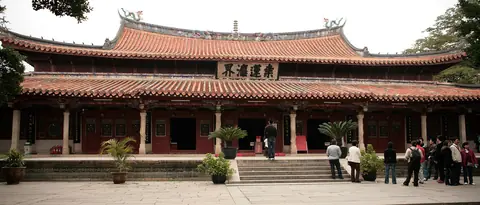
The largest Buddhist temple in Fujian, founded in AD 686, in the old port city of Quanzhou, which Marco Polo knew as Zayton, one of the greatest port…
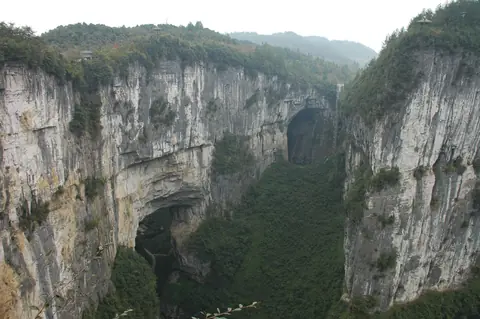
A landscape of huge sinkholes, gorges and natural stone bridges in the hills of Chongqing, part of the South China Karst World Heritage Site.
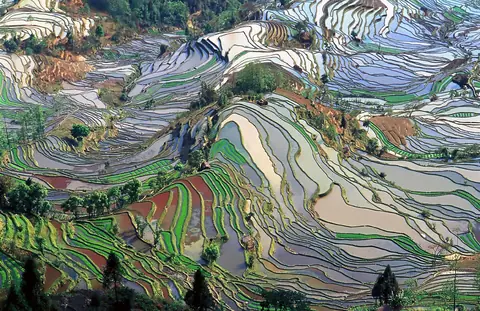
Thousands of rice terraces cut into the steep mountainsides of southern Yunnan by the Hani people over more than 1,300 years, a UNESCO World Heritage…
A vast imperial garden around Kunming Lake, the retreat of the Qing emperors and Empress Dowager Cixi, a UNESCO World Heritage Site.
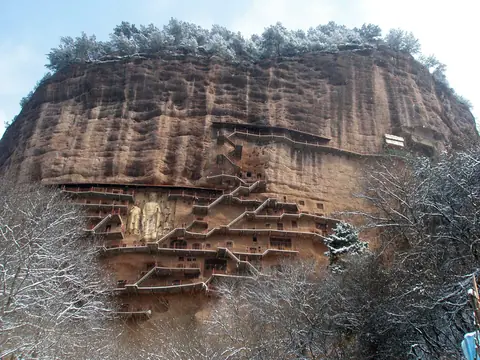
About 200 Buddhist caves cut into the side of a steep red hill shaped like a haystack, which is what Maijishan means, in a green, wooded area of sout…
Huge round and square earthen houses built by the Hakka people from the 12th century, each home to a whole clan, with rooms around a central courtyar…
More than 2,000 caves and niches along the Yi River with around 100,000 Buddhist statues carved between the 5th and 10th centuries, from tiny figures…
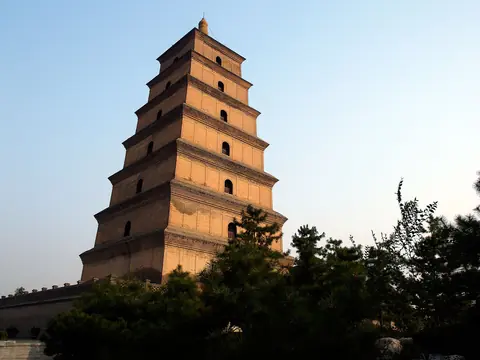
A seven-storey brick pagoda built in AD 652 to store the Buddhist scriptures that the monk Xuanzang brought back from India, a journey that inspired …
One of the best-preserved walled towns in China, with Ming and Qing dynasty streets, courtyard houses, temples, and the first banks in China, a UNESC…
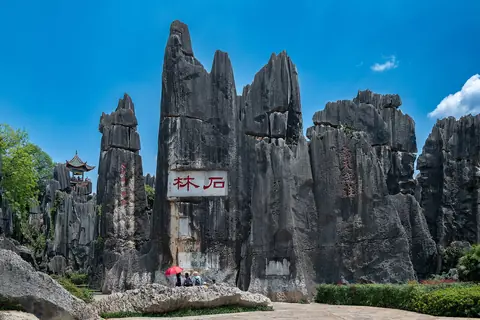
A labyrinth of grey limestone pillars, some more than 30 m tall, standing close together like the trees of a forest, part of the South China Karst Wo…
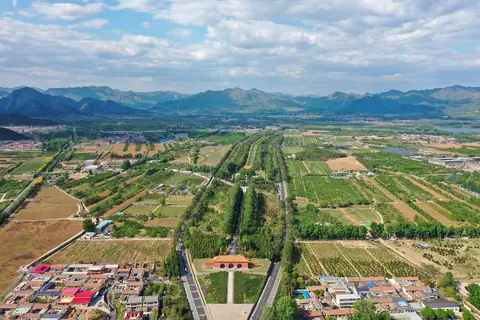
The burial ground of 13 of the 16 emperors of the Ming dynasty, in a quiet valley at the foot of the mountains north of Beijing, chosen for its good …
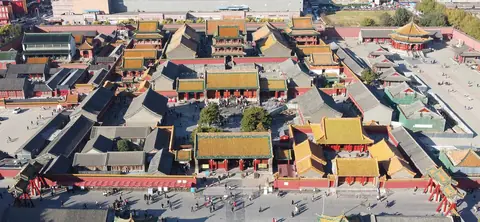
The palace of the early Manchu rulers, Nurhaci and Hong Taiji, built in 1625 before they conquered China and founded the Qing dynasty.
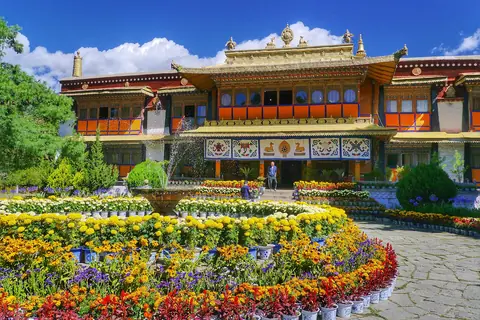
The summer palace of the Dalai Lamas, a large walled park on the western side of Lhasa with palaces, pavilions and gardens, first built in the 1750s.
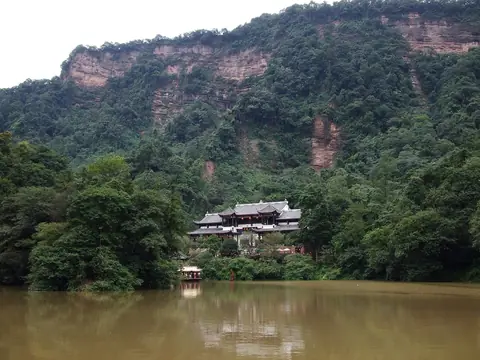
A forested mountain near Chengdu that is one of the birthplaces of Taoism, dotted with old temples, pavilions and caves along stone paths shaded by c…
An old town of the Naxi people, with cobbled lanes, wooden houses and canals, at the foot of the Jade Dragon Snow Mountain, a UNESCO World Heritage S…
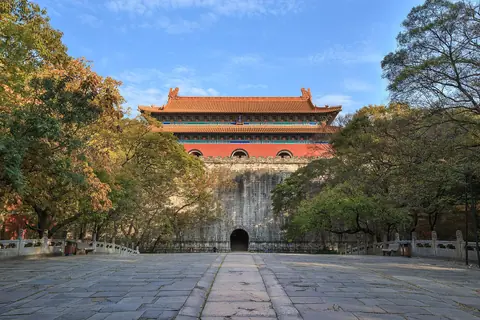
The tomb of Zhu Yuanzhang, the Hongwu emperor, who founded the Ming dynasty in 1368 and made Nanjing his capital.
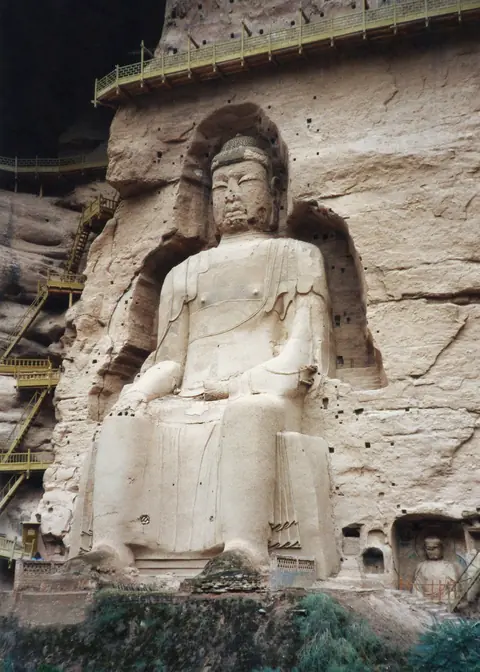
A series of Buddhist caves and niches carved into the cliffs of a gorge on the Yellow River, about 80 km south-west of Lanzhou, from the 5th century …
The longest canal in the world, about 1,800 km from Beijing to Hangzhou, begun in the 5th century BC and joined into one waterway under the Sui dynas…
A village of white-walled Huizhou houses with black-tiled roofs, built around a half-moon pond and a lake that reflect the houses, with water channel…
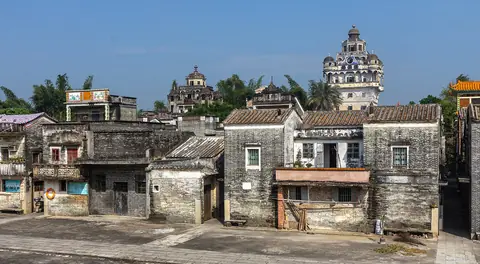
Fortified multi-storey towers, more than 1,800 of them, built in the villages around Kaiping in the early 20th century, mostly by families of people …
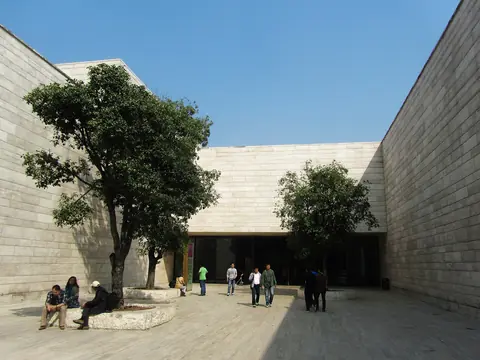
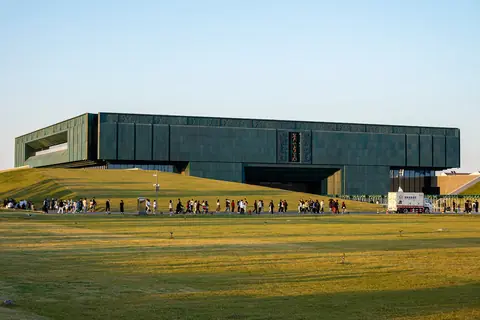
A museum about the Liangzhu culture, a Neolithic civilisation of the Yangtze delta from about 3300 to 2300 BC, known for its beautiful jade.
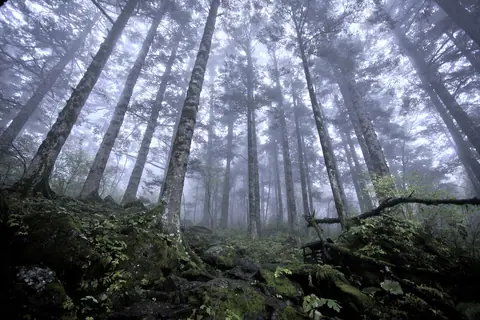
A remote area of forested mountains in western Hubei, named after Shennong, the legendary emperor who tasted plants to discover medicines.
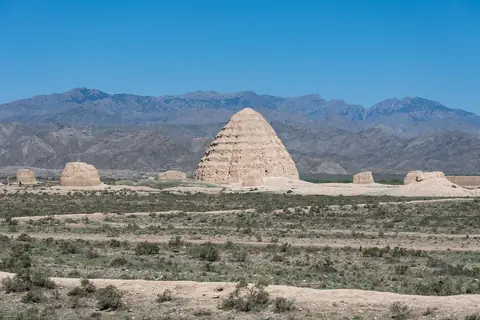
The tombs of the emperors of the Western Xia, a kingdom of the Tangut people that ruled north-western China from 1038 until it was destroyed by Gengh…
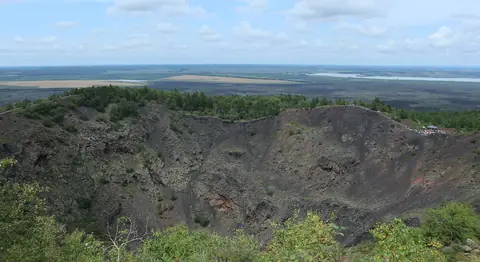
A volcanic field in northern Heilongjiang, with 14 volcanoes and five lakes linked like beads on a string, formed when lava from the most recent erup…
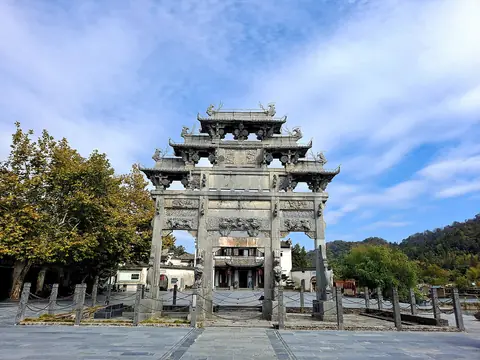
An old Hui-style village near Huangshan, with more than 120 houses from the Ming and Qing dynasties, built by rich merchants of the Hu family.
The site of Yin, the last capital of the Shang dynasty from about 1300 to 1046 BC, where archaeologists found the oracle bones, inscribed turtle shel…
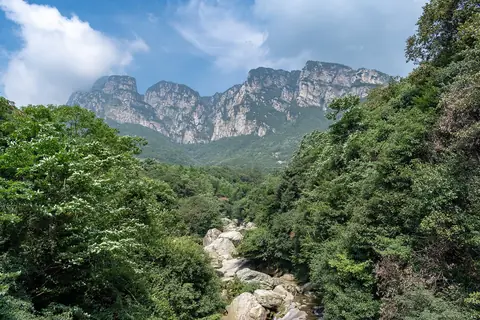
A wooded mountain range rising above the Yangtze River and Poyang Lake, famous for its waterfalls, clouds and views, which inspired Chinese poets and…
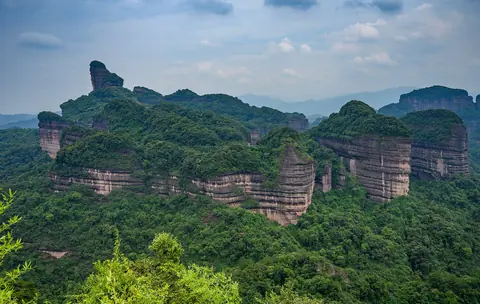
The mountain that gave its name to the "Danxia" landform, red sandstone shaped by erosion into cliffs, towers and rounded peaks, found across souther…
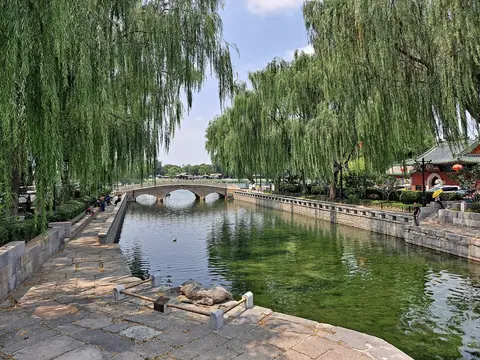
A long, narrow lake in Yangzhou, laid out as a series of classical gardens, pavilions and bridges along its banks.
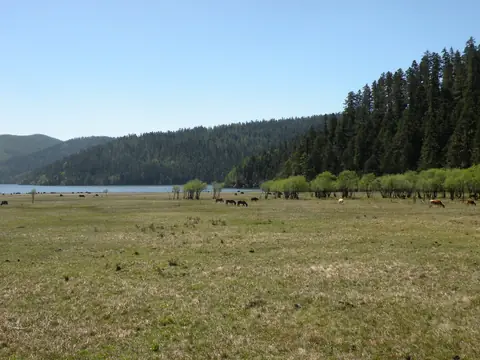
A national park of mountain lakes, meadows and forest about 20 km from Shangri-La, in the Tibetan region of north-western Yunnan, part of the Three P…
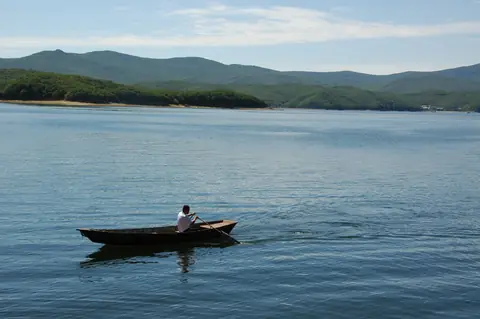
A long, winding lake in south-eastern Heilongjiang, formed about 10,000 years ago when lava from volcanoes dammed the Mudan River, surrounded by fore…