Buildings
Forbidden City (Palace Museum), Beijing
Beijing
The vast imperial palace of the Ming and Qing emperors, home to 24 emperors from 1420 to 1912, with nearly a thousand buildings inside its moat and r…
The former winter palace of the Dalai Lamas, a huge red and white building rising up the Red Hill above Lhasa, at 3,700 m, a UNESCO World Heritage Si…
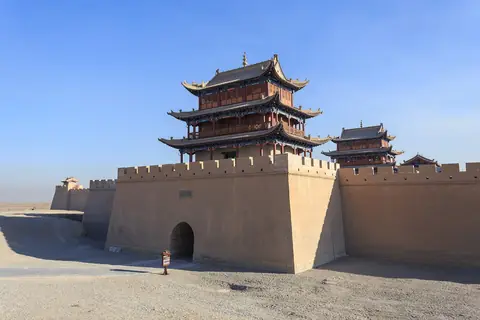
The great fortress at the western end of the Ming Great Wall, built in 1372 in a narrow pass between the snow-capped Qilian Mountains and the Black M…
A vast imperial garden around Kunming Lake, the retreat of the Qing emperors and Empress Dowager Cixi, a UNESCO World Heritage Site.
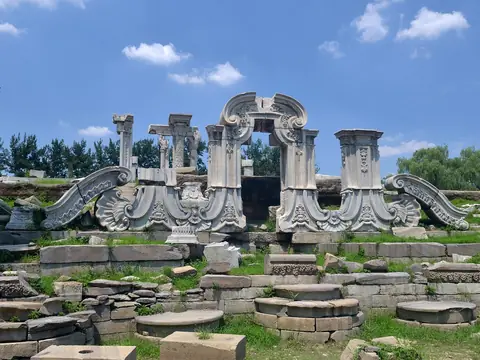
The ruins of what was once the greatest imperial garden in China, a huge complex of lakes, palaces and pavilions built by the Qing emperors in the 18…
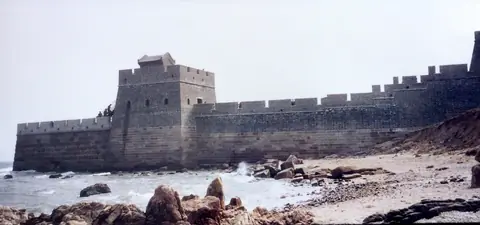
The eastern end of the main Ming Great Wall, where it meets the Bohai Sea, and the strongest fortress on the route between Beijing and Manchuria.
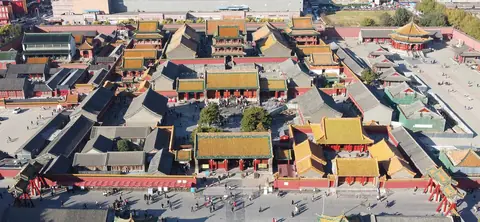
The palace of the early Manchu rulers, Nurhaci and Hong Taiji, built in 1625 before they conquered China and founded the Qing dynasty.
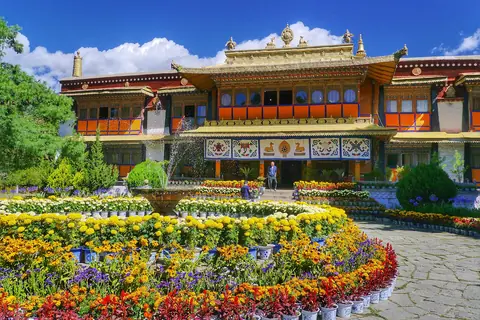
The summer palace of the Dalai Lamas, a large walled park on the western side of Lhasa with palaces, pavilions and gardens, first built in the 1750s.
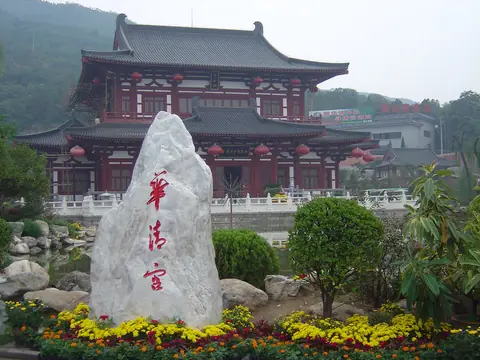
Hot springs at the foot of Mount Li, used as an imperial retreat for 3,000 years, best known as the place where the Tang emperor Xuanzong spent his w…
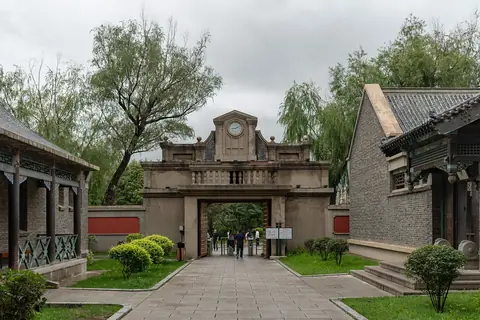
The palace of Puyi, the last emperor of China, who was set up by the Japanese as emperor of Manchukuo, their puppet state in Manchuria, from 1932 to …