Historic sites
Hadrian's Wall and Housesteads Roman Fort
Hexham, Northumberland
The wall built across northern England by the Emperor Hadrian from 122 AD to guard the Roman Empire's north-west frontier.
A castle on the Thames founded by William the Conqueror in the 1070s, which has served as a royal palace, a prison and a place of execution.
A fortress on an extinct volcano above Scotland's capital, the home of the Scottish crown jewels (the Honours of Scotland) and the Stone of Destiny.
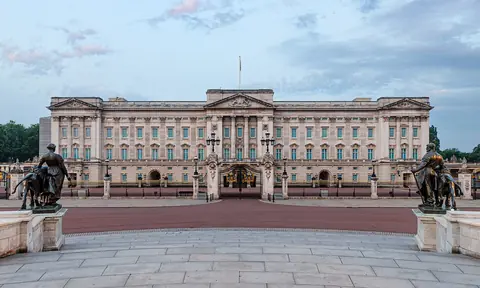
The King's official London home. The Changing of the Guard takes place in the forecourt on most mornings (check the schedule); arrive early for a goo…
The oldest and largest occupied castle in the world and an official residence of the King.
A massive fortress built by Edward I from 1283 to control Wales, with polygonal towers and banded stone walls.
A storybook castle with round towers and battlements, rising straight out of a wide moat.
The dramatic ruin of a royal castle on a steep hill in a gap in the Purbeck Hills, above a village of grey stone cottages.
A Tudor fort on a rocky outcrop on Holy Island, turned into a holiday home by Edwin Lutyens for Edward Hudson, founder of Country Life magazine.
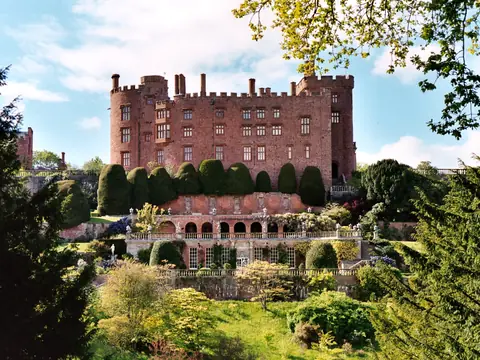
A medieval castle of red stone built by Welsh princes, perched on a ridge above famous Italianate terraced gardens, laid out over 300 years ago and p…
One of the most famous gardens in England, created in the 1930s by the writer Vita Sackville-West and her husband Harold Nicolson around the ruins of…
A tidal island off the coast of Cornwall crowned by a medieval castle and church, the home of the same family since the 17th century.
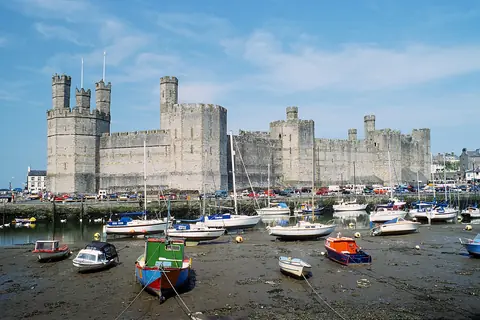
One of the great medieval castles built by Edward I to conquer Wales, completed in 1287, with eight huge towers and almost complete town walls that y…
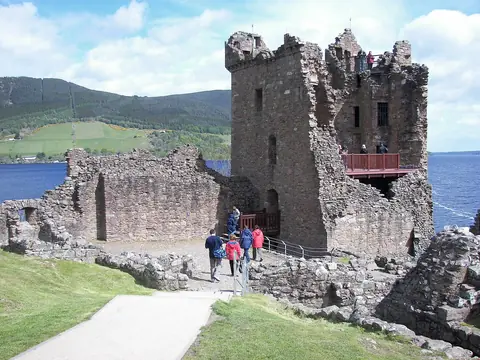
The ruins of a medieval castle on a headland jutting into Loch Ness, the long, deep lake famous for its legendary monster, 'Nessie'.
The last castle built in England, designed by Edwin Lutyens for the grocery millionaire Julius Drewe and finished in 1930.
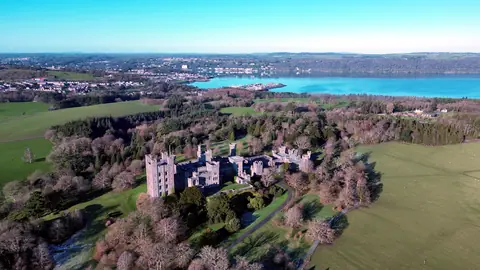
A vast neo-Norman castle built in the early 1800s for the Pennant family, whose wealth came from Jamaican sugar plantations and Welsh slate quarries.
A castle on a wooded hill above the medieval village of Dunster, home to the Luttrell family for 600 years and remodelled as a Victorian country house.
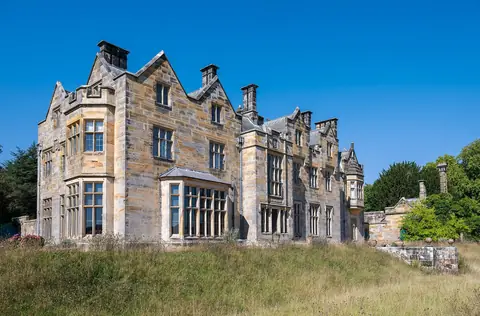
The romantic ruin of a 14th-century moated castle, set as the centrepiece of a picturesque garden by the Hussey family when they built a new house on…
An 18th-century house with two different fronts, one Classical and one Gothic, because Lord and Lady Bangor couldn't agree on a style.
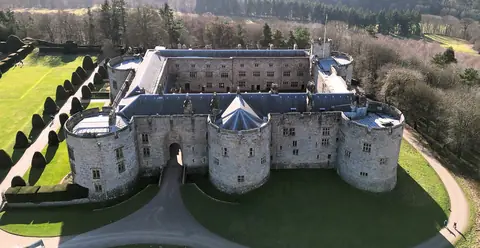
A massive castle built in 1295 by Edward I to control the Welsh border, the last of his castles still lived in until 2004.
One of the finest neoclassical houses in Ireland, designed by James Wyatt for the Earl of Belmore in the 1790s, with Portland stone brought from Engl…
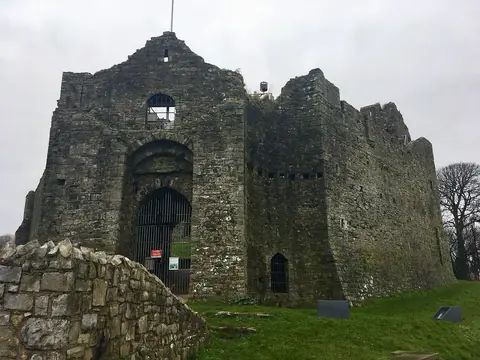
The ruins of a Norman castle on a hill above Mumbles, built by the de Breos family in the 12th century, with views over Swansea Bay.
A towering red-brick castle built in the 1430s for Ralph Cromwell, Lord Treasurer of England, rising high above the flat Lincolnshire fens.
A Victorian fort perched on the cliffs at the western tip of the Isle of Wight, with views straight down to the Needles, three chalk stacks rising fr…
A mock-Gothic castle with turrets and battlements on the western shore of Windermere, built in the 1840s for a retired surgeon.