Historic sites

Huaqing Palace and Mount Li, Xi'an
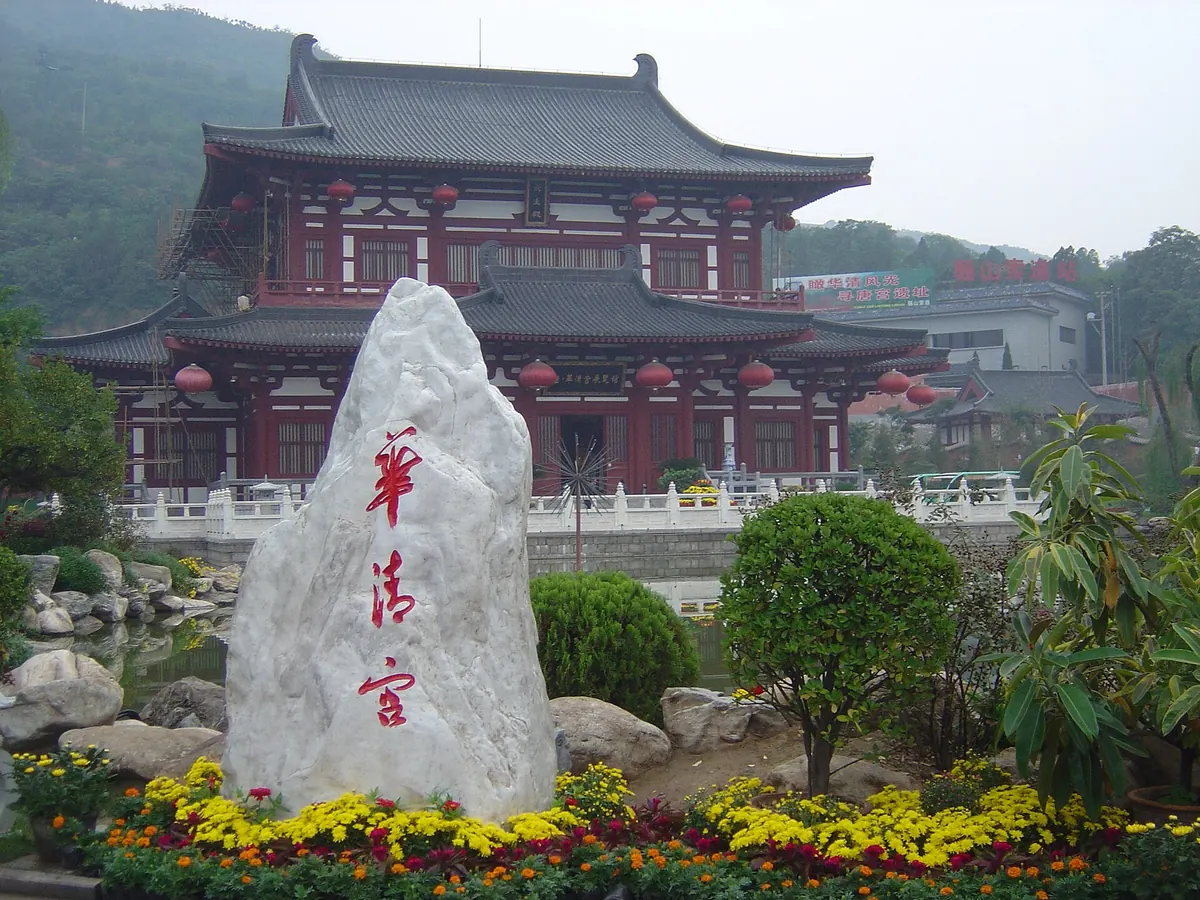
China Shaanxi Lintong

Huaqing Palace and Mount Li, Xi'an
Photo: The original uploader was Yyk at Chinese Wikipedia., CC BY-SA 3.0, via Wikimedia Commons

Hot springs at the foot of Mount Li, used as an imperial retreat for 3,000 years, best known as the place where the Tang emperor Xuanzong spent his winters with his beloved consort Yang Guifei in the 8th century. Their love story, which ended in rebellion and her death, is one of the most famous in China.


The rebuilt palace has pools, pavilions and gardens, and the excavated remains of the Tang bathing pools, including Yang Guifei's. A cable car climbs Mount Li. In 1936, Chiang Kai-shek was captured here by his own generals in the Xi'an Incident, which forced him to ally with the Communists against Japan; you can see the bullet holes in the building where he stayed. In the evening, the outdoor show The Song of Everlasting Sorrow tells the story of Xuanzong and Yang Guifei.


The palace is near the Terracotta Army, so they are often visited together.

Comments

No comments yet.

More tips nearby

All tips for China
Historic sites

Terracotta Army, Xi'an

Lintong, Shaanxi

Thousands of life-sized clay soldiers, archers, horses and chariots, each with an individual face, buried to guard the tomb of Qin Shi Huang, China's…

Food and drink

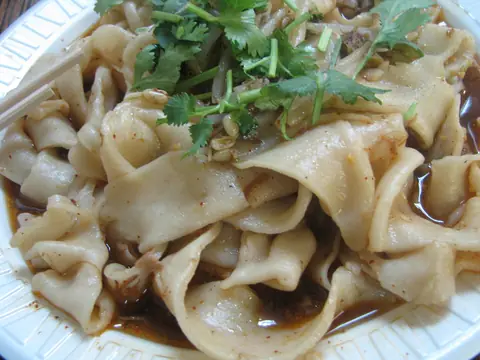
Biangbiang noodles

Xi’an, Shaanxi

Xi'an's belt-wide noodles: thick, hand-pulled ribbons of wheat dough as wide as a belt, slapped against the counter to stretch them (supposedly the '…

Food and drink

Roujiamo (Xi'an meat sandwich)

Xi’an, Shaanxi

Sometimes called the Chinese hamburger, roujiamo is a crisp, round flatbread cut open and stuffed with finely chopped, slowly stewed meat.

Attractions

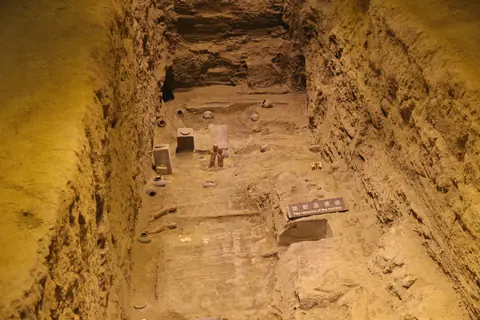
Han Yangling Museum, Xi'an

Xianyang, Shaanxi

The tomb of the Han emperor Jing, who died in 141 BC, and his empress, north of Xi'an.

Attractions

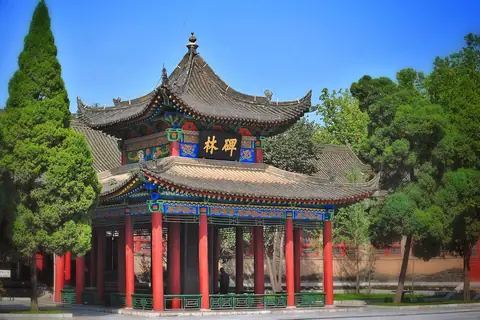
Forest of Stone Steles Museum (Beilin), Xi'an

Xi’an, Shaanxi

A museum in a former Confucian temple near the south gate of the Xi'an city wall, with more than 4,000 stone tablets, or steles, from the Han dynasty…