Historic sites
Taj Mahal, Agra
Agra, Uttar Pradesh
The white marble mausoleum built by the Mughal emperor Shah Jahan for his wife Mumtaz Mahal, completed around 1653, one of the most beautiful buildin…
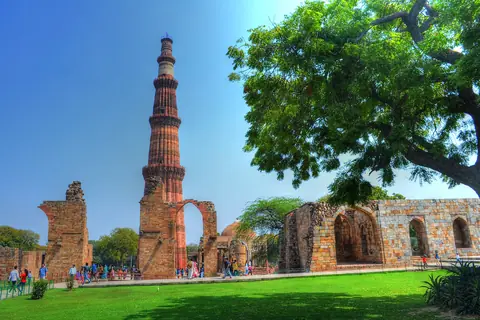
A soaring red sandstone tower, 73 m tall, begun around 1199 by Qutb-ud-din Aibak, founder of the Delhi Sultanate, and finished by his successors.
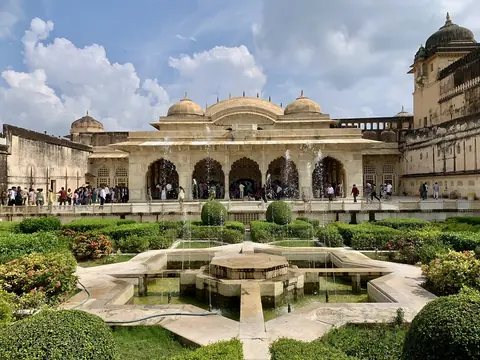
A hilltop palace fortress overlooking Lake Maota, built of pale yellow and pink sandstone from 1592, with courtyards, gardens and the dazzling Sheesh…
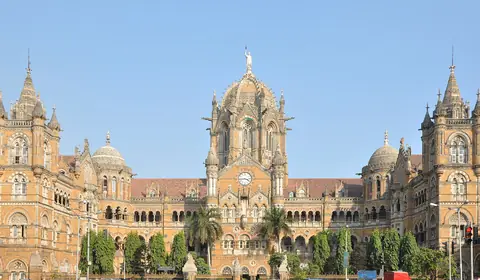
Mumbai's great Victorian railway station, built in 1887 as the Victoria Terminus, is a fantastic mix of Gothic Revival and Indian styles, with a grea…
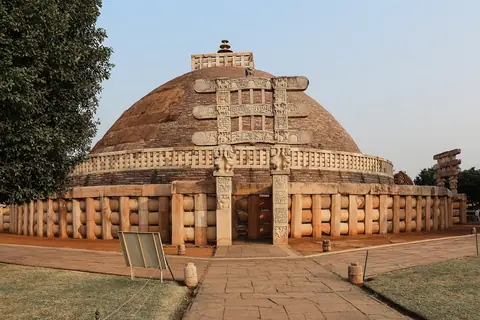
One of the oldest stone structures in India, a great dome-shaped Buddhist stupa first built by the emperor Ashoka in the 3rd century BC on a hilltop.
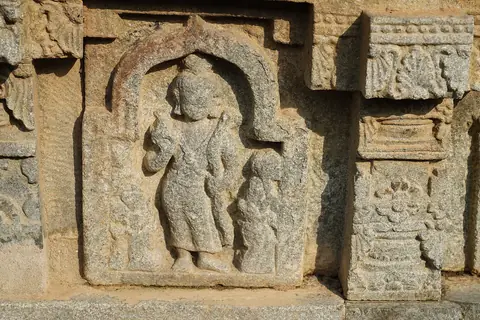
The ruins of Vijayanagara, once one of the world's richest cities, scattered among giant boulders, banana plantations and the Tungabhadra River, a UN…
Home to two-thirds of the world's great one-horned rhinoceroses, in grasslands and wetlands by the Brahmaputra River in Assam, a UNESCO World Heritag…
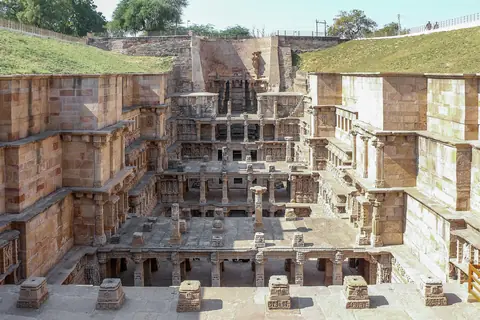
One of the finest stepwells in India, built in the 11th century as a memorial to a king of the Solanki dynasty.
The tomb of the Mughal emperor Humayun, built in the 1560s, the first garden tomb in India and an inspiration for the Taj Mahal, a UNESCO World Herit…
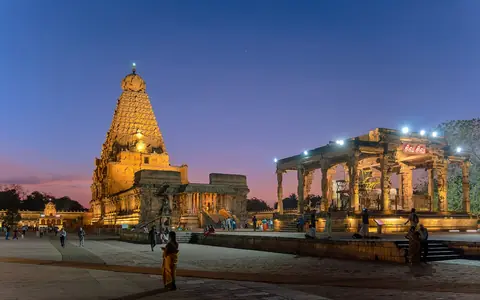
A masterpiece of Chola architecture, completed in 1010 by King Rajaraja I.
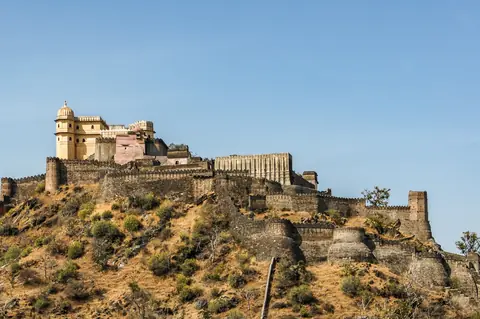
A mighty hill fort in the Aravalli hills, built by Rana Kumbha of Mewar in the 15th century, surrounded by a wall that runs for about 36 km across th…
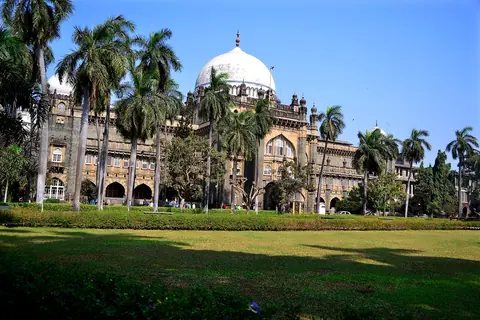
Mumbai's main museum, formerly the Prince of Wales Museum, in an Indo-Saracenic building with a great dome, opened in 1922 and set in a garden of pal…
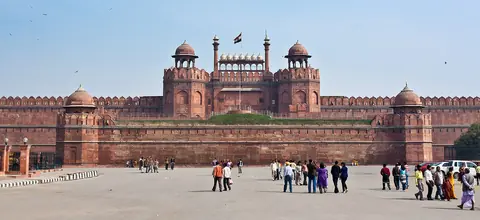
The Mughal emperors' palace fortress, with red sandstone walls, built by Shah Jahan in the 1640s, a UNESCO World Heritage Site.
A 13th-century temple to the sun god Surya, built in the shape of a giant stone chariot with 24 carved wheels drawn by seven horses, a UNESCO World H…
A great basalt arch on Mumbai's waterfront, built to commemorate the visit of King George V in 1911, opposite the Taj Mahal Palace hotel.
A massive red sandstone fortress, the main residence of the Mughal emperors until 1638, a UNESCO World Heritage Site.
A high Himalayan valley in Uttarakhand carpeted with wildflowers in the monsoon, part of a UNESCO site with Nanda Devi National Park.
Goa, a Portuguese colony until 1961, combines palm-fringed beaches with whitewashed churches.
A group of Hindu and Jain temples built by the Chandela dynasty around 950 to 1050 AD, covered with exquisitely carved sculptures of gods, dancers, a…
A group of 7th and 8th-century Pallava monuments by the sea south of Chennai, a UNESCO World Heritage Site: the granite Shore Temple, the Five Rathas…
The ruins of one of the world's oldest universities, a great Buddhist centre of learning from the 5th to the 12th century, where thousands of student…
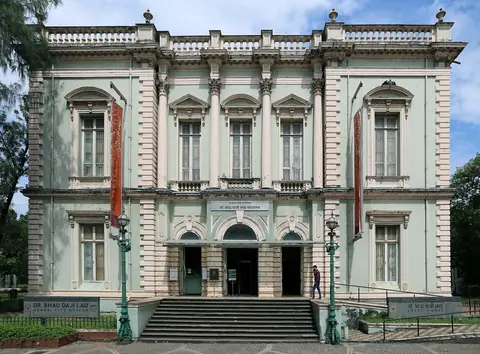
Mumbai's oldest museum, opened in 1872 as the Victoria and Albert Museum, in a building of Palladian and Victorian style with a stunning interior of …