
Culture and etiquette in the Philippines: hospitality, churches and fiestas
Filipinos are among the friendliest, most welcoming people you'll meet, and most speak English, so it's easy to get talking. A few customs will help you fit in, and the fiestas are among the best reasons to visit.
Filipino hospitality
- Filipinos are very hospitable. If you're invited to a home or a fiesta, you'll be fed, and fed again. Accept at least a little of what you're offered, and take a small gift, such as fruit, cakes or something from your country.
- Family is at the heart of Filipino life, and you'll often be asked whether you're married and have children. These are friendly questions, not nosy ones.
- Many families have a relative working abroad, and know your country better than you might expect.
Politeness
- Po and opo: Filipinos add po to sentences, and say opo for "yes", to show respect to older people and strangers. "Salamat po" ("thank you") is a good first phrase to learn.
- Younger people greet their elders with the mano, pressing the back of the older person's hand to their forehead. As a visitor, you won't be expected to, but it's touching if you're offered the hand.
- Older men and women are often called kuya ("big brother") and ate ("big sister"), or manong and manang, and you can use them too, for drivers, waiters and shopkeepers.
- Don't lose your temper. Shouting or embarrassing someone in public causes hiya, shame, and gets you nowhere. Stay calm and smile, even when a ferry is late: you'll get further.
- Filipinos may say "yes" to avoid disappointing you. If directions or promises sound unsure, ask someone else too.
- People sometimes point with their lips, and call for attention with "psst": it isn't rude here.
- Filipino time: social events often start late. Flights, ferries and tours, though, leave on time, or early.
- The toilet is the CR, the "comfort room".
Churches and mosques
- The Philippines is mostly Roman Catholic, and faith is part of daily life. Many churches, such as the baroque churches of the north and the old churches of Bohol and Cebu, are still busy with services.
- Dress modestly in churches, with shoulders and knees covered, take off your hat, and be quiet during Mass. Don't use flash.
- Parts of Mindanao and the south are mostly Muslim. Visiting a mosque, dress modestly (women covering their hair), take off your shoes, and ask first.
Fiestas and festivals
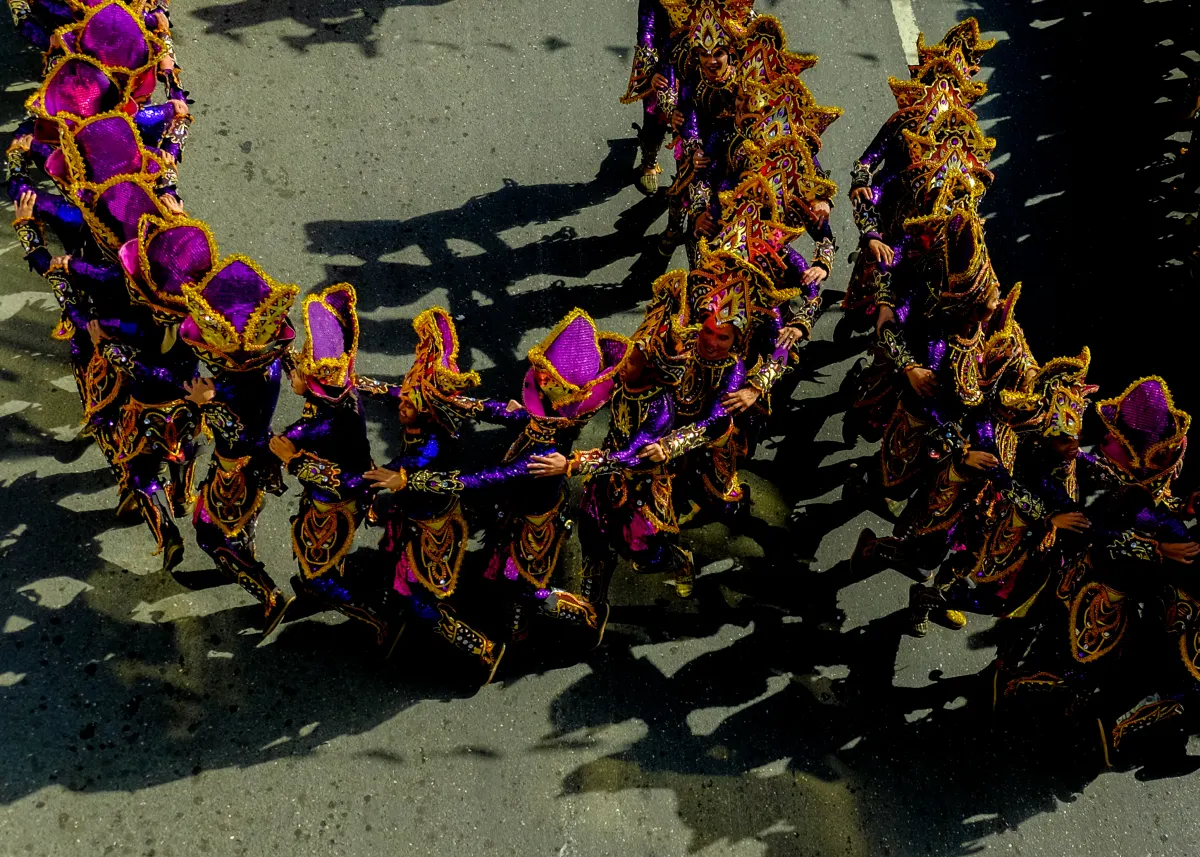
Every town and village celebrates its patron saint with a fiesta, with a Mass, a procession, food, music and dancing. Visitors are welcome: if you're lucky enough to be invited, go. Some of the biggest festivals:
- Sinulog, Cebu City, the third Sunday of January: a huge parade of dancers honouring the Santo Niño (the child Jesus).
- Ati-Atihan, Kalibo (Aklan, near Boracay), in January: street dancing with painted faces and costumes, the oldest of the big festivals.
- Dinagyang, Iloilo City, in January.
- Panagbenga, the flower festival in Baguio, in February.
- Holy Week, before Easter: processions and Passion plays, and in Pampanga, people who whip themselves or are nailed to crosses on Good Friday. Many businesses close, and travel is very busy.
- Pahiyas, Lucban (Quezon), on 15 May: houses decorated with coloured rice wafers and produce.
- MassKara, Bacolod, in October: smiling masks and street dancing.
- Christmas: the Philippines has the longest Christmas season in the world, with carols and decorations from September. Many people go to the nine dawn Masses, Simbang Gabi, before Christmas.
Book accommodation well ahead for the big festivals, and watch your bags in the crowds.
Photos
Ask before you photograph people, especially in Indigenous communities, in the mountains of northern Luzon for example, and at religious events. Don't fly a drone over crowds, churches or government buildings.
A few words
- Salamat (po): thank you
- Magandang umaga / hapon / gabi: good morning / afternoon / evening
- Oo / opo: yes (and the polite form); hindi: no
- Magkano?: how much?
- Masarap!: delicious!
- Ingat: take care (said when saying goodbye)
In the Visayas, people speak Cebuano and other languages as well as Filipino: salamat works everywhere.
See also: Filipino food and drink and Weather and when to go.

Comments
No comments yet.