
Trekking in Peru: Inca Trail permits, Salkantay, Lares, Choquequirao and choosing an operator
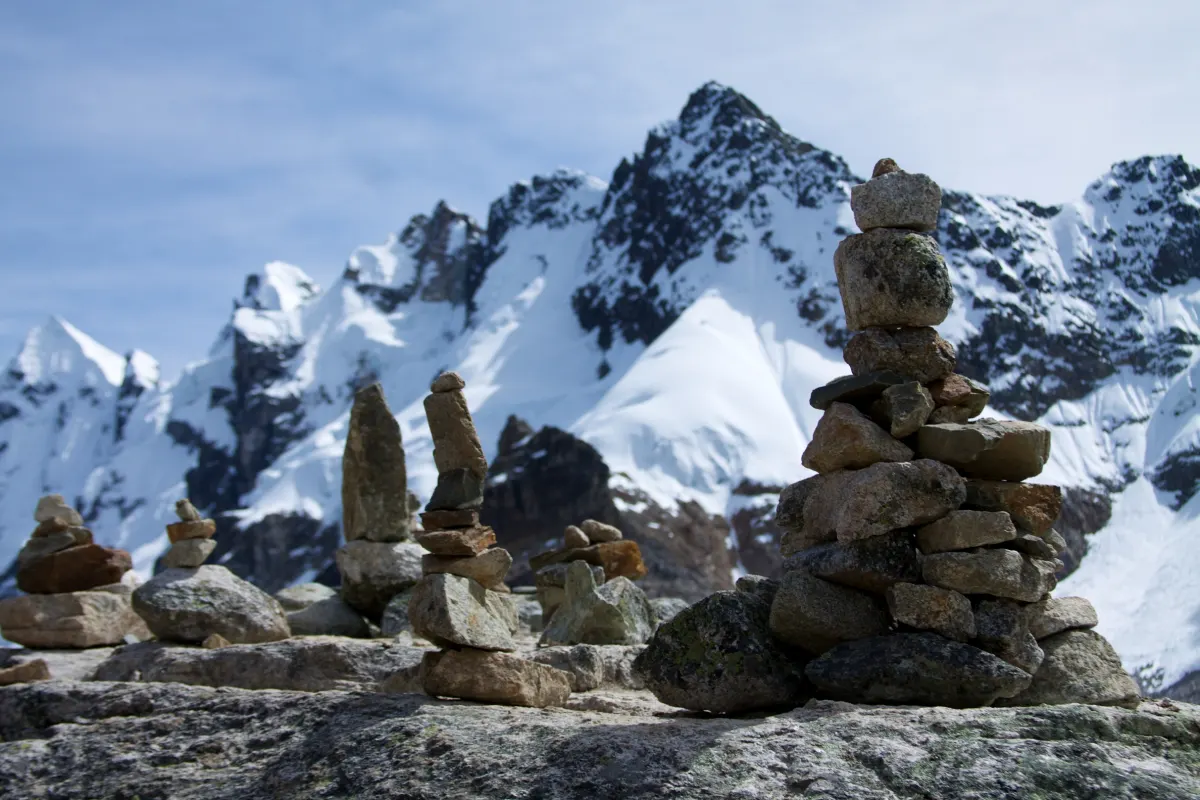
The Inca Trail is one of the world's great walks, and the hardest to get a place on. The alternatives need no permit, or a simpler one, and some walkers like them better.
The classic Inca Trail
- Four days and about 43 km from Km 82 on the railway, over the Dead Woman's Pass at about 4,215 metres, to arrive at Machu Picchu through the Sun Gate.
- You can only walk it with a licensed agency, which must be registered with the Cusco culture office and buys the permits in your name. You can't go alone.
- Permits are limited to 500 people a day including guides and porters, so only about 200 are for walkers. With the short trail, 750 people a day are allowed in all.
- Since September 2026, agencies must pay in full when they buy, and can't hold places first. A permit is for one date and one named person, and isn't refunded or moved, except for proven emergencies.
- Give your agency your details exactly as in your passport, and bring that passport: it's checked at Km 82 and again at Machu Picchu. If you'll renew it before the trek, ask your agency what to do.
- The permit includes entry to Machu Picchu, on route 3-B (the lower part). For the classic circuit too, buy a second ticket: see Machu Picchu tickets.
- 2027 permits weren't on sale when we checked in November 2026. Sales for 2026 opened on 17 November 2025, and for 2025 on 4 November 2024. May to September can go within days, so ask an agency to buy yours as soon as they open.
- It's closed every February for maintenance. In 2026 it was shut from 31 January to 1 March. Machu Picchu itself stays open.

Inca Trail to Machu Picchu
The classic Inca Trail is a 4-day, 43 km hike on original Inca stone paths from Km 82 in the Sacred Valley to Machu Picchu, passing Inca ruins, cloud…
The short Inca Trail
If you've less time, start at Km 104 and walk the last part in a day, past the ruins of Wiñay Wayna to the Sun Gate. You sleep in Aguas Calientes and visit Machu Picchu properly the next day. You need a permit and an agency for this too.
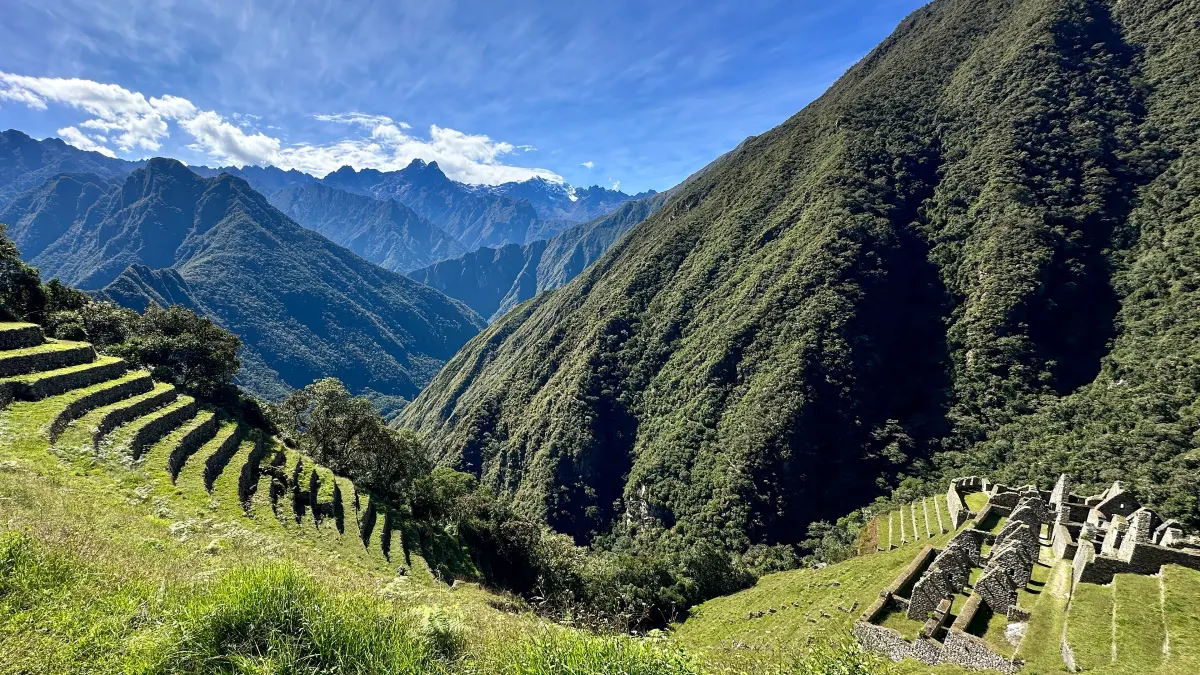
Salkantay
- Four or five days below the snow peak of Salkantay (6,271 m), over a pass at about 4,600 metres and down into cloud forest, ending with a walk or train to Aguas Calientes.
- No Inca Trail permit is needed, though there are local entry fees, and you need a Machu Picchu ticket of your own.
- You can go with an agency, or on your own with mountain experience, staying at simple lodges and camps.
- From January to March, heavy rain can close it, and operators say it was closed for two months in 2025. The UK government warns that landslides can affect this route and the Hidroeléctrica road.
Lares
Three or four days through Quechua villages and past hot springs, in the valleys north of the Sacred Valley, over passes of about 4,400 to 4,600 metres. It's more about the people than the ruins, and it ends with a train to Aguas Calientes. No Inca Trail permit is needed.
Choquequirao
An Inca city nearly as dramatic as Machu Picchu, but with few visitors because there's no road to it. From Cachora or Capuliyoc, it's two days' hard walking down and up the Apurímac canyon, and two days back, hot and steep. You can also walk on to Machu Picchu in about eight days. There's an entry fee, paid in cash. The Canadian government includes the province of Abancay in the VRAEM region where it advises against travel, though the UK doesn't extend its warning to all of it, so check your government's advice and insurance first.
Away from Cusco
- Huaraz and the Cordillera Blanca, north of Lima: the Laguna 69 day walk and the four-day Santa Cruz trek. Register when you enter Huascarán National Park, and ask iPerú in Huaraz about conditions.
- Colca Canyon: two or three days down to the oasis and back up. See Colca Canyon.
- Rainbow Mountain (Vinicunca): a hard day trip because of the height. See Altitude.

Huascarán and Laguna 69
The Cordillera Blanca is the highest tropical mountain range in the world, in Huascarán National Park.
Choosing an operator
- Check that the agency is licensed, and for the Inca Trail that it's on the Cusco culture office's list of authorised agencies. iPerú can check.
- Ask what's included: permit, train back, bus, entry ticket, meals, tent and sleeping bag, and how many people to a guide.
- Ask how porters are paid, fed and equipped. The law limits their loads and says how much they must be paid. Very cheap treks cut corners here.
- Ask about oxygen, first aid, and what happens if someone gets ill.
- Pay by card and get it in writing. In Cusco, be wary of people selling tours in the street.
- Walk in a group. There have been robberies and assaults on trails.
Before you go
- Spend at least two or three days in Cusco or the Sacred Valley first. See Altitude.
- May to September is dry, with cold nights. November to March is wet, with more landslides. See When to go.
- Bring broken-in boots, layers, a rain jacket, a sleeping bag for below freezing, sunscreen, a torch, water tablets, and cash for tips: see Money.
- Make sure your insurance covers trekking at the height you'll reach, with rescue. See Health.
Comments
No comments yet.