
Money in Peru: soles, ATMs and their fees, cards, fake notes and tipping
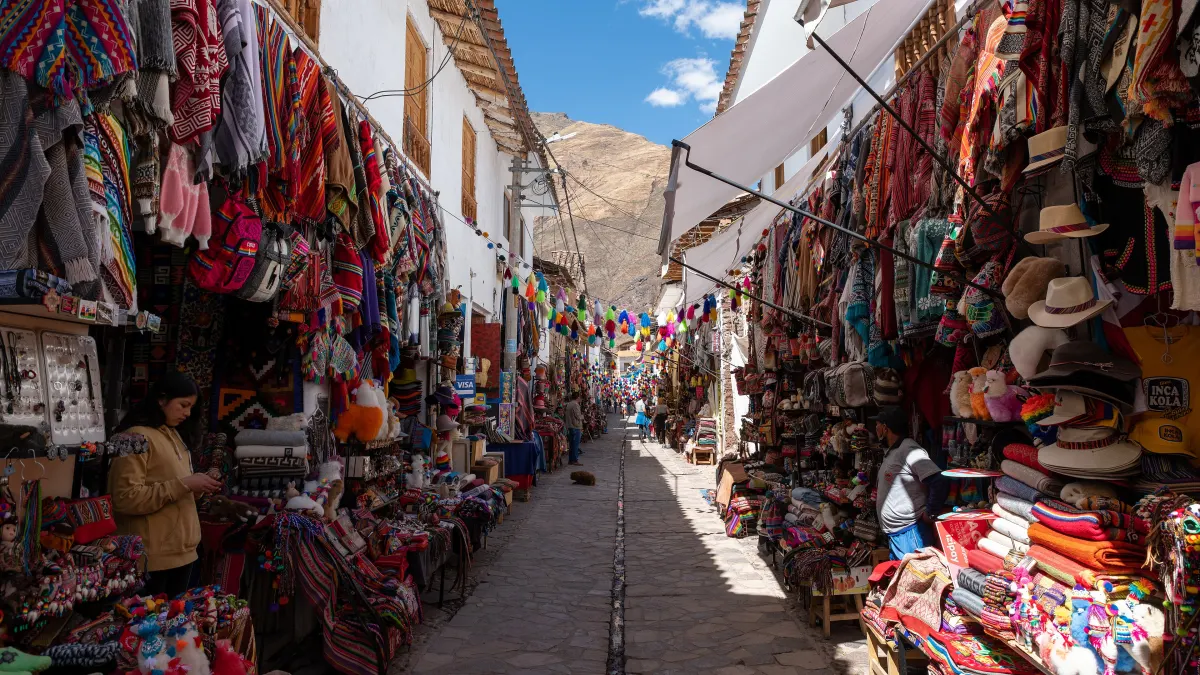
Peru's money is the sol (plural soles), written S/. You'll need cash outside cities and for markets, buses, taxis, entry fees and tips, while hotels, restaurants and tours in the main places take cards.
Cash
- Notes are S/10, 20, 50, 100 and 200, and coins from 10 céntimos to S/5. Keep small notes and coins: drivers, stalls and museums often can't change a S/100.
- US dollars are accepted for some hotels, tours and flights, but usually at a poor rate. Notes must be perfect, with no tears or marks.
- Soles are hard to change outside Peru, so spend them or change them at the end.
- You must declare more than US$10,000 in cash when you arrive or leave.
Cash machines
- There are machines in all cities, in Aguas Calientes, Ollantaytambo and Urubamba, but few in villages, on treks, on Lake Titicaca's islands or in the jungle. Take enough cash with you.
- Most banks charge foreign cards a fee of somewhere around S/18 to S/36 each time, on top of your own bank's. The machine shows it before you accept. Banco de la Nación's MultiRed machines have usually been free, and BCP's sometimes.
- Many let you take out only about S/400 at once, and BCP about S/700. Take the most you can, so you pay fewer fees.
- If the machine offers to charge you in your own currency, refuse and choose soles.
- Use machines inside banks, supermarkets or shopping centres, in the daytime. Cover your PIN, put the money away before you walk out, and don't use a taxi from the street outside. "Express kidnappings", where people are made to empty their accounts at a machine, happen mostly at night: see Safety.
- Bring two cards from different banks, kept in different places.
Cards and Yape
- Visa is the most widely taken, then Mastercard. Some places add a few per cent for cards, so ask first.
- Choose to be charged in soles, and keep your card in sight.
- Peruvians pay for nearly everything, even at stalls, with Yape or Plin on their phones. You need a Peruvian bank account or ID to use them, so most visitors can't.
Changing money
- Use banks or exchange offices (casas de cambio) with a receipt. Avoid changers on the street: the UK and Canada warn of fake notes, and of people in Cusco passing off intis, money that went out of use long ago.
- Count your money before you leave the counter.
Fake notes
- Fake soles and dollars are common, and you can be given them even by shops.
- Feel, look and tilt: real notes feel crisp with raised printing, show a watermark when held up to the light, and have a security thread and ink that changes when tilted. Peru's central bank shows how to check each note on its site.
- It's normal to check a note in front of the person who gave it to you, and to ask for another. If you've paid with a note and the seller hands it back saying it's fake, it may have been switched: watch your note, and say its value as you hand it over.
Tipping
- Restaurants: about 10% is usual in places for visitors, if service isn't included. In simple local places, nothing is expected, or leave some change.
- Taxis: not expected.
- Guides: a tip is usual if you were happy. Ask your agency what's normal.
- Treks: groups usually put together a tip for the guide, cook and porters on the last night. Your operator can suggest an amount. Bring it in soles and small notes.
- Porters and cleaners in hotels: a few soles.
Tickets to budget for
- Machu Picchu, with train and bus: the biggest cost. See Machu Picchu tickets.
- The Boleto Turístico covers 16 sites in and near Cusco, including Sacsayhuamán, Pisac, Ollantaytambo, Moray and Chinchero. It was S/130 for foreigners in 2026, valid ten days, or S/70 for a shorter version with some of them. Most single sites don't sell tickets of their own. A new law may change the prices.
- Colca: there's a tourist ticket to pay in cash at the checkpoint, about S/70 for most foreigners.
- Maras salt pans, Cusco's cathedral and Qorikancha have their own tickets, as do the Uros and other islands.
Bargaining
Bargain gently in markets for crafts, and not over food. A few soles mean more to the seller than to you.

Comments
No comments yet.