
Eight days up Jutland's west coast to Skagen: Legoland, Ribe, the Wadden Sea, Hvide Sande, Thy National Park and Rubjerg Knude
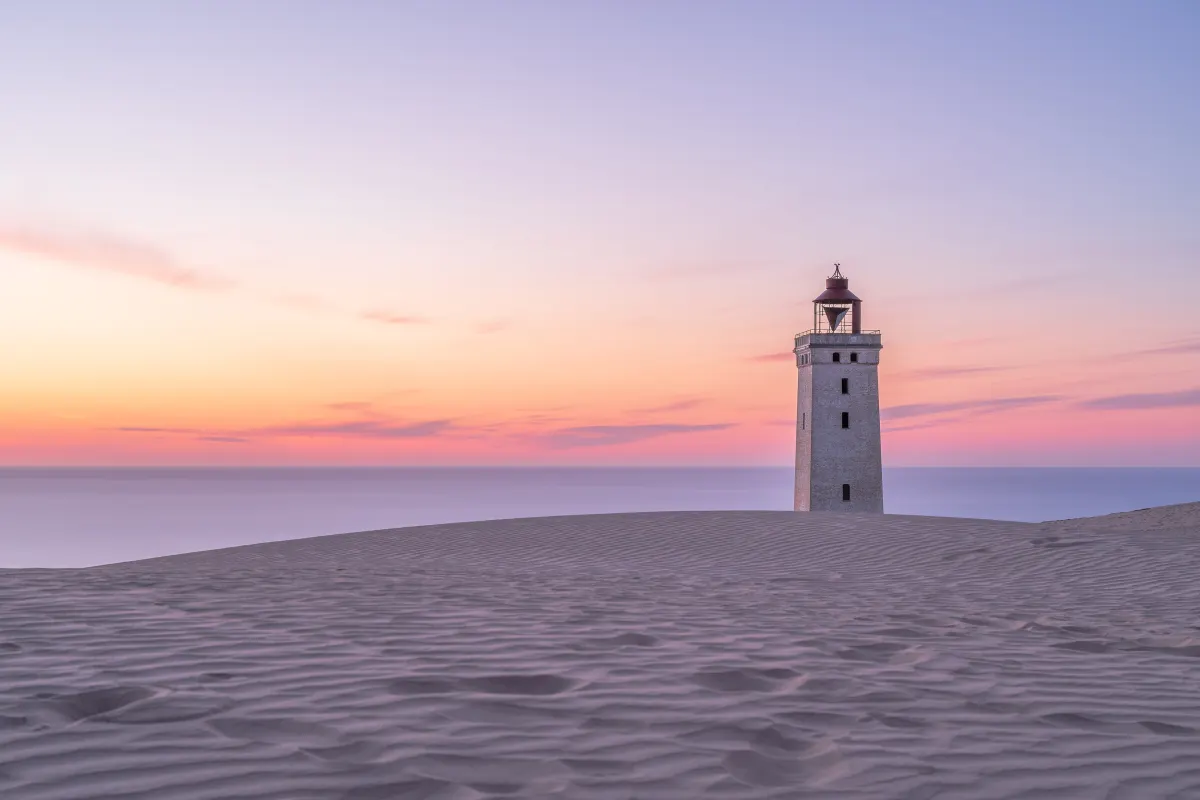
There are 400 km of sand between the German border and the top of Denmark, with dunes, lighthouses, bunkers, fishing harbours and nearly no towns. You need a car, a jacket, and no hurry.
Map of the route
Billund to Jelling and Ribe, about 101 km
Tractor bus to Mandø, about 8 km
Ribe to Vester Vedsted, about 9 km
Ribe to Esbjerg, about 32 km
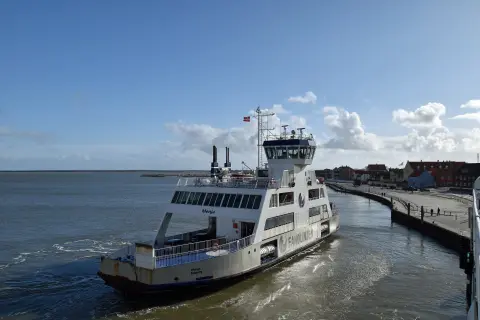
Ferry to Fanø, about 3 km
Nordby to Sønderho by bike, about 13 km
Esbjerg to Hvide Sande by Blåvand, about 101 km
Hvide Sande to Thyborøn by Bovbjerg, about 108 km
Ferry from Thyborøn to Agger, about 2 km
Agger to Klitmøller, about 53 km
Klitmøller to Løkken, about 117 km
Løkken to Skagen, about 94 km
Skagen to Grenen on foot, about 4 km
Click a dot for the place. Labels show the days. Dashed lines are ferries and the tractor bus over the seabed, drawn straight. Distances are approximate. Route from OpenStreetMap (© OpenStreetMap contributors, ODbL).
Before you go
- When: May to September. June has the light, and late August warm sea and heather. From October to April it's for walkers, and many places are shut.
- Car: from Billund airport, left at Aalborg if the one-way fee is fair. See Driving.
- Beds: inns, campsites and holiday houses. Houses are let by the week, Saturday to Saturday, in summer.
- The sea: read Beaches and the sea first. It isn't like the Mediterranean.
Day 1: Billund and Jelling
With children, Legoland or Lego House: see their page. Without, Jelling, where Harald Bluetooth raised a stone in about 965 to say that he'd made the Danes Christian. It stands between his parents' mounds, with a free museum. Drive to Ribe, an hour.

Legoland Billund
The original Legoland, opened in 1968 next to the Lego factory in Billund, with Miniland, a world of famous buildings made from millions of Lego bric…
Day 2: Ribe and the Wadden Sea
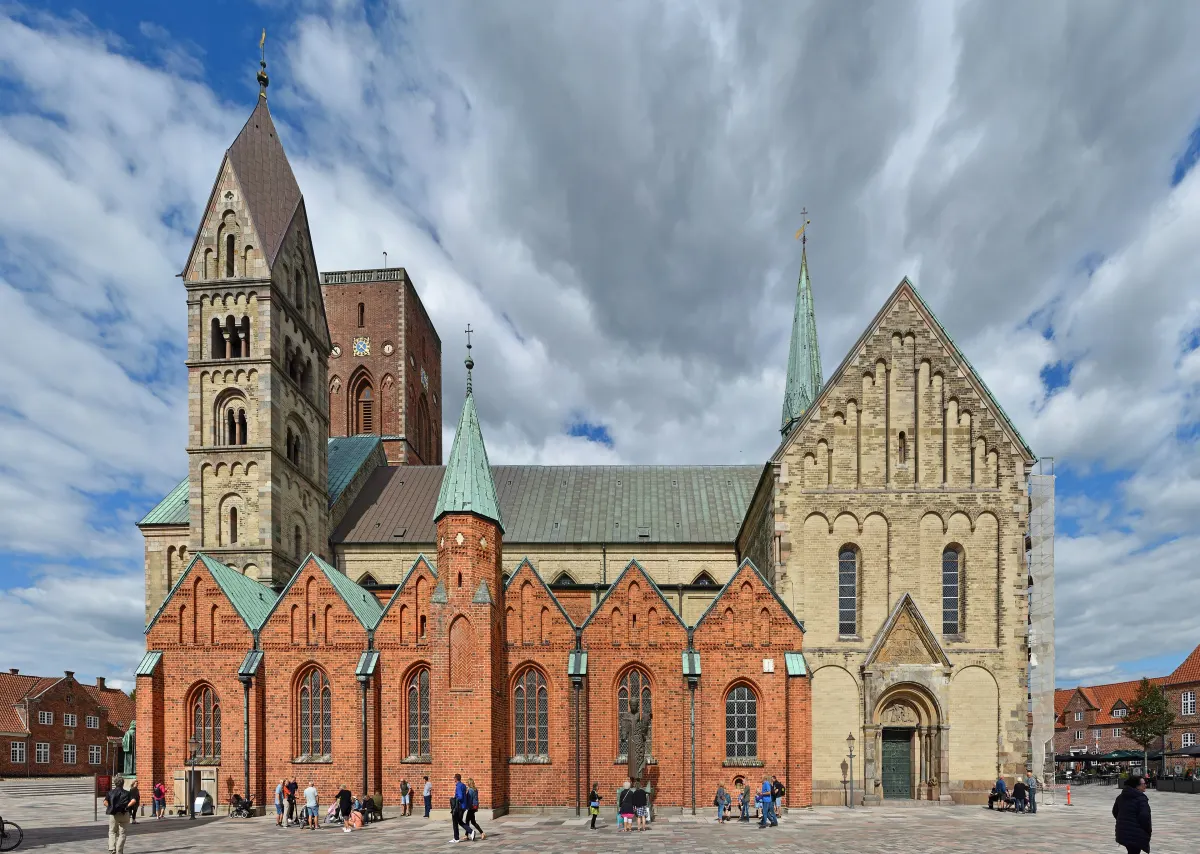
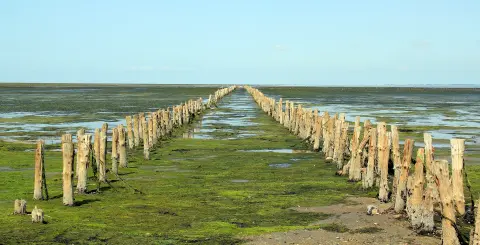
Ribe is the oldest town in Denmark, from about 700, with storks (sometimes), a cathedral tower to climb, and a night watchman who sings his round, with stories in English in summer. At low tide go on to the mud with a guide, or by tractor bus to Mandø, from Vester Vedsted: see Wadden Sea National Park. The centre there, a thatched house by Dorte Mandrup, explains it. In September, October and spring, look for the black sun, the starlings at dusk.
Wadden Sea National Park
Tidal flats and islands, a World Heritage site, with oyster safaris at low tide, seals, and 'black sun' starling murmurations in spring and autumn.
Day 3: Fanø
Half an hour to Esbjerg, where four white giants (Men at Sea) look at the water, and 12 minutes by ferry. Leave the car and hire a bike. Sønderho, at the far end, 13 km, has thatched captains' houses and an old inn. The beach is 12 km long and half a mile wide. Seals lie on the sands at the south.
Day 4: Blåvand to Hvide Sande
Blåvandshuk is the western point of Denmark: climb the lighthouse. On the beach, German bunkers have been given mules' heads by a sculptor. Tirpitz, by Bjarke Ingels, is a museum dug into the dunes beside a bunker. Then the road goes up the narrow sandbar of Holmsland Klit, between the sea and Ringkøbing Fjord. Stop at Lyngvig lighthouse, and eat fish off the boat in Hvide Sande. Beginners learn to windsurf on the fjord side. Sleep here, or in Ringkøbing.
Day 5: Bovbjerg to Thy
At Bovbjerg the land ends in a cliff of 40 m, with a red lighthouse where there's coffee and cake. Further on, at Thyborøn, take the little ferry to Agger over the channel, 10 minutes (check that it's running: otherwise go round by the bridge at Oddesund). You're in Thy National Park, dunes and heath from here to Hanstholm. Climb Lodbjerg lighthouse. Sleep in Klitmøller, which surfers call Cold Hawaii, or Vorupør, where the boats are pulled up on the beach.
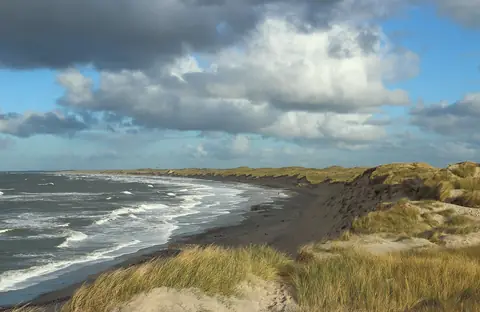
Thy National Park
Denmark's largest wilderness of dunes, heath and lakes along the North Sea coast.
Day 6: Thy to Løkken
Walk in the dunes in the morning, or take a surfing lesson. At Hanstholm is a huge gun battery. Go on by Bulbjerg, the only cliff with seabirds in Jutland, the wide sand at Blokhus, and Løkken, with its white bathing huts. Parts of these beaches are open to cars. Look at the signs, and at the tide.
Day 7: Rubjerg Knude
The lighthouse at Rubjerg Knude was built 200 m from the sea in 1900. Sand buried the houses round it, and in 2019, with the edge 6 m away, it was put on rails and rolled 70 m inland. It's a kilometre or two on foot from the car park. Keep off the edge: it falls. Next, the cliff and ruined church at Mårup, of which hardly anything is left, and Hirtshals, with the Oceanarium. Then Råbjerg Mile, a desert of moving sand a kilometre square, which goes east 15 m a year. Reach Skagen in time for dinner.
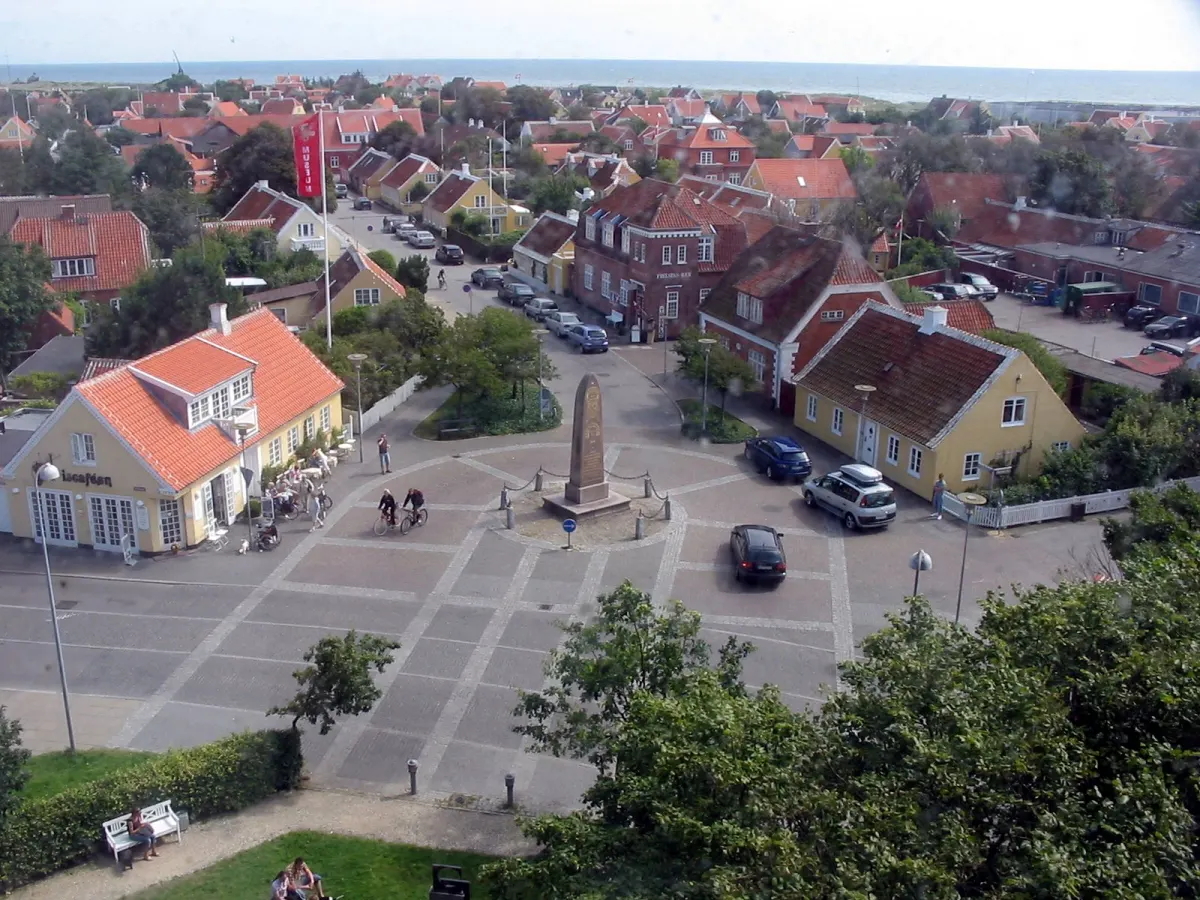
Day 8: Skagen and Grenen
Walk out early to Grenen, half an hour along the sand, or take the tractor (Sandormen), to where the waves of two seas run into each other. No swimming. Then Skagens Museum, for the painters who came for the light in the 1870s, and the houses of Anna and Michael Ancher. The Sand-Covered Church is a white tower in the pines: they gave up digging it out in 1795. Fish at the harbour, and the sunset at Gammel Skagen, where people clap. To Aalborg and its airport it's an hour and a half by car, or by train with a change at Frederikshavn.

Skagen and Grenen
At Grenen, the northernmost tip of Denmark, the Skagerrak and the Kattegat seas meet, and you can stand with a foot in each, watching the waves clash.
With more time
- Rømø, south of Ribe, for a beach you can drive on, and Møgeltønder, a street of lime trees, near Tønder.
- Læsø, from Frederikshavn: houses thatched with seaweed. See Ferries.
- Aalborg: the Viking graves of Lindholm Høje, and a street of 60 bars.
- Back by Aarhus: see Funen, Ærø and Aarhus.
Comments