
Buses in Denmark: regional buses, Rejseplanen, long-distance coaches, tickets and how to reach places with no train
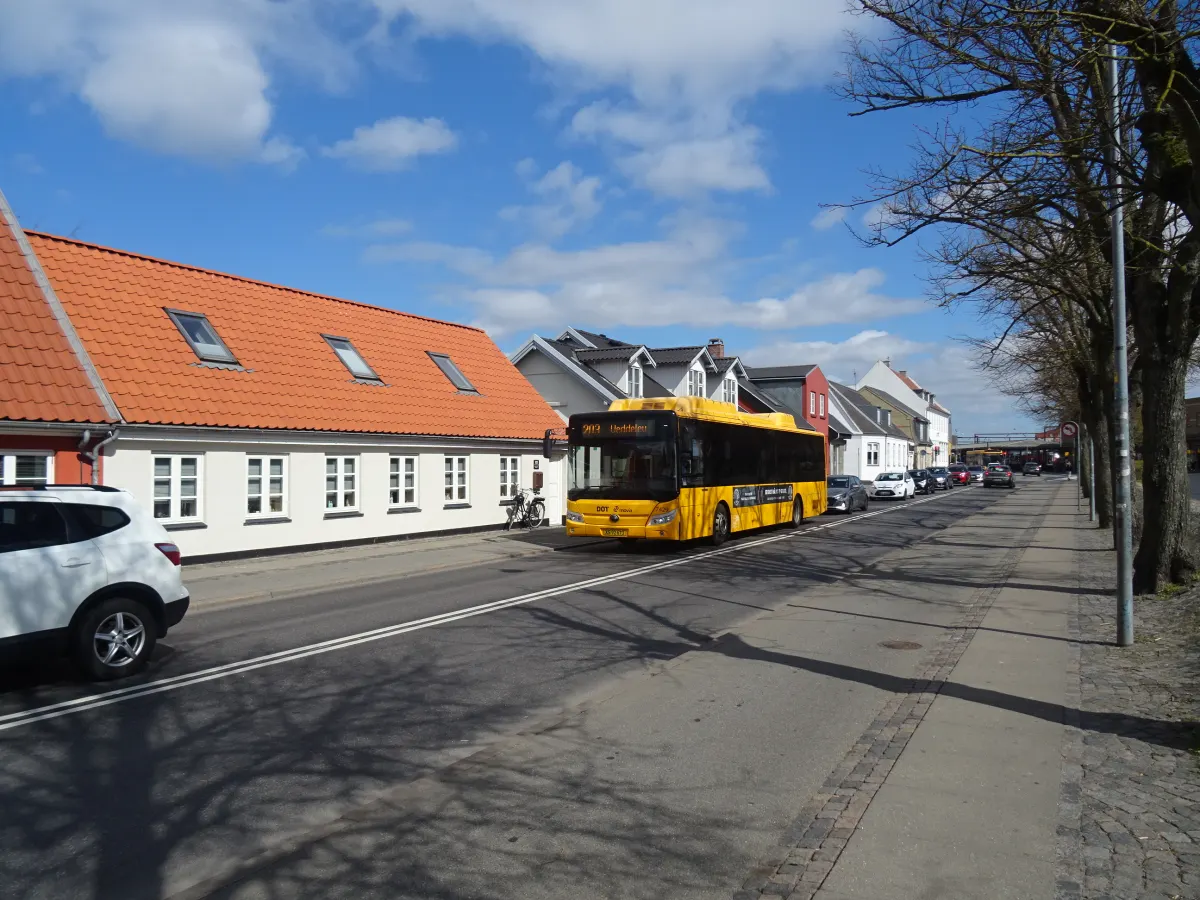
Buses fill the gaps between the railways, and reach most villages and beaches in the country. They're punctual, and they fit the trains. At weekends and after six o'clock some of them hardly run.
One planner for everything
- Rejseplanen (the website, or the app) knows every train, bus, metro, ferry and light rail in the country, door to door, in English. Use it for anything outside Copenhagen.
- Look at the last bus back before you set out, and at Sunday's times as well as Saturday's.
- Some country buses must be booked by phone or app a couple of hours ahead. They show as telebus, flextur or plustur.
Who runs what
- Movia: Copenhagen, Zealand, Lolland, Falster and Møn.
- FynBus: Funen and Langeland. BAT: Bornholm.
- Sydtrafik: southern Jutland. Midttrafik: the middle of Jutland, and Aarhus. NT: the north.
- Aarhus and Odense have light rail as well. Aarhus's goes to Grenaa and Odder.
Paying
- The Rejsekort app, the DSB app or a Basiskort work on all of them: check in when you board, check in again if you change, and check out at the end. See Trains.
- The Rejsebillet app sells ordinary tickets in advance. Each bus company used to have its own app.
- Many drivers no longer take cash, and some sell nothing at all. Have the app ready before the bus comes.
- Get on at the front, except on the busiest city lines, and press STOP. At a country stop, put out your arm.
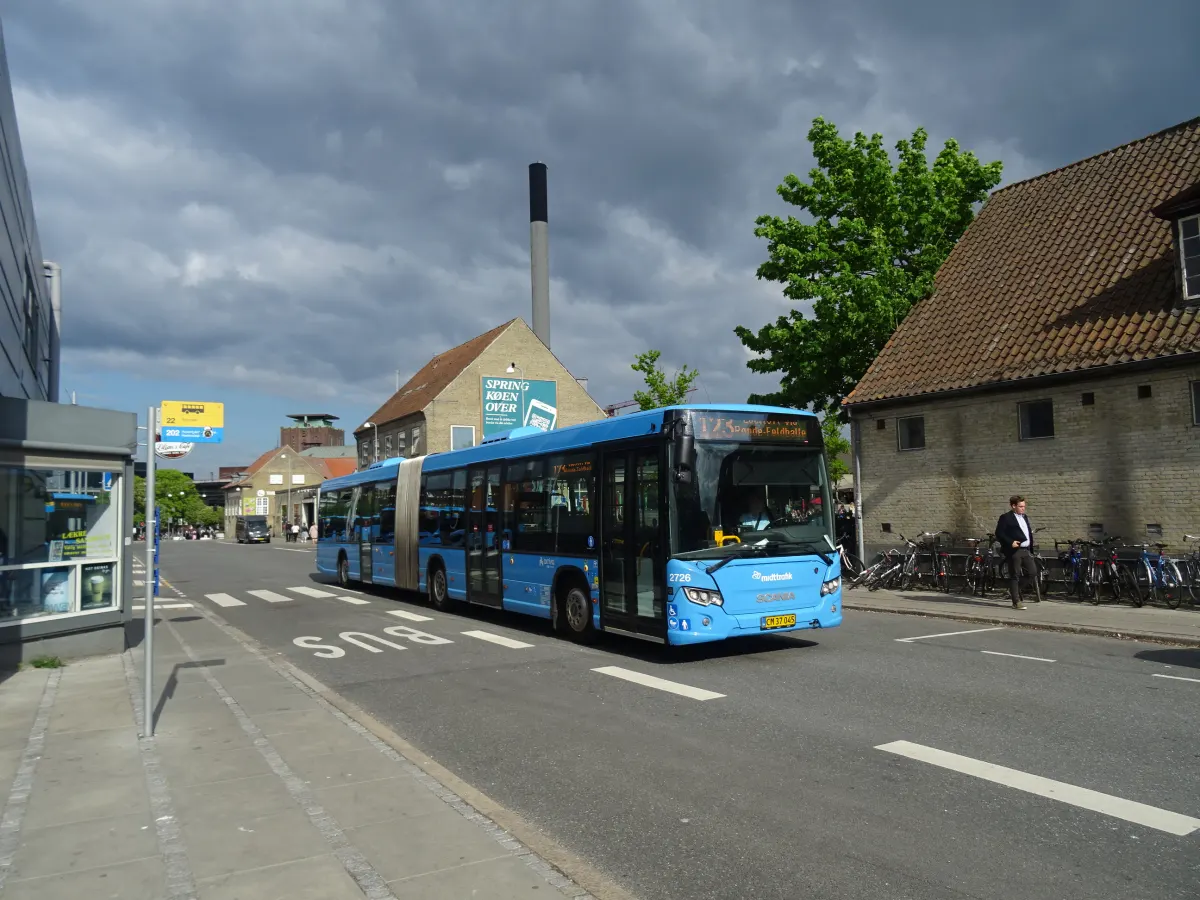
Long-distance coaches
- FlixBus runs between Copenhagen and Aarhus more than a dozen times a day, in about 3½ hours, and to Aalborg, Odense, Svendborg and Germany. Booked early it's often under 150 kroner, which is cheaper than the train with no Orange fares left.
- Kombardo Expressen goes from Copenhagen to Aarhus and beyond by the fast ferry from Sjællands Odde.
- In Copenhagen, most leave from the bus terminal at Dybbølsbro, by the shopping centre Fisketorvet, one S-train stop from the Central Station. Check the ticket.
Places you need a bus for
- Møns Klint: a train to Vordingborg, a bus to Stege, and another to the cliffs. It takes about 2½ hours from Copenhagen, and the last bus runs all the way only in the season. A car is much easier.
- Legoland: buses from Vejle, Kolding, Fredericia and Billund airport.
- Thy National Park: a train to Thisted, then a bus to Klitmøller or Hanstholm. There are few on Sundays.
- Egeskov Castle: a train to Kværndrup, and a bus or a half-hour walk.
- Blåvand, Henne and Hvide Sande: buses from Varde, Esbjerg and Ringkøbing.
- Løkken and Blokhus: buses from Aalborg and Hjørring.
- Mols Bjerge: a bus from Aarhus to Ebeltoft, and local ones from there.
Sitting on it
People sit by themselves if they can, talk quietly, and say tak to the driver at the door. Prams have a place in the middle, where you go in by the back. There's no eating on most city buses.

Natural features
Møns Klint
Stege, Zealand
White chalk cliffs rising up to 128 m above the Baltic Sea on the island of Møn, a UNESCO biosphere reserve.
Natural features
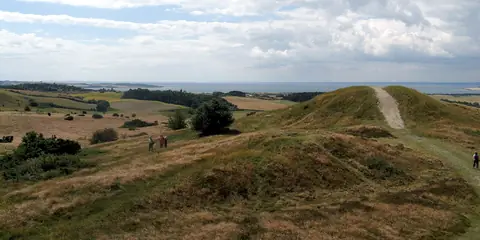
Mols Bjerge National Park
Central Denmark
Rolling glacial hills, heath and beaches near Aarhus, with Kalø Castle ruins on a small island reached by a causeway.

Comments