
The Øresund and Great Belt bridges: tolls for 2026, how to pay, trains to Malmö, wind, and the bridges that are free
Two long bridges hold Denmark together, and both charge. The Great Belt (Storebælt) joins Zealand to Funen, and so Copenhagen to Jutland. The Øresund Bridge joins Copenhagen to Malmö. You can cross either by train for the price of a ticket. All other bridges in the country are free, and there are no motorway tolls for cars.
Øresund: what it costs
- One way, from 14 September 2026, for a car or motorhome up to 6 m: 470 kroner at the toll station, or 420 kroner with an online ticket bought beforehand, valid for 30 days.
- With ØresundGO it's 182 kroner, and the contract is 370 kroner a year. If you drive there and back, it's already cheaper: 734 instead of 840.
- Motorcycles: 240, 215 or 94. Motorhomes of 6 to 10 m, and a car with a trailer: 940, 840 or 364.
- Pay at the Swedish end (Lernacken), in both directions. Cards, and kroner of both kinds.
Øresund: the crossing
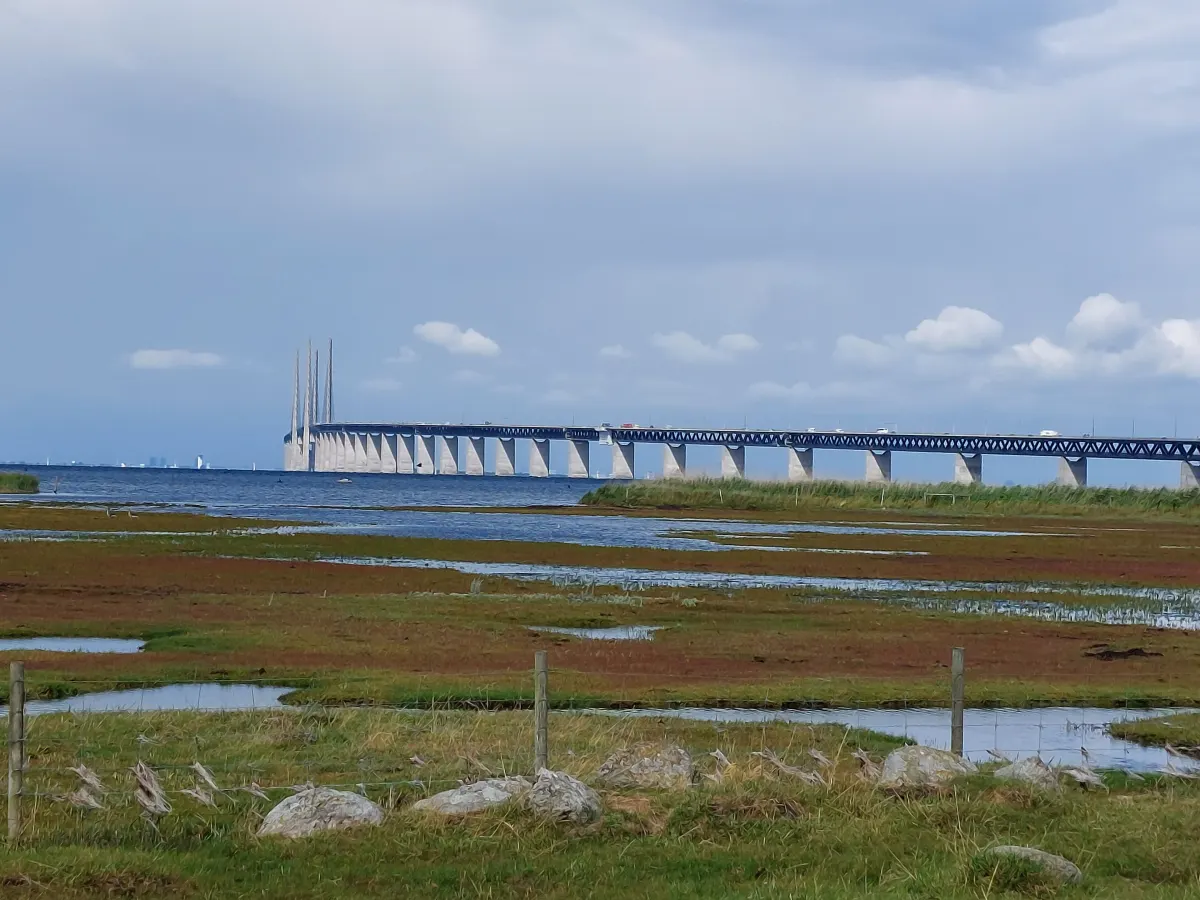
- It's 16 km from Copenhagen Airport: first a tunnel of 4 km, then the artificial island of Peberholm, where you can't stop, then nearly 8 km of bridge.
- There's no path for walkers or cyclists. Put the bike on the train.
- It has closed in storms, and towed caravans are stopped first. See the bridge's site.
- The best view of it is free: from the beach at Dragør or Kastrup, or from Sibbarp on the Swedish side.
By train to Malmö
- Øresund trains go every 20 minutes by day, and hourly at night. It's 35 to 40 minutes from Copenhagen's Central Station to Malmö C. They run on the level below the road, so you see the sea between girders.
- A single is a bit over 100 kroner, with no advance fares. The Øresund Family Ticket is for two to five people (at most two adults), 20% less than two adult tickets. It's sold at DSB machines and 7-Eleven in stations. Only children under 7 go free into Sweden.
- Metro and bus are included to your station in Copenhagen. SJ's own trains aren't.
- Passport or identity card: Sweden's police may walk through at Hyllie. See Arriving. Swedish kronor are another currency, but cards work everywhere. See Arriving in Sweden.
Great Belt: what it costs
- One way, in 2026, for a car of 3 to 6 m: 235 kroner by card or cash, or 205 kroner in the green Express lanes, for those with a Bizz box or number-plate payment set up beforehand. Cars under 3 m are 125 or 109.
- Number-plate payment is an app or web account from Brobizz or another company, and can be set up with a foreign car. Hire cars often have it already: ask, and ask what they add for it.
- The yellow lanes take cash (kroner, or euros except the 500 note), the others cards. Don't reverse if you get in the wrong one.
- Cheaper returns in the evening (246 kroner), and from Friday noon to Sunday (346), are only for people with the bridge's own agreement.
- 2027 prices weren't out when this was written. They change on 1 January.
Great Belt: the crossing
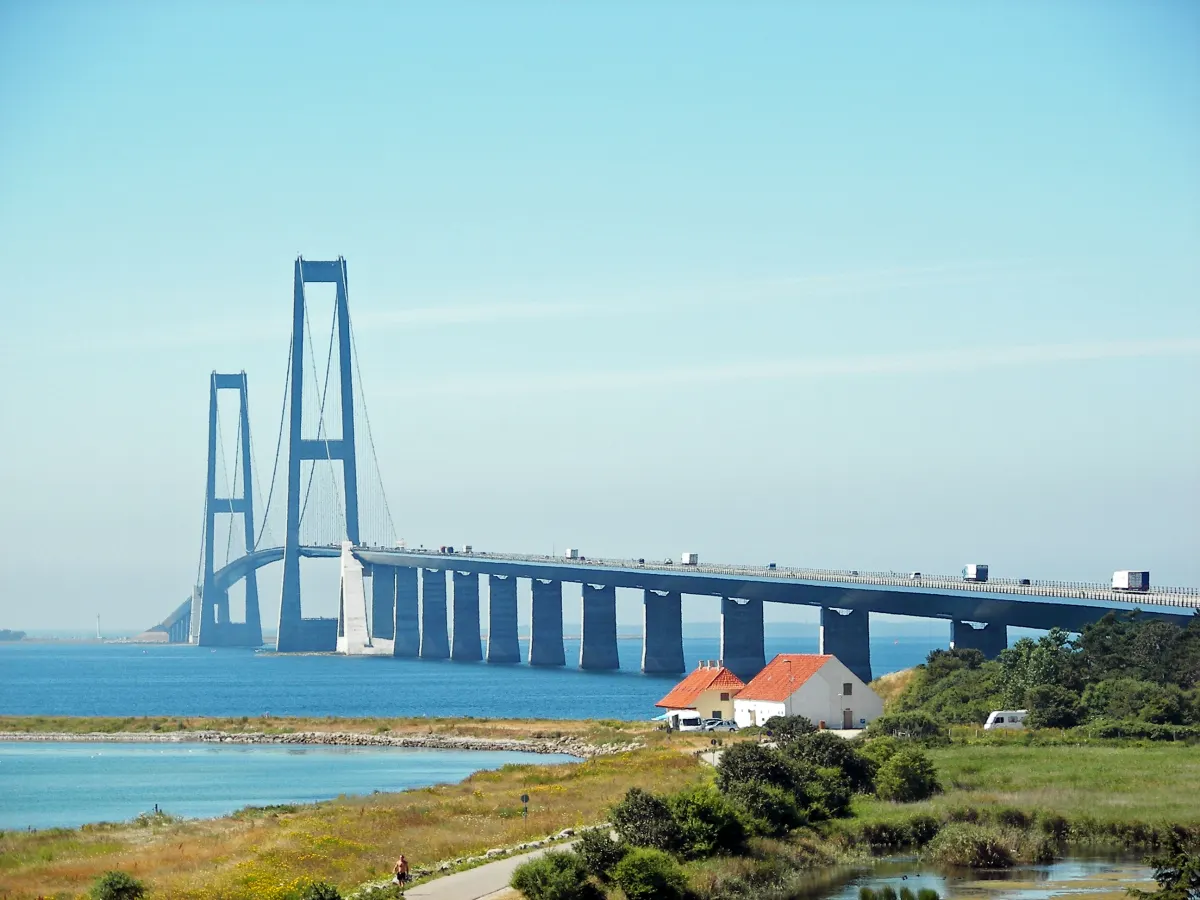
- It's 18 km: a low bridge, the island of Sprogø, and then the great suspension bridge, whose towers are 254 m high. Trains go in a tunnel under that part.
- You can't walk or cycle over. There's a rest area with a view at Halsskov, by Korsør, and at Knudshoved, near Nyborg.
- In strong wind there are warnings on signs, and light vehicles and caravans are stopped.
- With the toll, two people are often as cheap by train: Copenhagen to Odense starts at 88 kroner each. See Trains.
Round the tolls
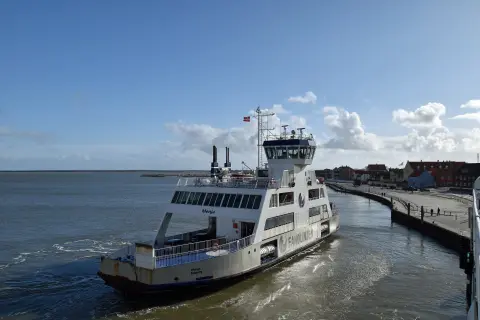
From Zealand to Jutland the fast ferry from Sjællands Odde to Aarhus is the other choice, and to Sweden the one from Helsingør. See Ferries. From Germany to Funen you come by Jutland, over the Little Belt, and pay nothing.
Bridges worth stopping for
At Middelfart you can walk over the top of the old Little Belt Bridge with a guide, 60 m up. The Queen Alexandrine Bridge to Møn (1943), and the road over Siø and Tåsinge to Langeland, are the prettiest to drive.

Kronborg Castle, Helsingør
A Renaissance castle on the narrowest point of the Øresund strait, where Danish kings collected tolls from passing ships.

Comments