
Trains in Denmark: DSB tickets, Orange fares, seat reservations, Intercity and Lyntog, trains abroad and delays
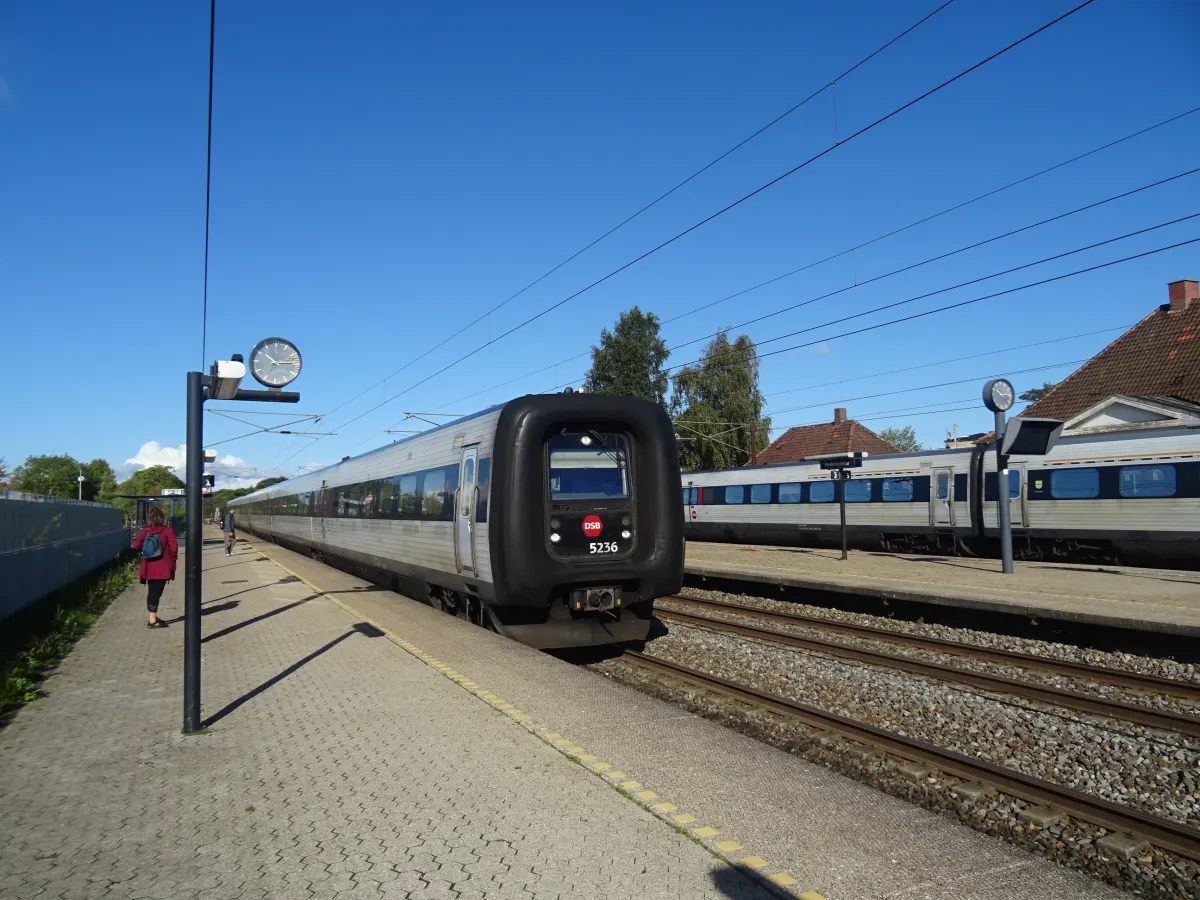
Trains go to nearly every town in Denmark, and no place on the network is more than about five and a half hours from Copenhagen. Most are run by the state company, DSB. Others, such as GoCollective in Jutland and on Funen and Nordjyske Jernbaner (NJ) north of Aalborg, are sold on the same tickets.
The trains
- Lyntog (Lyn) are the fastest, and Intercity (IC) stop a little more. They cost the same.
- Regional trains stop everywhere. S-trains are the suburban lines round Copenhagen: see Copenhagen transport.
- Trains divide: the front half may go to Esbjerg and the back half to Aarhus. Look at the sign on the carriage.
How long it takes
- Copenhagen to Roskilde: about 25 minutes. To Helsingør: about 45.
- To Odense: about 1¼ to 1½ hours.
- To Aarhus: about 3 hours. To Esbjerg: about 3.
- To Aalborg: about 4½ hours. To Skagen: 6 or more, with a change at Frederikshavn.
Tickets
- Orange is the cheap fare, tied to one train. Copenhagen to Aarhus starts at 119 kroner, and Odense to Copenhagen at 88. Book early: it goes up as the train fills. It isn't valid on buses, the metro or light rail. Orange Fri costs a bit more and can be refunded up to 30 minutes before.
- Single tickets have a fixed price, several times the cheapest Orange fare, for any train on the day, and cover the bus and metro at each end.
- Check in: in the DSB or Rejsekort app you swipe when you start, and again when you finish, and pay for what you used. Outside the rush hour it's 20% off. Forget to check out and you pay too much, so turn on the automatic one.
- The old blue plastic Rejsekort card stopped working after 29 June 2026. If you have one in a drawer, leave it there. The plastic replacement is the Basiskort: 80 kroner for an anonymous one, from 7-Eleven at stations.
- Buy in the app, at dsb.dk, from machines, or at 7-Eleven at the station. You can't buy on board.
- Two children under 12 travel free with each adult.
- Interrail and Eurail passes are good on all of them.
Seats
- A seat reservation costs 30 kroner, for any distance, up to two months ahead. It's optional, but worth it on Intercity and Lyntog on Fridays, Sundays and round holidays. Without one, look at the small screens over the seats.
- You can choose a quiet zone (stillezone), a family zone, or DSB 1', which is first class, with coffee and a lounge in Copenhagen, Odense and Aarhus.
Bicycles, bags and dogs
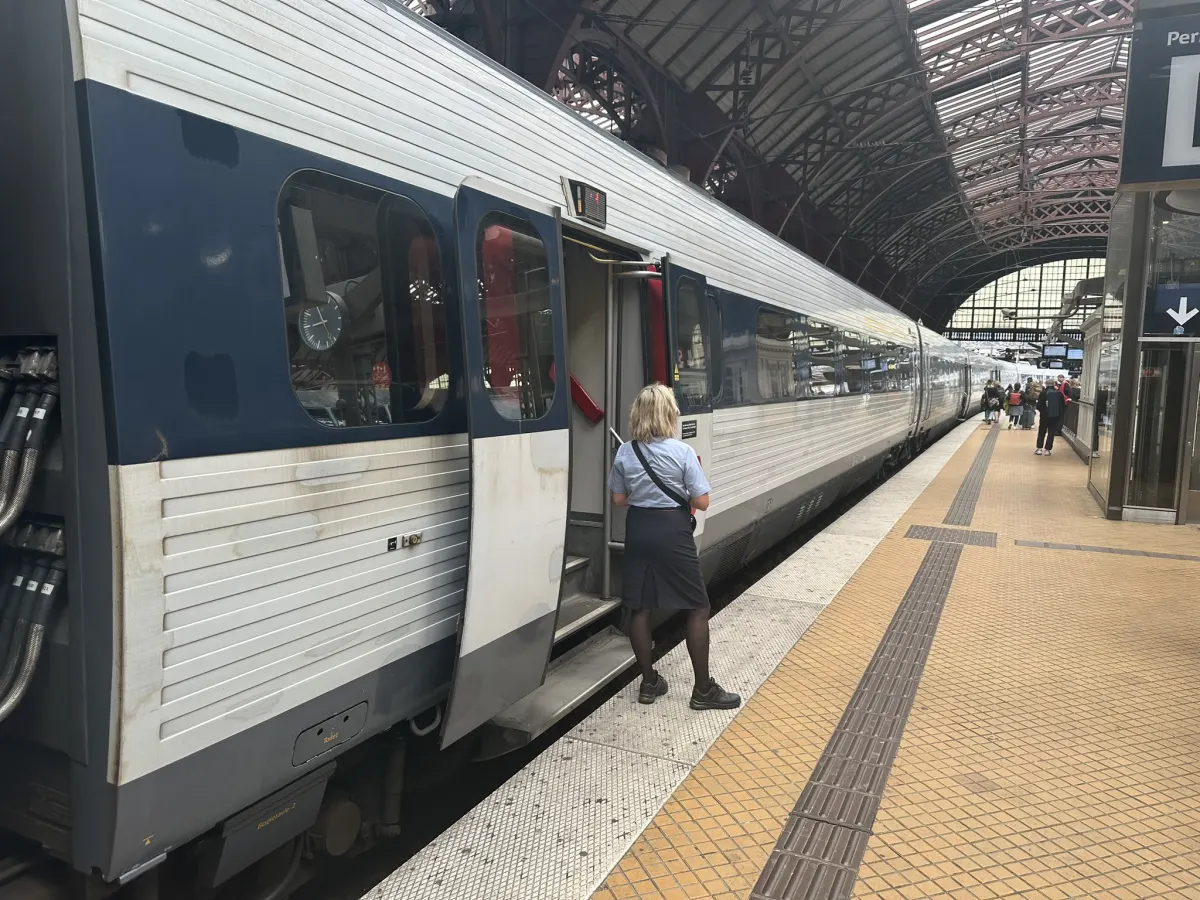
- Bikes are free on S-trains. On Intercity trains they need a ticket, and from spring to autumn a reserved place. See Cycling.
- Lockers are at the larger stations. A small dog in a bag goes free.
To other countries
- Hamburg: several a day, about 4¾ hours from Copenhagen, by Odense and Kolding, or about 4½ from Aarhus. The old train that rolled on to a ferry is long gone.
- Berlin: direct, about 7 hours, since May 2026, and on to Dresden and Prague, about 11.
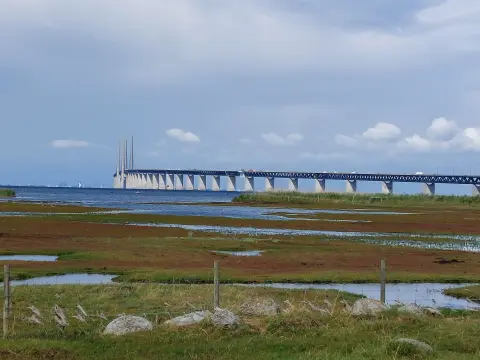
- Malmö: every 20 minutes for most of the day, and some run on to Gothenburg in about 3½ hours. See the bridges.
- Stockholm: a bit over 5 hours by SJ, when its direct trains are running. Snälltåget's trains, and the night trains to Berlin and Stockholm, call at København Syd (Ny Ellebjerg), a metro ride from the Central Station, or at the airport. See Trains in Sweden.
- Buy Germany weeks ahead for the cheap fares. There are passport checks: see Arriving.
When it goes wrong
- Track works (sporarbejde) put buses on for days or weeks, most in summer and holidays. In November 2026 there were fewer trains between Copenhagen and Køge Nord, and buses for regional trains between Odense and Fredericia. Look in the DSB app the day before, and again in the morning.
- If you're more than 30 minutes late you can have part of the fare back. Claim it on DSB's site. Taxis aren't covered.
- Forsinket is late, aflyst cancelled, spor platform, togbus the bus instead.
- An inspector with no ticket in sight means a fee of many times the fare, whatever the reason.

Attractions
Aarhus: ARoS and the Old Town
Aarhus, Central Denmark
Denmark's second city has the ARoS art museum, topped by 'Your rainbow panorama', a circular glass walkway in all the colours of the rainbow, with vi…
Attractions
Viking Ship Museum, Roskilde
Roskilde, Zealand
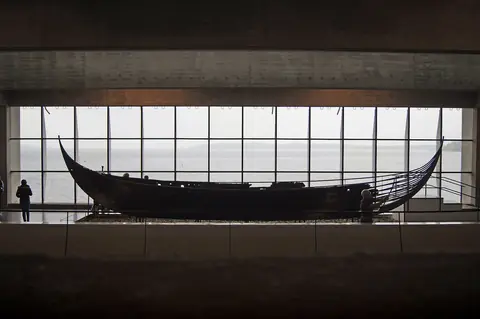
Five Viking ships deliberately sunk to block the fjord around 1070, raised and displayed.
Comments