
Beaches and the sea in Denmark: flags, rip currents, the tide in the Wadden Sea, Grenen, harbour baths and water quality
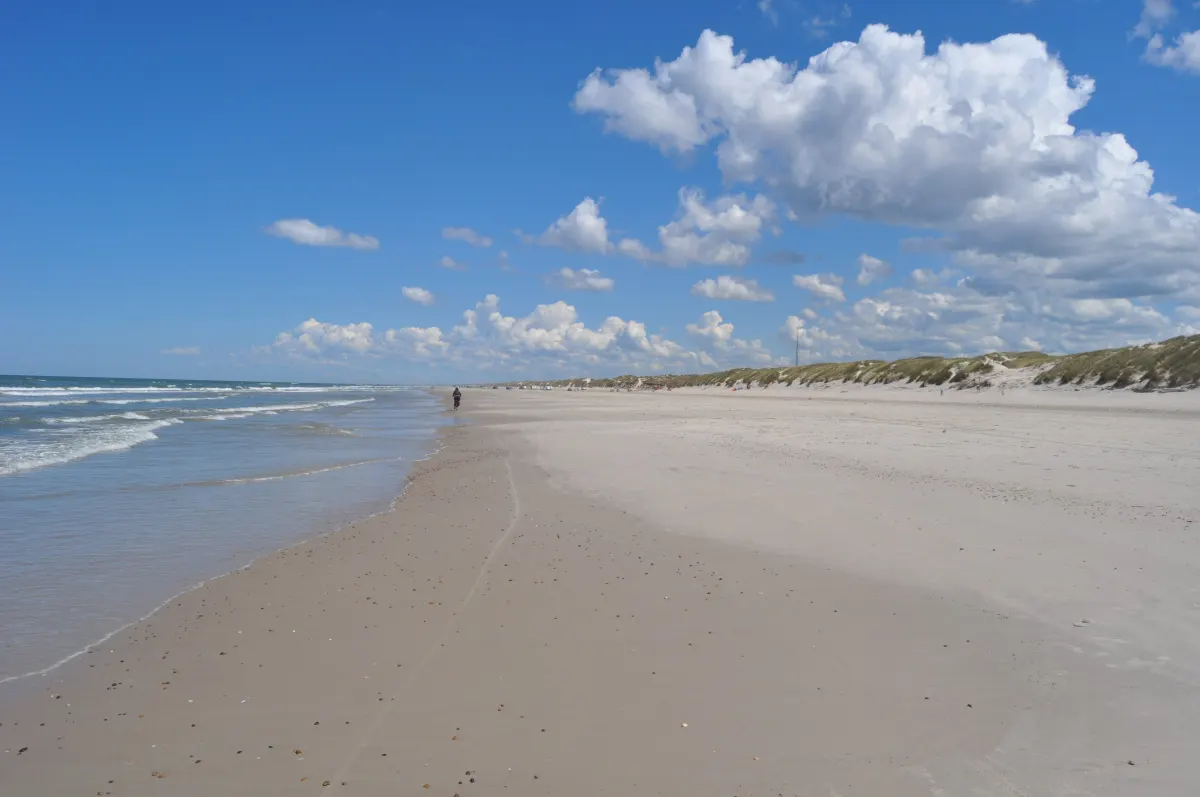
You're never more than about 50 km from the sea in Denmark, and most of the shore is sand, public and free. The east side is calm. The west coast, on the North Sea, is magnificent, and drowns people every year.
Which coast
- Kattegat and the Belts (east Jutland, Funen, west Zealand): shallow, sheltered, good for children. Mols Bjerge, Ebeltoft, Samsø.
- North Zealand (Tisvilde, Hornbæk, Liseleje): waves, and revlehuller, gaps in the sandbars where the water runs out.
- Baltic: Bornholm (Dueodde has the finest sand), Marielyst on Falster, Møn.
- North Sea and Skagerrak (Rømø to Skagen): wide sand, surf, wind and currents.
- The water is about 16 to 20 °C in July and August, and 10 to 13 in late May. Any of it can be cold enough to take your breath.
Flags and lifeguards
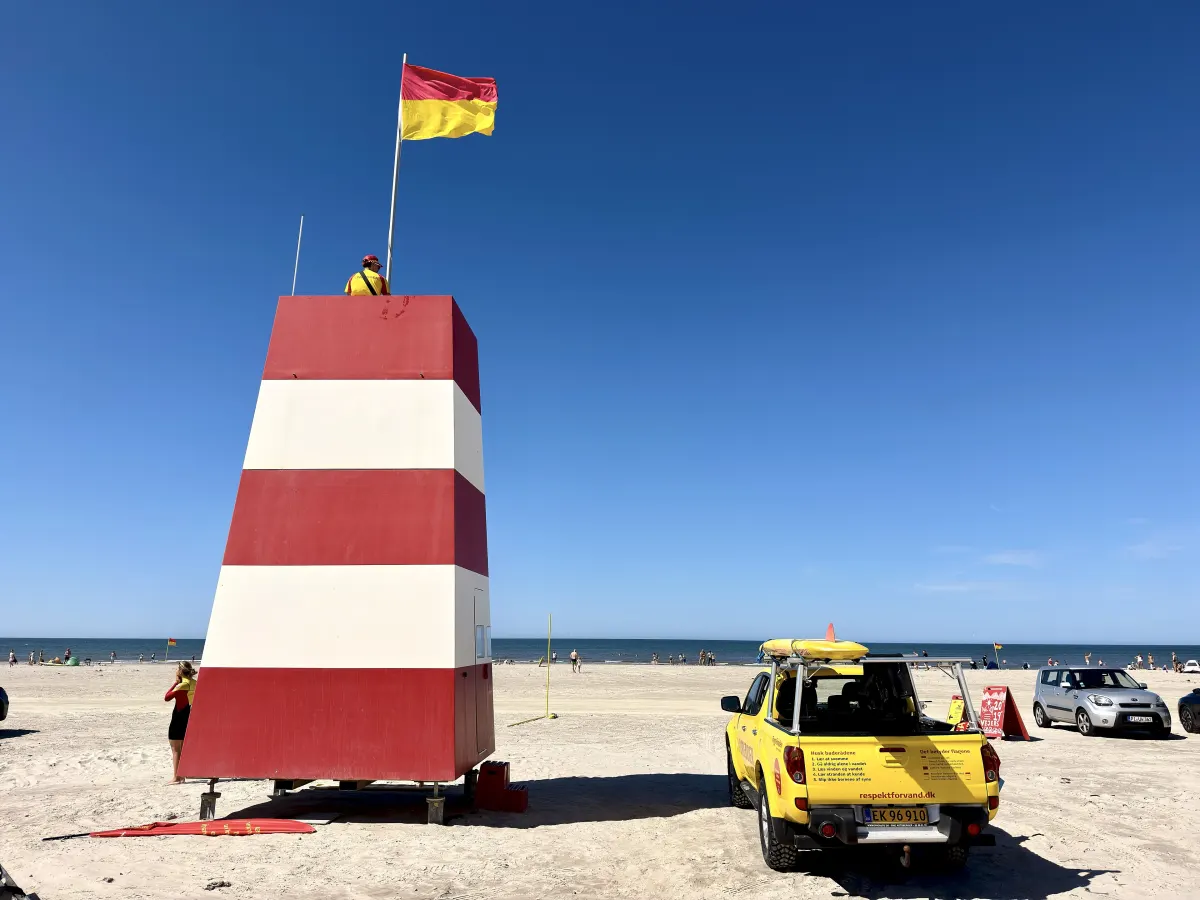
- Some 35 beaches have TrygFonden lifeguards in summer, roughly from late June to the middle of August, 10 to 18. Outside that, nobody's watching.
- Red and yellow: lifeguards on duty, and bathe between the flags. Yellow: be careful. Red: don't go in.
- Green signs with a letter and number stand at every way to the beach (for example B 123). Note it. It's what 112 will ask for.
- No flag isn't a sign that it's safe.
Rip currents
- On the west coast, water thrown over the sandbars by the waves runs back out in narrow, fast streams. Look for a gap in the breaking waves, or a darker, calmer strip. Don't swim there, or next to groynes.
- If you're caught: don't fight it. Float, let it carry you past the bar, swim along the shore, and come in where the waves break. Wave and shout.
- Go in to the waist, never alone, and swim along the beach. Keep children within reach.
- With wind off the land, no airbeds, paddleboards or swimming rings. They're in the North Sea in minutes. Let it go: don't swim after it.
Grenen
At Grenen, by Skagen, two seas meet over the sandbank, and swimming is forbidden. The currents are deadly, for waders too. Stand with a foot in each, in the last inch, with your shoes off.
The Wadden Sea
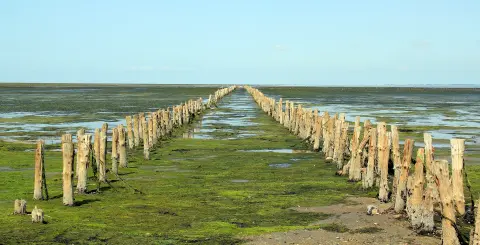
- From Blåvand to the German border the sea floor is bare twice a day, and the difference is up to 1.8 m, and far more in a storm with a west wind. See Wadden Sea National Park.
- The water comes in behind you, along channels, faster than people think. Fog does the rest. Go with a guide, or stay near the shore, with the tide table and the forecast from DMI.
- Mandø: the road, Låningsvejen, is under water twice a day. Take the tractor bus from Vester Vedsted. If you drive, get the times from the island first, and don't chance it.
- On Rømø and Fanø you may drive on parts of the sand. Cars are lost to the tide there. Keep to the firm part, leave before high water, and don't stay the night.
Harbour baths
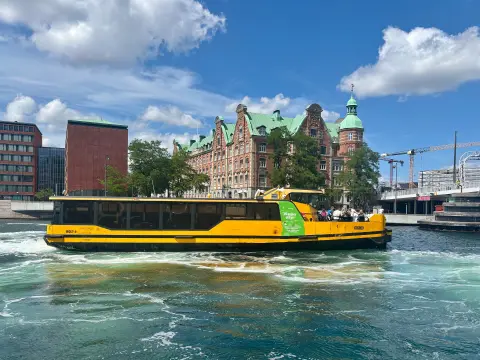
- Copenhagen: Islands Brygge, Sluseholmen, Fisketorvet (Havnebadet) and Sandkaj in Nordhavn, all free, with lifeguards in the summer (about June to August). Aarhus has a fine one at Aarhus Ø, and Odense and others follow.
- Swim only in marked places. It's an offence in the rest of the harbour, and there are boats.
- After heavy rain they close for a day or two, when drains overflow. See the city's site or the flag.
- The Water Culture House on Paper Island, in the middle of the harbour, is due to open on 5 December 2026, with the pools in the harbour to follow in 2027.
- Winter bathing with a sauna is in fashion. Most clubs are for members, but there are mobile saunas you can book by the hour.
What's in the water
- It's clean nearly everywhere. Blue flags mark about 200 beaches and harbours.
- Vibrio bacteria grow in warm, brackish water in hot summers, mostly in fjords and the Baltic. Keep out with an open wound, above all if you're elderly or have a weak immune system, and see a doctor at once if one turns red and painful.
- Blue-green algae: if the water's like pea soup, keep children and dogs out.
- Red jellyfish (brandmand) sting like nettles, in late summer. Rinse with sea water, and scrape.
- The weever fish hides in sand and stings feet. Hot water helps.
Beach rules
- All beaches are open to everybody, private ones for walking and a short stop. See Access rights.
- Dogs on a lead from 1 April to 30 September, and not at all on blue-flag beaches in the summer.
- Naked is allowed unless a sign says no, and bare breasts everywhere. Be considerate.
- No tents. A small fire on the sand is allowed if there's no ban, away from dunes. Put it out with water, not with sand.
- Dunes hold the country together: use the paths. Don't dig deep holes. They collapse.
- Bunkers from 1944 lean in the surf. There's iron in and around them: don't climb.

Natural features
Skagen and Grenen
Skagen, North Denmark
At Grenen, the northernmost tip of Denmark, the Skagerrak and the Kattegat seas meet, and you can stand with a foot in each, watching the waves clash.
Natural features
Wadden Sea National Park
Southern Denmark
Tidal flats and islands, a World Heritage site, with oyster safaris at low tide, seals, and 'black sun' starling murmurations in spring and autumn.

Comments