
Access rights in Denmark: where you may walk, cycle and swim, private forests, beaches, picking berries, dogs and fires
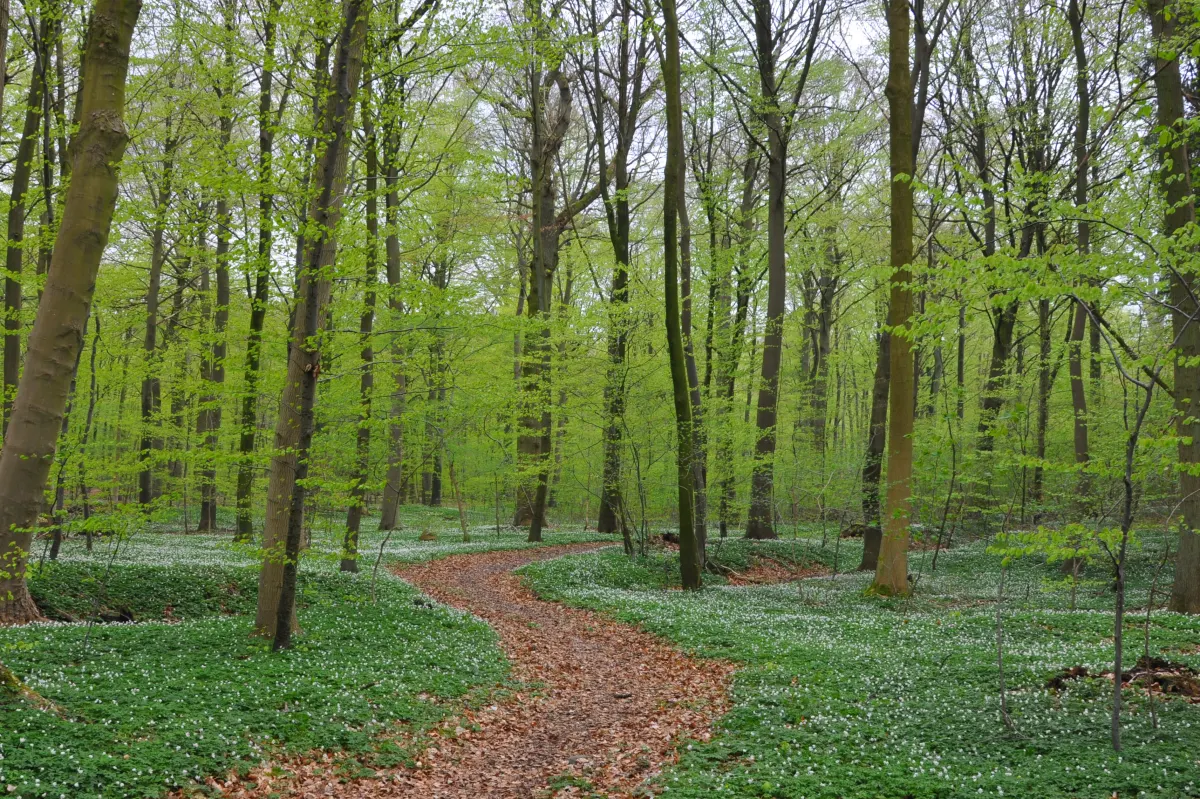
There's no right to roam everywhere in Denmark. Nearly all the land is farmed and privately owned. But beaches, dunes, heaths and woods are open to walkers, with rules that depend on who owns them and whether you have wheels.
Woods
- Public woods (state or council): open day and night, all year. On foot you may leave the paths.
- Private woods: from 6 in the morning to sunset, and only on roads and paths. Keep 150 m from buildings. Owners of small woods (under 5 hectares) may close them, with a sign at the entrance.
- How to tell: signs and posts. State posts are red. Green or brown ones usually mean private land. If you don't know, stay on the path.
- Woods may be shut for a hunt, mostly from October to January. There's a notice.
Beaches, dunes and heaths
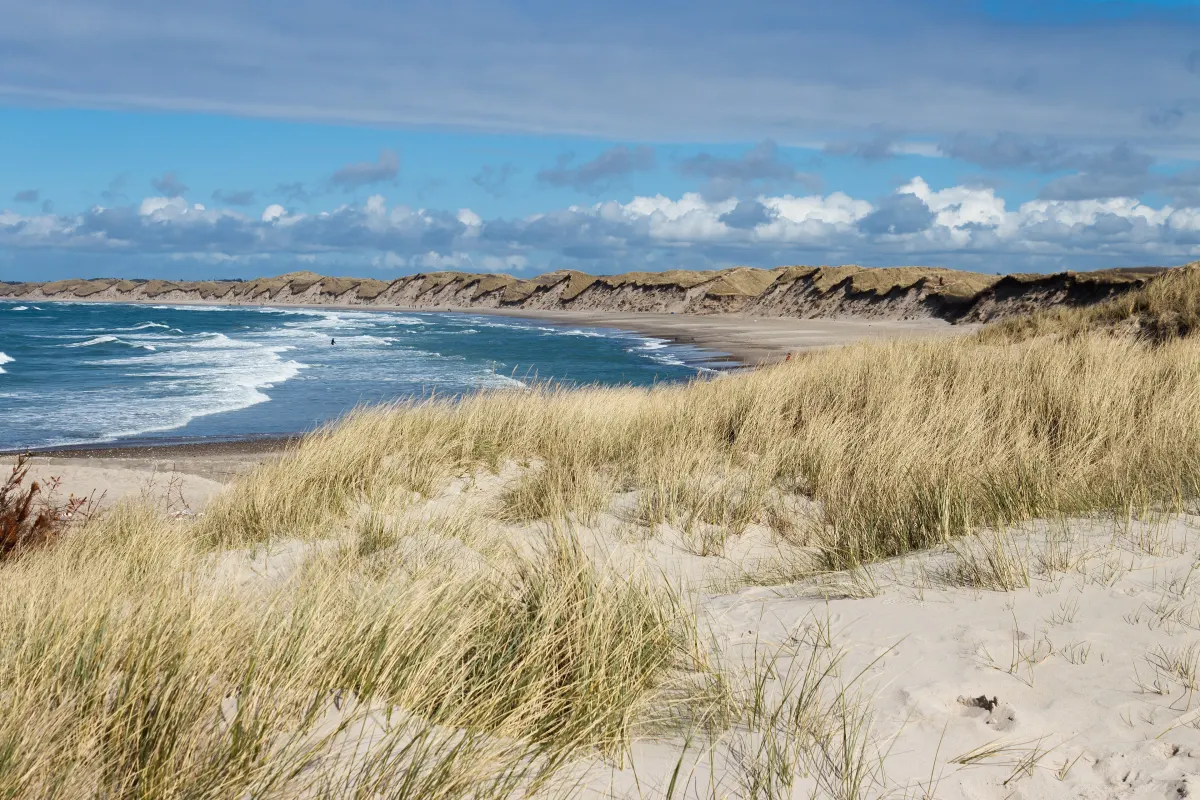
- You may walk along all beaches, swim, and stop for a while. On private beaches keep 50 m from houses if you sit down or bathe.
- Dunes, heaths, cliffs, moors and meadows that aren't cultivated or fenced: on foot. On private ones, between 7 and sunset or so, and 150 m from buildings.
- If land is fenced and has animals on it, don't go in, unless there's a gate or stile with a sign. Cows with calves chase dogs.
Fields and roads
- You may walk and cycle on private roads and paths in open country, if no sign says adgang forbudt or privat vej: færdsel forbudt. Not across crops, or along the edge of a field, unless it's a marked path.
- Marked paths called Spor i landskabet cross private farms, with the farmer's consent. Keep to them.
- Old railway lines have become cycle paths in many places.
Bikes and horses
Cycling is on roads and solid paths only, in woods of both kinds, and not on narrow tracks, unless there's a mountain bike sign. On beaches and heaths you push it. Horses keep to roads, or bridleways, and the beach outside summer.
Picking things
- Berries, mushrooms, nuts, herbs, flowers, cones, twigs: for your own use. A carrier bag of them is the old measure. Shells from a beach: a hat or bucketful.
- In private woods, only what you can reach from the path.
- Not whole plants, not branches from trees under 10 m, and nothing protected, such as orchids. Not in fields or gardens, of course.
- Don't eat a mushroom you don't know. The death cap grows here, and looks like one people eat in Asia.
- Amber on the beach is yours. Metal detectors need permission, and old finds belong to the state (danefæ): hand them to a museum.
- Oysters and mussels in the Wadden Sea: for yourself, and go with a guide. Look at warnings about algae first.
Dogs
- On a lead in all woods, and on beaches from 1 April to 30 September. In winter, loose on the beach if it obeys you.
- There are dog woods (hundeskov) in every district, fenced or not, where they run free. They're on udinaturen.dk.
- Pick up after it. Not on blue-flag beaches in summer, not near birds' nests.
Fires
- Only at fire places, and on a beach, if there's no ban. Never in wind, in drought, or near trees and bushes. Put it out completely.
- Look for a burning ban on brs.dk. Beside thatched houses the distances are long: in a holiday house, read the rules in the folder before you light the barbecue.
Fishing and boats
- Between 18 and pension age you need a fishing licence (fisketegn), by the day, week or year, at fisketegn.dk, for the sea and fresh water. In rivers and lakes you also need the owner's permission or a day card.
- Kayaks and canoes may use most waters. Some rivers, such as the Gudenå, have rules about seasons and tickets.
Closed to everybody
Bird islands and some beaches are shut from 1 March or 1 April to the middle of July. Seal reserves have dates of their own. The army's ranges, such as Oksbøl by Blåvand and Skallingen, close when the signals (red flags, balls or lights) are up.
For sleeping out, see Camping. For swimming, see Beaches and the sea.
Mols Bjerge National Park
Rolling glacial hills, heath and beaches near Aarhus, with Kalø Castle ruins on a small island reached by a causeway.
Skjoldungernes Land National Park
Forest, lakes and fjord landscapes near Roskilde, linked to the legendary Danish kings.
Comments