
Culture and manners in Denmark: plain speaking, equality, punctuality, queues, flags, talking to people and the holidays of 2027
Danes are informal, punctual, dry-humoured and hard to impress. They trust one another to an extent that surprises visitors, and they expect you to keep the same rules.
Talking
- Everybody uses first names, with teachers, doctors and ministers. There's no word for please. Tak (thanks) does the work, many times a day.
- Plain speaking isn't rudeness. If you ask whether it's a good idea, you'll hear if it isn't.
- Irony is constant, and told with a straight face. If something sounds absurd, it's a joke.
- Janteloven, the law of Jante, says: don't think you're better than us. So don't boast about money, work or where you've been.
- Strangers don't chat on trains. Ask a direct question, and you'll get a helpful answer in very good English.
- Leave out what people earn, believe and vote for, until they begin. It's best not to ask about Greenland as if it were for sale.
In public
- Take a number from the machine in bakeries, pharmacies and offices. Otherwise there's a queue, even if it doesn't look like one.
- Wait for the green man. Never walk on a cycle path, or step off a kerb without looking for bikes.
- Be on time. Seven means seven, at a home as at an office.
- Prams with sleeping babies stand outside cafés, also in winter. That's normal. Leave them alone.
- Stalls by farm gates sell strawberries and potatoes with nobody there. Put the money in the box, or pay by phone if you can.
- Smoking is banned in restaurants, stations and most bars. Vaping counts.
- In saunas and on beaches people are relaxed about nakedness. Don't photograph.
At home
- Shoes off. Shake hands with everybody in the room, children included, and say your name.
- Bring flowers or wine. Look people in the eye for skål.
- Say tak for mad after the meal. See Hygge.
- Don't drop in. Invitations are made weeks ahead, and the date is kept.
The flag and the crown
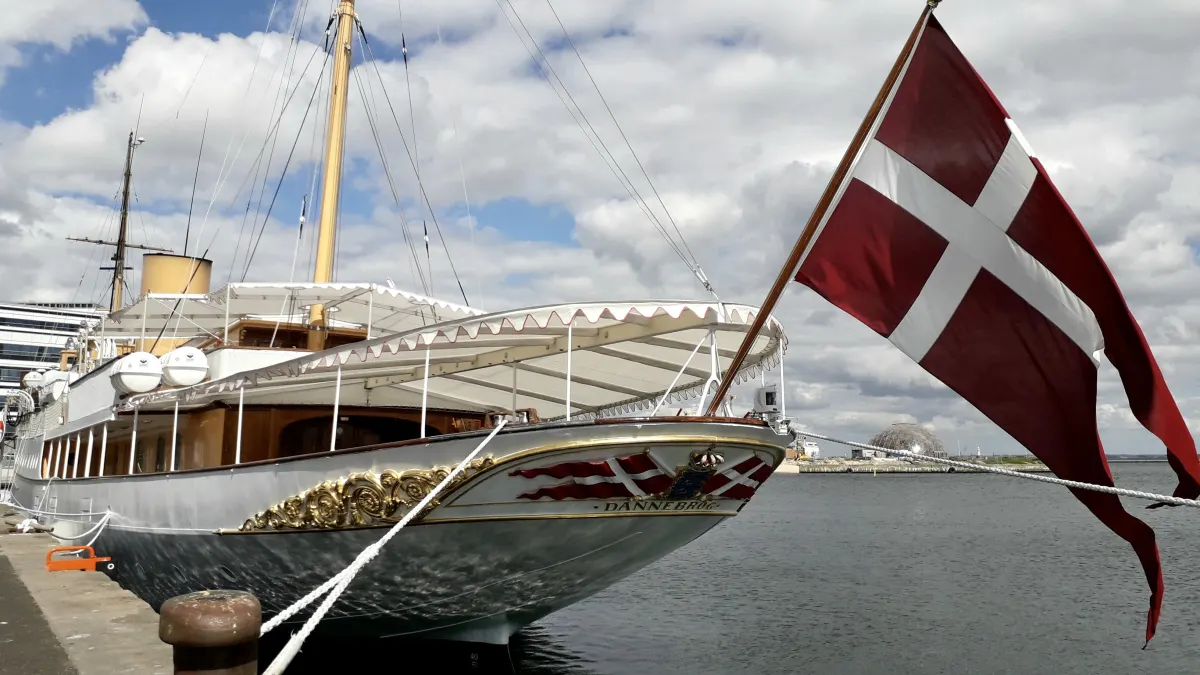
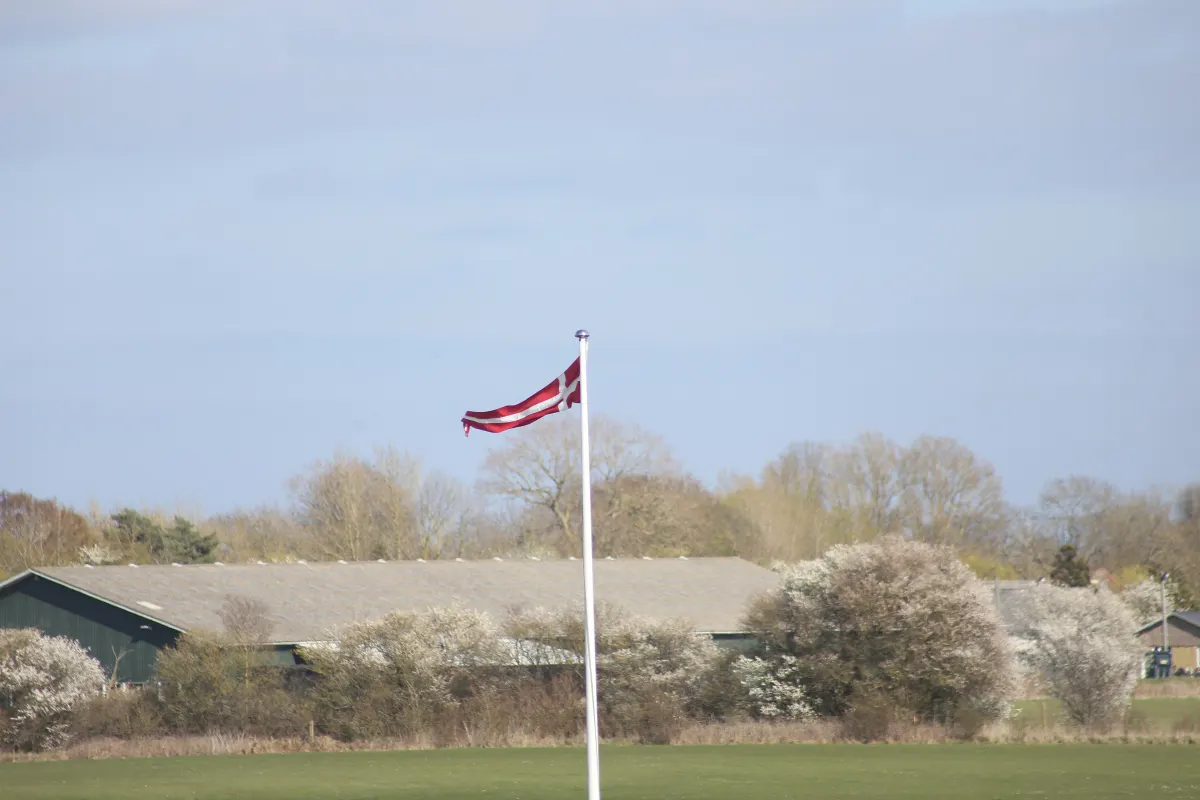
- The Dannebrog, red with a white cross, isn't about politics. It's for birthdays, Christmas trees, cucumber salads, and meeting people at the airport.
- The monarchy is popular. King Frederik X came to the throne in January 2024, when Queen Margrethe II stepped down.
- Most people belong to the Lutheran church, and few go. Cover nothing, take off your hat, and don't visit in a service.
A few words
- Hej (hi) is hello, and hej hej goodbye. Tak thank you, selv tak you're welcome. Undskyld excuse me. Ja, nej.
- Half the letters aren't pronounced. Æ, ø, å come at the end of the alphabet, and aa is the old way to write å: Aarhus, Aalborg.
- Half past is counted towards the next hour: halv tre is 2:30, not 3:30. It has ruined many appointments.
Holidays in 2027
- New Year's Day. Maundy Thursday to Easter Monday, 25 to 29 March. Ascension, 6 May. Whit Sunday and Monday, 16 and 17 May. Christmas, 25 and 26 December.
- Shops are shut by law on those days, and also on Constitution Day, 5 June, on Christmas Eve, and after 15:00 on New Year's Eve. Small food shops, kiosks, petrol stations and those in some holiday towns may open, and from 2027 also in more small towns.
- The Great Prayer Day, in older guides, was abolished from 2024.
- Ordinary Sundays are shopping days.
- Fastelavn, 7 February: children in costume beat a barrel full of sweets. Sankt Hans, the evening of 23 June: bonfires and songs on every beach.
- Students in white caps ride round in lorries at the end of June. Wave.
- School holidays: week 7 (15 to 21 February), July, and week 42 (18 to 24 October). Danes count in weeks. In weeks 28 to 30 half the country is away, and some restaurants in Copenhagen close.
Historic sites
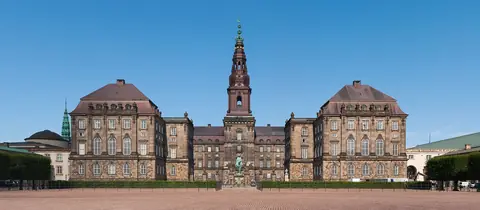
Christiansborg Palace, Copenhagen
Copenhagen, Capital Region of Denmark
Home of the Danish parliament, the Supreme Court and the Royal Reception Rooms.
Comments