
Poland's eastern borders: Ukraine, Belarus and Russia, which crossings are open, closed zones and the Białowieża Forest
Poland's borders with Ukraine, Belarus and Russia are the edge of the EU, and there's a war on the other side of one of them. Nearly all of Poland is unaffected, and you can visit the east, including Białowieża, Biebrza and Bieszczady. Near the line itself there are rules that are strictly enforced.
Ukraine
- Most governments, including the UK's, advise against travel to Ukraine, all or most of it. Read your own government's advice first.
- The UK government warns that Russian strikes have hit places in Ukraine within 20 km of the Polish border. In September 2025 Russian drones crossed into Poland and several airports closed for hours.
- The main crossings, such as Medyka, Korczowa and Dorohusk, are open, with long and unpredictable queues. Trains run from Przemyśl.
- Being within 15 metres of the border is banned, except at crossings. In the Bieszczady the ridge paths run along it: stay on the marked path.
- Most hire firms don't allow their cars into Ukraine.
Belarus
- The UK, USA, Canada and Australia advise against all travel to Belarus.
- The road crossing at Terespol (Brest) is the one every source lists as open for cars and buses. Kuźnica reopened for cars in November 2025. Sources disagreed in autumn 2026 on whether Bobrowniki takes passengers. Połowce and Sławatycze were closed.
- Poland shut the whole border for 12 days in September 2025, and can do so again at short notice.
The closed strip along the Belarus border
- Since June 2024 you may not enter a strip along about 78 km of the border, near Michałowo, Narewka, Białowieża, Dubicze Cerkiewne and Czeremcha.
- Most of it is 200 metres deep. Around nature reserves and the Białowieża national park it's about 2 km, and on one short stretch about 4 km.
- It's renewed every 90 days. The ban in force when this was written ran until 29 November 2026, and the government had drafted one until 27 February 2027. Expect it to go on.
- It's marked with signs. People have been fined.
Can you still visit Białowieża?
- Yes. The government says the zone, as a rule, doesn't cover villages or tourist trails. The village of Białowieża, the palace park, the bison reserve and most trails are outside it.
- The strictly protected reserve can be seen only with a licensed guide, who knows which parts are open. Book one ahead, and ask at the park's information point before you cycle or walk east.
- Expect police and army checks on the roads, and carry your passport.
- If you meet somebody in trouble in the forest, call 112.
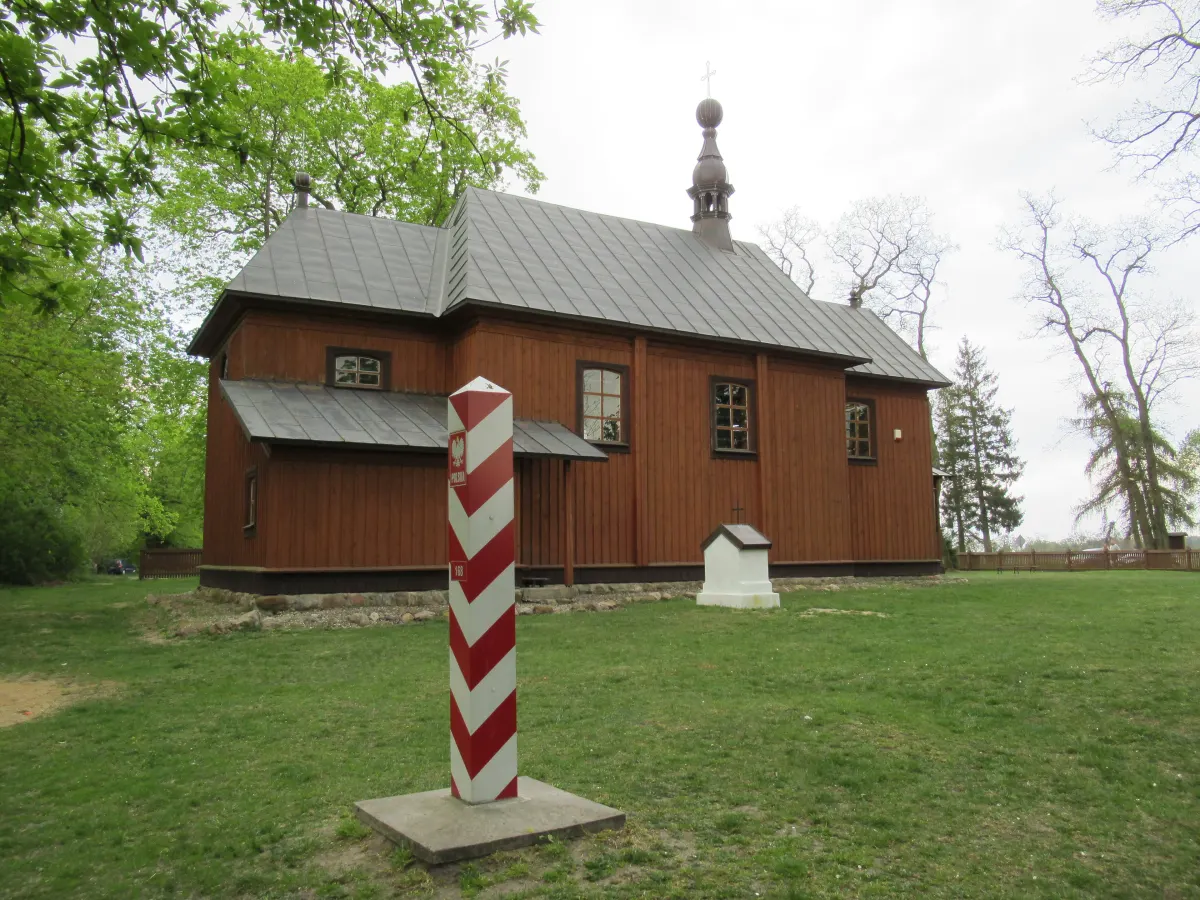
Russia (Kaliningrad)
- The UK, USA, Canada and Australia advise against all travel to Russia.
- Canada's government lists Grzechotki and Bezledy as the only road crossings open to cars and buses. Australia's says that coming into Poland from Kaliningrad is restricted, with few exceptions: some travellers need a permit on humanitarian grounds. Ask the Polish Border Guard before you go.
- Cars registered in Russia can't enter Poland, whoever drives them.
- On the Vistula Spit, don't walk along the beach to the border beyond Piaski.
Photos and drones
- Don't photograph soldiers, police, border fences, military sites, railways carrying military goods, or anything with a sign of a crossed-out camera. Since April 2025 many sites have been marked with that sign, and you can be fined and lose the camera or phone.
- Drones are banned near the eastern border without permission. Ask the Civil Aviation Authority (ULC).
- Don't touch any wreckage of a drone or balloon. Keep away and call 112.
Alerts on your phone
The government sends warnings to every phone in an affected area, by text, in Polish and English. If you get one, do what it says. For the rest of the country, see Safety.

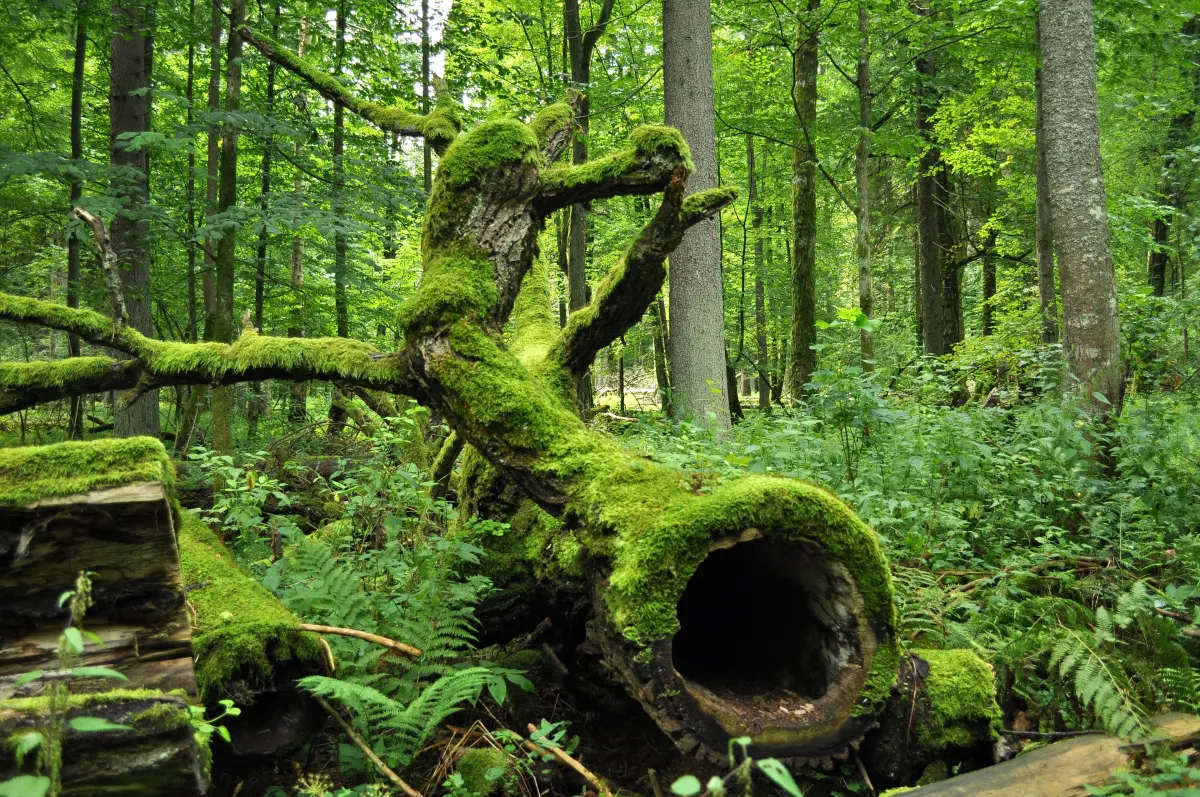
Białowieża Forest
The last remaining part of the primeval lowland forest that once covered Europe, shared with Belarus, a UNESCO World Heritage Site.
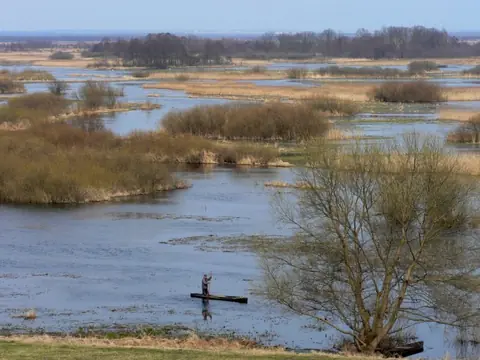
Biebrza National Park
One of Europe's largest wetlands, a paradise for birdwatchers, with elk, beavers and huge spring floods.
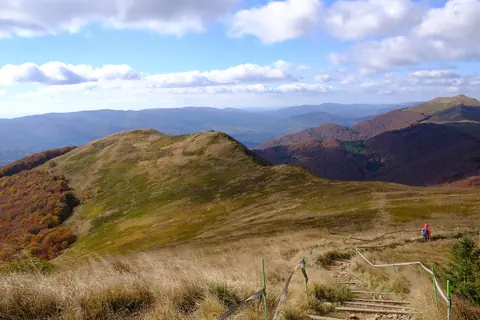
Bieszczady National Park
Wild mountain meadows (połoniny) and forests in Poland's far south-east, with bison, wolves, bears and old wooden churches.
Comments