
Arriving in Poland: Schengen rules, EES and ETIAS, checks on the German and Lithuanian borders, customs and airports
Poland is in the Schengen area, the group of European countries with no routine passport checks between them. Most visitors from outside the EU can come for up to 90 days without a visa. Two new systems matter: EES, which is running, and ETIAS, which isn't yet. For Ukraine, Belarus and Russia, see the eastern borders.
The 90-day rule
- Citizens of the UK, USA, Canada, Australia, New Zealand, Japan, South Korea and many other countries can stay without a visa for up to 90 days in any 180-day period. The days count for the whole Schengen area together, so time in Germany or Italy uses them up too.
- Overstaying can mean a ban of up to three years.
- EU, EEA and Swiss citizens need only a passport or national identity card. Other nationalities, including Indian, Chinese and South African citizens, normally need a Schengen visa, applied for in advance.
- Polish citizens with a second nationality must enter and leave on a Polish passport or identity card. Children born abroad to a Polish parent are usually Polish too. The UK government says people have been stopped from leaving on a British passport.
Your passport
- For visitors from outside the EU, it must have been issued less than 10 years before you arrive, and be valid for at least three months after you leave the Schengen area.
- Border guards can ask for a return or onward ticket and proof of enough money for your stay.
- Carry identification at all times. The UK government says a printed copy of the passport's photo page is accepted.
EES: fingerprints and a photo
- The Entry/Exit System replaces passport stamps for visitors from outside the EU and Schengen. It has been fully operational since 10 April 2026.
- The first time you cross the border, your fingerprints and photo are taken. It's free, there's nothing to apply for before you travel, and children aged 11 or younger don't give fingerprints. The record lasts three years.
- Allow extra time in both directions, and more for a connection from a flight outside Schengen to one inside it.
- You register where you first enter Schengen. If you change planes in Frankfurt or Amsterdam, that's there, not in Poland.
ETIAS: not yet
- ETIAS is an online travel authorisation that visa-free visitors will need. In November 2026 it wasn't in operation and no applications were being accepted. The EU had planned the end of 2026, but hadn't given a date.
- When it starts, it will cost €20 and be applied for online.
- Any website that offers to take your application now is not genuine. The only official address is travel-europe.europa.eu. Look there before you book.
Checks at the German and Lithuanian borders
- Poland has checked people arriving from Germany and Lithuania since July 2025, and has extended this until 30 March 2027. They're mostly spot checks on roads, trains and buses.
- Germany also checks people arriving from Poland. Expect queues on the motorway at Świecko and Zgorzelec, and officers on trains to Berlin.
- The borders with Czechia and Slovakia are normally open, but carry your passport, even on a mountain path.
Customs
- From outside the EU you can bring up to €430 of goods by air (€300 by land), plus, for those aged 17 and over, 200 cigarettes, 1 litre of spirits or 2 litres of drinks up to 22%, 4 litres of wine and 16 litres of beer. The tobacco limits are lower by land from the east.
- Meat, milk and anything made with them are banned from most countries outside the EU, including the UK, with small exceptions such as baby milk.
- Declare cash of €10,000 or more, in or out.
- Taking out an antique or an old painting can need a permit. Ask the seller for the papers.
From Warsaw's airports
- Chopin (WAW) is inside the city. Trains S2 and S3 from under the terminal take a little over 20 minutes to the centre, and bus 175 about half an hour. Both take an ordinary city ticket: the airport says to buy the 75-minute one. By night there's bus N32.
- A taxi to the centre was about 50 zł by the airport's estimate. Use the official rank, or Uber or Bolt, and ignore anyone who offers a ride in the hall.
- Modlin (WMI), used by budget airlines, is 40 km north: a shuttle bus to Modlin station and a train, or a direct coach. The RL train links it with Chopin. Radom is 100 km south.
From the other airports
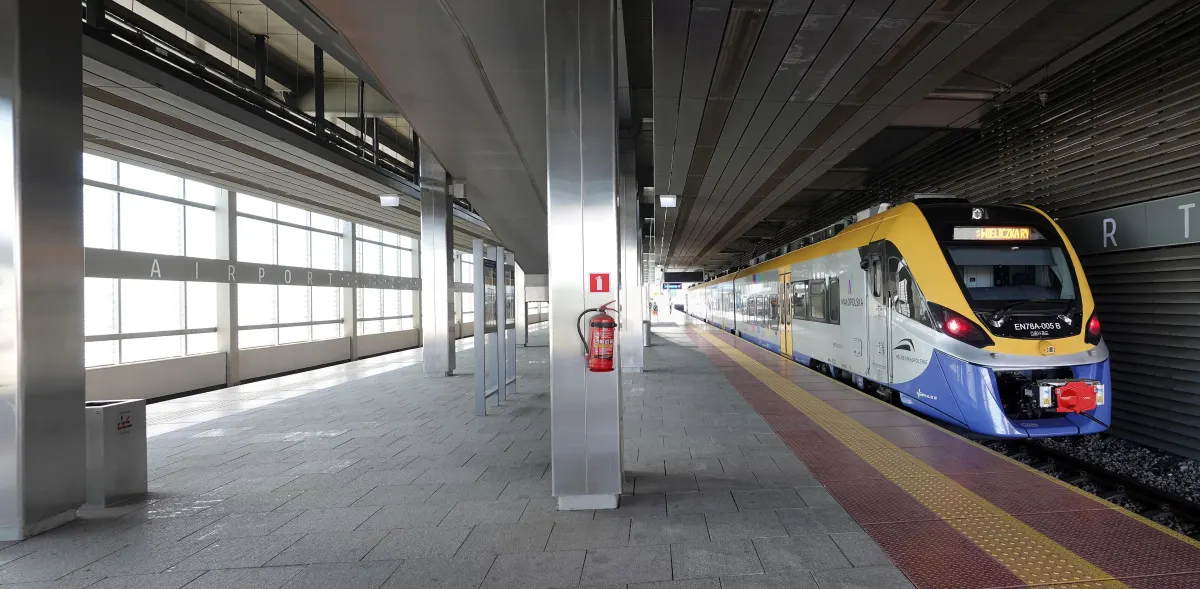
- Kraków: the SKA1 train to the main station in about 20 minutes, 20 zł, and on to the Wieliczka salt mine for 24 zł. Buses 209 and 300, and 902 by night, take city tickets.
- Katowice (KTW), in Pyrzowice, is used by many budget flights: direct coaches run to Kraków in under two hours.
- Gdańsk: trains from the terminal to Wrzeszcz, where you change for the centre, or bus 210. Wrocław: bus 106 to the main station. Poznań: bus 159.
Arriving by land or sea
- Trains run direct from Berlin, Prague, Vienna, Budapest and Vilnius (with one change of train at the border at Mockava): see Trains.
- Ferries from Sweden come to Gdańsk, Gdynia and Świnoujście.

Comments