
Money in Poland: złoty, cards and cash, cash machines that overcharge, kantors, prices and tax-free shopping
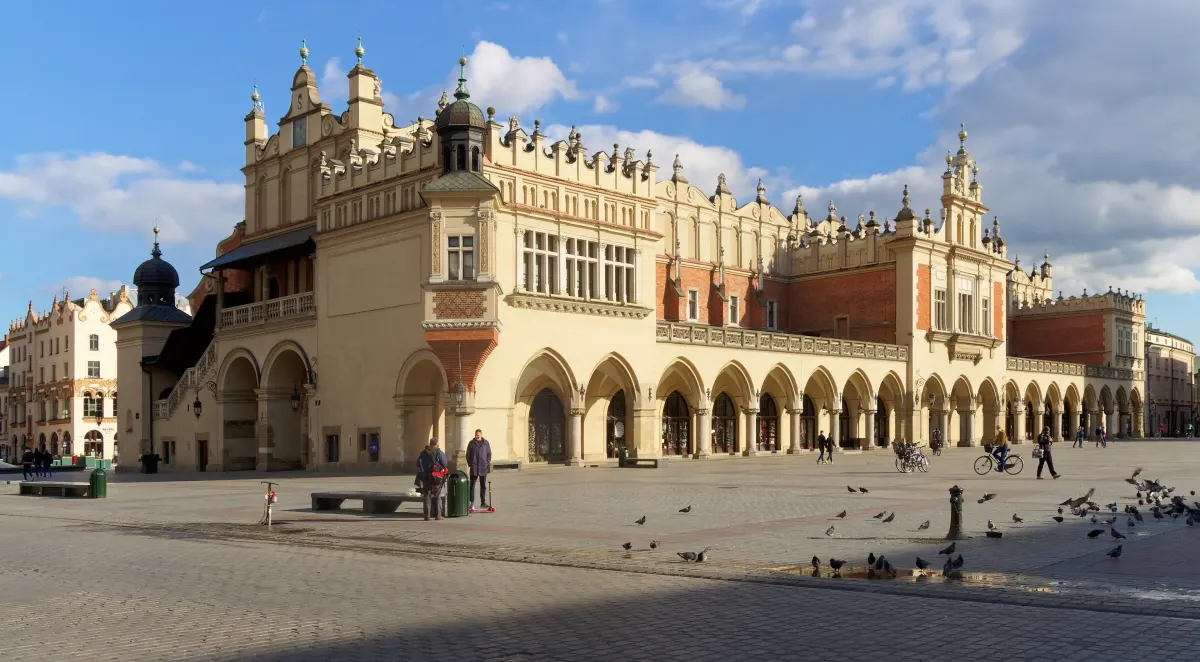
Poland is in the EU but doesn't use the euro. The currency is the złoty (zł or PLN), of 100 grosz. On 23 November 2026 the central bank's rates were €1 = 4.46 zł, £1 = 5.32 zł, US$1 = 4.06 zł and A$1 = 2.70 zł.
Cards
- Poland is one of Europe's most cashless countries. Cards and phones work in shops, cafés, trams, taxis, museums, market stalls and even many public toilets and churches.
- If a terminal asks, always choose to pay in złoty. Choosing your own currency is a worse rate.
- Some places take BLIK, a Polish phone payment for people with a Polish bank account. You can ignore it.
When you need cash
- Minibuses, village shops, mountain huts, flea markets, cloakrooms, some milk bars, small parking places, and tips. 100 to 200 zł in small notes is enough.
- Shops dislike breaking a 200 or 500 zł note. Ask the machine for small ones, or pay with it in a supermarket.
- Euros are accepted in some tourist shops, at a poor rate.
Cash machines
- Use a machine (bankomat) that belongs to a bank: PKO BP, Pekao, Santander (being renamed Erste in 2026), ING, Millennium or BNP Paribas.
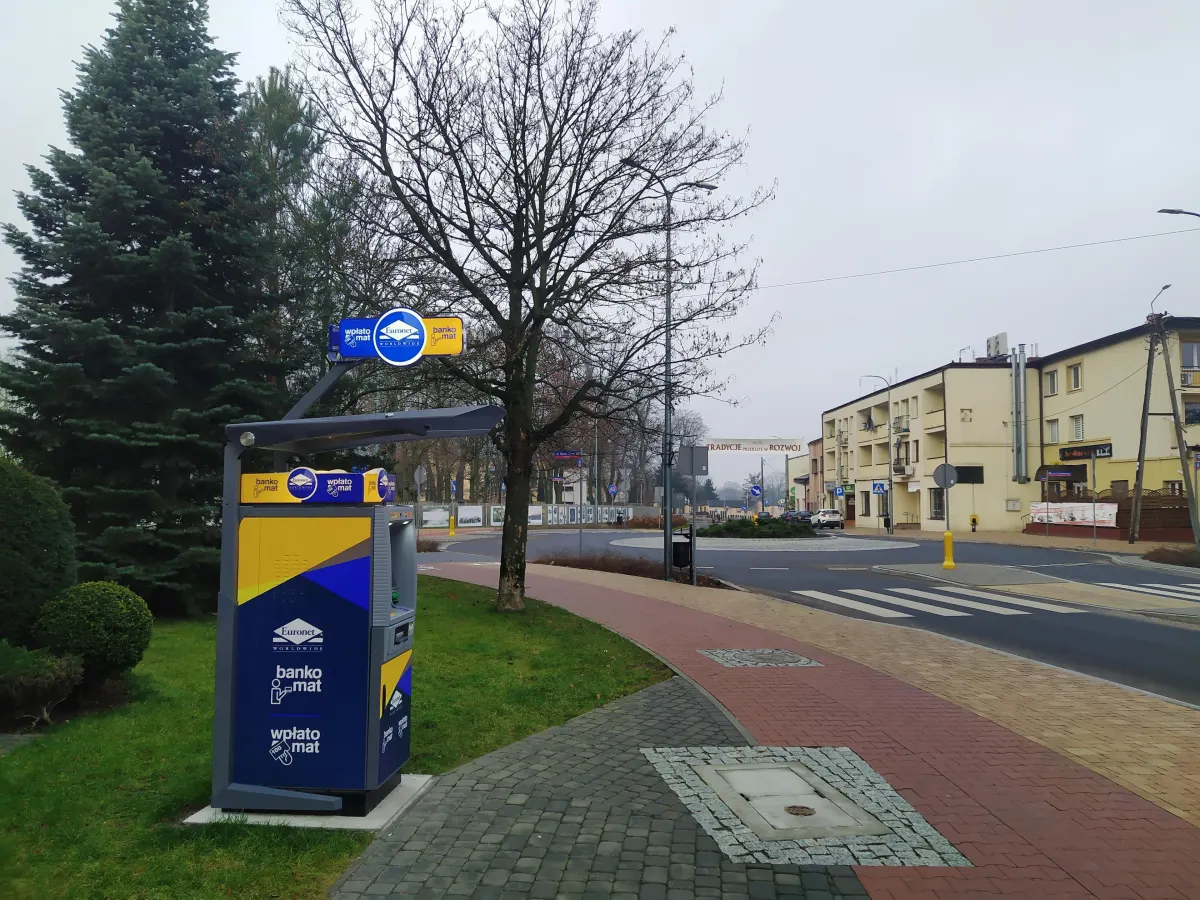
- The blue and yellow Euronet machines stand wherever tourists do. They add a fee and offer a dreadful rate. If you must, refuse the conversion and press "without conversion" (bez przeliczenia), even when the screen makes it look like cancelling.
- Cover your PIN, and avoid machines in bars and at night.
Changing money
- A kantor is an exchange office. The good ones have a narrow gap between the buying rate (kupno) and the selling rate (sprzedaż), and no commission. Compare with the central bank's rate.
- Avoid those at airports, stations and on the main squares, and any that shows only one rate in big figures. The rate must be the one displayed: count the money before you sign.
- Never change money in the street. People may hand you old or foreign notes.
What things cost
Rough prices in late 2026:
- Coffee 14 to 20 zł. Half a litre of beer in a bar 15 to 22 zł. A Kraków pretzel 3 to 5 zł.
- Lunch in a milk bar 25 to 40 zł. A weekday set lunch (lunch dnia) 35 to 50 zł. A main course in a good restaurant 50 to 90 zł.
- A city day ticket 15 to 20 zł. A fast train from Warsaw to Kraków 29 to 170 zł.
- A museum 35 to 65 zł, the salt mine about 140 to 170 zł.
- A double room 250 to 500 zł in the cities, more in Kraków and Gdańsk in summer.
Saving: most state museums are free one day a week: see Warsaw and Kraków.
Bottle deposits
Since October 2025 plastic bottles up to 3 litres and cans with the deposit mark cost 50 grosz extra, and reusable glass bottles 1 zł. Put them in the machine at a bigger supermarket, without crushing them, and you get it back.
Sundays and holidays
- Most shops and all malls are closed on Sundays, except eight a year. In December 2026 they open on the 6th, 13th and 20th. By the same law, 2027's should be 31 January, 21 March, 25 April, 27 June, 29 August, and 5, 12 and 19 December.
- Small shops with the owner behind the counter can open, including most Żabka convenience stores, and so can petrol stations, bakeries, stations' shops, cafés and restaurants.
- Holidays close them too: 1 and 6 January, Easter Sunday and Monday (28 and 29 March 2027), 1 and 3 May, Corpus Christi (27 May 2027), 15 August, 1 and 11 November, 24, 25 and 26 December. 24 December has been a holiday only since 2025.
VAT refund
- If you live outside the EU you can get back part of the VAT (23% on most goods) on purchases of at least 200 zł in one shop.
- Ask for the TAX FREE document, show your passport, and take the unused goods out within three months after the month you bought them in.
- Have it confirmed by customs when you leave the EU, before you check your bag in. Firms such as Global Blue keep a share.
See also Tipping and Tourist tax.
Food and drink
Milk bars (bar mleczny)
Warsaw, Mazovia
Cheap canteens from communist times serving home-style Polish food: pierogi, soups and pancakes.
Food and drink
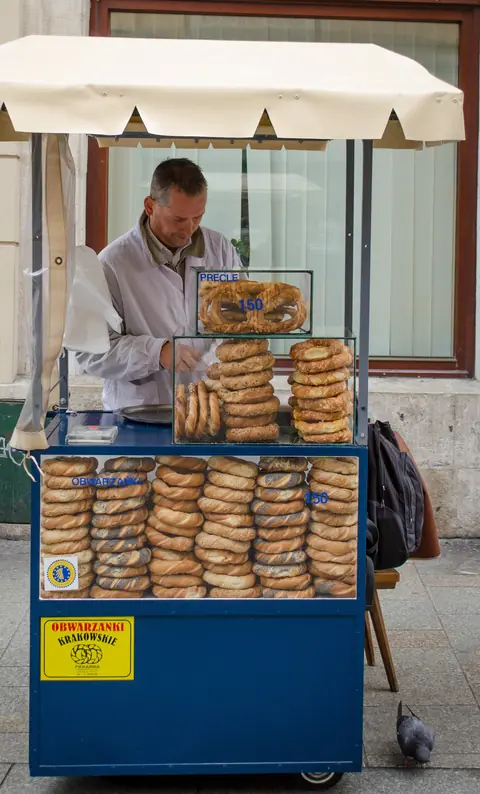
Obwarzanek krakowski
Kraków, Lesser Poland
Kraków's braided bread ring with poppy or sesame seeds, sold from blue carts.
Comments