
Driving in Norway: tolls, ferries, winter tyres, speed limits, tunnels, licences and camper vans
A car is the best way to see the fjords and the far north. Roads are well kept, but narrow, steep and slow: count on 60 km an hour at best, and leave time to stop. Tolls and ferries bill you by themselves. Fines are among the highest in Europe.
Tolls
- You never stop to pay. Cameras read the number plate (AutoPASS). City rings, new roads, bridges and tunnels all charge, usually between 20 and 150 kroner.
- Hire cars have a tag. The company adds the tolls to your card, often weeks later, with a fee. Ask what the fee is, per day or per bill.
- Your own car from abroad: register free at Epass24 before you come, or the bill goes to the owner's address, with a fee for looking it up in some countries. If you'll drive a lot, get an AutoPASS tag from one of the toll companies: 20% off tolls. You can't get one at the border, so order it well ahead.
- Electric cars pay less than petrol ones, but a foreign one only if it's registered with Epass24 or a tag company.
Car ferries
- Drive up, join the lane, and drive on. Most run every half hour or hour, until late evening. A few in the north run a few times a day: look them up on Entur.
- Most read the number plate too. Without an account, the bill comes by post with a 35 kroner fee. Register your plate and card with FerryPay to avoid it. Passengers are free on many.
- Only a few can be booked, such as Bodø to Moskenes: see Getting around.
Licence
- EU, EEA, Swiss and UK licences are accepted. UK paper licences may not be.
- Other licences are good for three months. You need an international driving permit as well if yours has no photo, isn't in the Latin alphabet, or doesn't use the international classes (A, B, C). Many licences from the USA, Canada and Australia don't, so get a permit at home. It's cheap.
- You must be 18. Hire firms usually want 19 to 21 or more, a year's experience and a credit card.
The rules
- Alcohol: the limit is 0.2 g per litre, which one drink can break. There are frequent checks, also in the morning. Prison is possible.
- Speed: 50 km/h in towns, 30 on many streets, 80 on country roads, and 90 to 110 on motorways. Cameras are common, and some measure your average between two points, often in a long tunnel.
- Phones in the hand: a fine of 10,750 kroner, even at a red light.
- Headlights are on, dipped, all day, all year.
- Give way to the right where there's no yellow diamond sign, even to a small side street. It catches out most visitors.
- On single-track roads, use the passing places (a blue sign with an M). Buses and lorries go first. Pull over if there's a queue behind you, and never stop in the road for a photo.
- Pedestrians at a crossing always go first.
Winter
- Tyres must have at least 3 mm of tread from 1 November to the first Sunday after Easter Monday (4 April 2027), and from 16 October to 30 April in Nordland, Troms and Finnmark. In any month, you must have tyres fit for snow or ice if the road has it. Summer tyres aren't allowed on winter roads. The fine is up to 750 kroner a tyre.
- Hire cars have winter tyres in the season. Ask for studded ones in the north.
- Visit Norway advises people who've never driven on snow not to drive in winter, and northern Norway started a campaign about it in November 2026. Moving slowly off the road to look at the sky causes accidents. If you want the northern lights, take a tour.
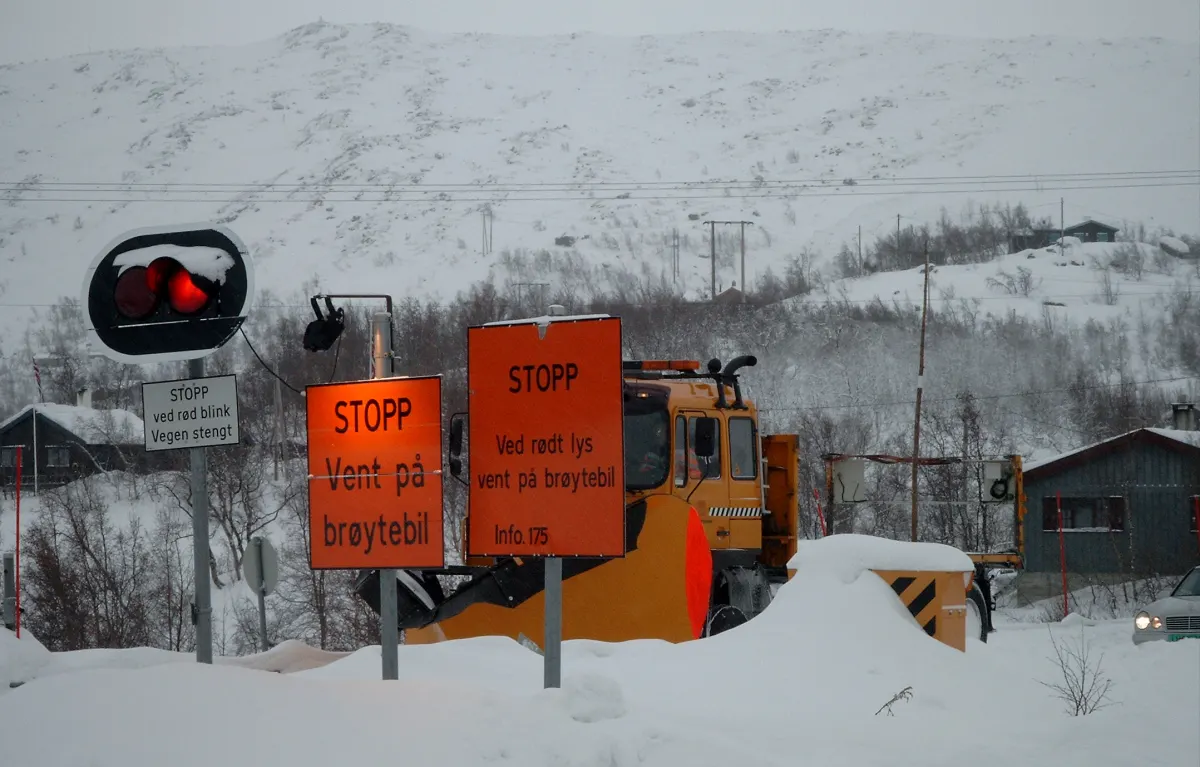
- Mountain passes close in storms, or open only in convoy (kolonnekjøring): you wait at a barrier, and follow a snowplough. Have a full tank, warm clothes, food, a shovel and a torch. Don't leave the car.
- Black ice, side winds and drifting snow are worst at the coast. Keep far behind the car in front, and brake early and gently.
Mountain roads in summer
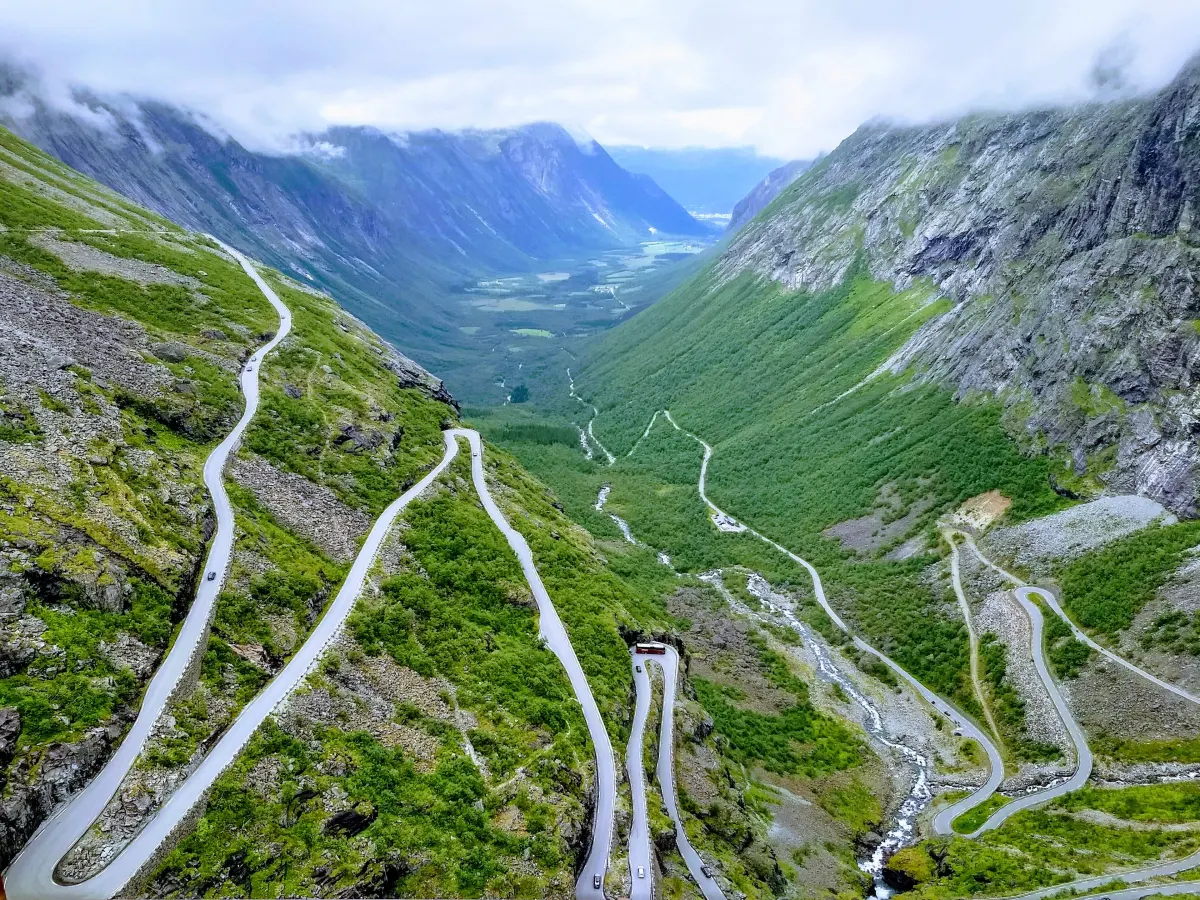
- Some of the best are closed for half the year: Trollstigen (normally open from mid-May to October or November), Sognefjellet in Jotunheimen, Aurlandsfjellet, Gamle Strynefjellsvegen, and the road to Lysebotn for Kjerag. The date depends on the snow.
- Trollstigen is often shut for a while for rockfall works. In autumn 2026 the Åndalsnes side was closed on weekdays.
- Check 175.no, the Vegvesen trafikk app, or ring +47 22 175 175, before any long drive. The Scenic Routes (Nasjonale turistveger), 18 of them, are the pick of the roads: Geiranger to Trollstigen, the Atlantic Ocean Road, Lofoten, Hardanger, and Helgeland, by the Svartisen glacier.
Tunnels
- There are over a thousand, some steep and under the sea. The longest, Lærdal, is 24.5 km. Keep your distance. In smoke, turn back or walk out: don't wait in the car.
- Lofoten: the Nappstraum tunnel, on the E10 between Leknes and Ramberg, is being rebuilt. It's closed at night from 11 pm to 6 am (with one opening at 2 am), and has delays by day, until December 2027.
- Tromsø: the tunnels under the city (not the one at Breivika) are closed. They won't reopen before February 2027. Allow more time to the airport.
- Oslo: the inner ring tunnels are closed until about August 2027.
Animals
Elk cross at dawn and dusk, most of all from autumn to spring, and reindeer and sheep lie on the road in the north and the hills. If you hit one, put out the warning triangle and ring the police on 02800. Not reporting it is an offence.
Parking and camper vans
- Pay by app (EasyPark and others) or machine. Avgift means you pay. Trailheads charge too: see Preikestolen and Trolltunga.
- Vans may spend a night in some lay-bys, but signs rule: many rest areas in Lofoten and the viewpoint at Stegastein have time limits, and whole villages ban overnight stops. Use campsites, and empty tanks only at dump stations. You can't drive off the road onto land.
- Keep the van under 3,500 kg, or different licence, toll and tyre rules apply.
Fuel and charging
Norway sells more electric cars than any other country, and chargers are everywhere in the south. Download the apps before you start, or hire a car that comes with a charging card. In Finnmark, fill up or charge whenever you can.
See also A fjord road trip.

Trollstigen Mountain Road
A dramatic mountain road climbing a steep valley wall in 11 hairpin bends, with the Stigfossen waterfall crashing down beside it.

Atlantic Ocean Road
An 8 km road hopping across small islands and skerries on the edge of the Norwegian Sea, linked by eight bridges.



Comments