
Arriving in Norway: Schengen rules, EES and ETIAS, ferry checks, customs, alcohol limits and airports
Norway isn't in the European Union, but it is in the Schengen area, so there are no routine passport checks if you come from most of Europe. Most visitors can stay for up to 90 days without a visa. Because it's outside the EU, though, there is a customs border with every country, and the alcohol limits are strict.
The 90-day rule
- Citizens of the UK, USA, Canada, Australia, New Zealand, Japan, South Korea, Brazil and many other countries can stay without a visa for up to 90 days in any 180-day period. The days count for the whole Schengen area together, so time in Sweden or Denmark uses them up too.
- Overstaying can mean a ban of up to three years.
- EU, EEA and Swiss citizens need only a passport or national identity card. Other nationalities, including Indian, Chinese and South African citizens, normally need a Schengen visa, applied for in advance.
Your passport
- For visitors from outside the EU and Schengen, it must have been issued less than 10 years before you arrive, and be valid for at least three months after you leave the Schengen area.
- Border officers can ask for proof of where you're staying, travel insurance, a return or onward ticket, and enough money for your stay.
EES: fingerprints and a photo
- The Entry/Exit System replaces passport stamps for visitors from outside the EU and Schengen. It became fully operational on 10 April 2026.
- The first time you cross the border, your fingerprints and photo are taken. It's free, there's nothing to apply for beforehand, and children aged 11 or younger don't give fingerprints. The record lasts three years.
- You register where you first enter Schengen. If you change planes in Copenhagen, Amsterdam or Frankfurt, that's there, not in Norway. Allow extra time for the connection, and at the airport when you leave.
ETIAS: not yet
- ETIAS is an online travel authorisation that visa-free visitors will need for Norway too. In November 2026 the EU's official site said it isn't in operation and that no applications are being accepted. It had been planned for late 2026, but there is no start date now.
- When it starts, it will cost €20 and be applied for online. Any website that offers to take your application now is not genuine. The only official address is travel-europe.europa.eu. Look there before you book.
Checks on ferries and at borders
- Norway has temporary checks at the ports with ferries from other Schengen countries, such as Oslo, Larvik, Sandefjord, Kristiansand, Stavanger and Bergen. The European Commission lists them until 11 May 2027, and they've been extended every six months so far. Carry your passport or identity card.
- Sweden has checks of its own at its borders until the same date.
- Cars registered in Russia (with nine seats or fewer) may not enter.
Customs
- Alcohol: 1 litre of spirits (over 22%, and up to 60%), 1.5 litres of wine and 2 litres of beer. You can swap the spirits for 1.5 litres of wine or beer, and the wine for beer. Nothing over 60% may be brought in. You must be 18 for beer, wine and tobacco, and 20 for spirits.
- Tobacco: visitors may bring 200 cigarettes or 250 g of other tobacco. Arrivals shops at Norwegian airports sell only 100 cigarettes or 125 g.
- Banned: vapes with nicotine (without a medical certificate that they're for giving up smoking), flavoured vapes, nicotine pouches without tobacco, heated tobacco and shisha tobacco. Ordinary Swedish-style snus is legal, and counts as tobacco.
- Goods: your own clothes, camera and computer are free. Gifts and things you'll leave or use up are free up to 6,000 kroner.
- Food: no meat or milk, or anything made with them, from outside the EEA. That includes the UK. Baby milk and special medical food are exceptions.
- Declare cash of 25,000 kroner or more, in or out.
- If you have too much, use the red channel or the Norwegian Customs app. It's cheaper than being caught. There's no customs exemption for coming from the EU: people are stopped on the roads from Sweden too.
- Dogs need a microchip, a rabies jab, papers and a tapeworm treatment shortly before they arrive. Check with the Norwegian Food Safety Authority (Mattilsynet).
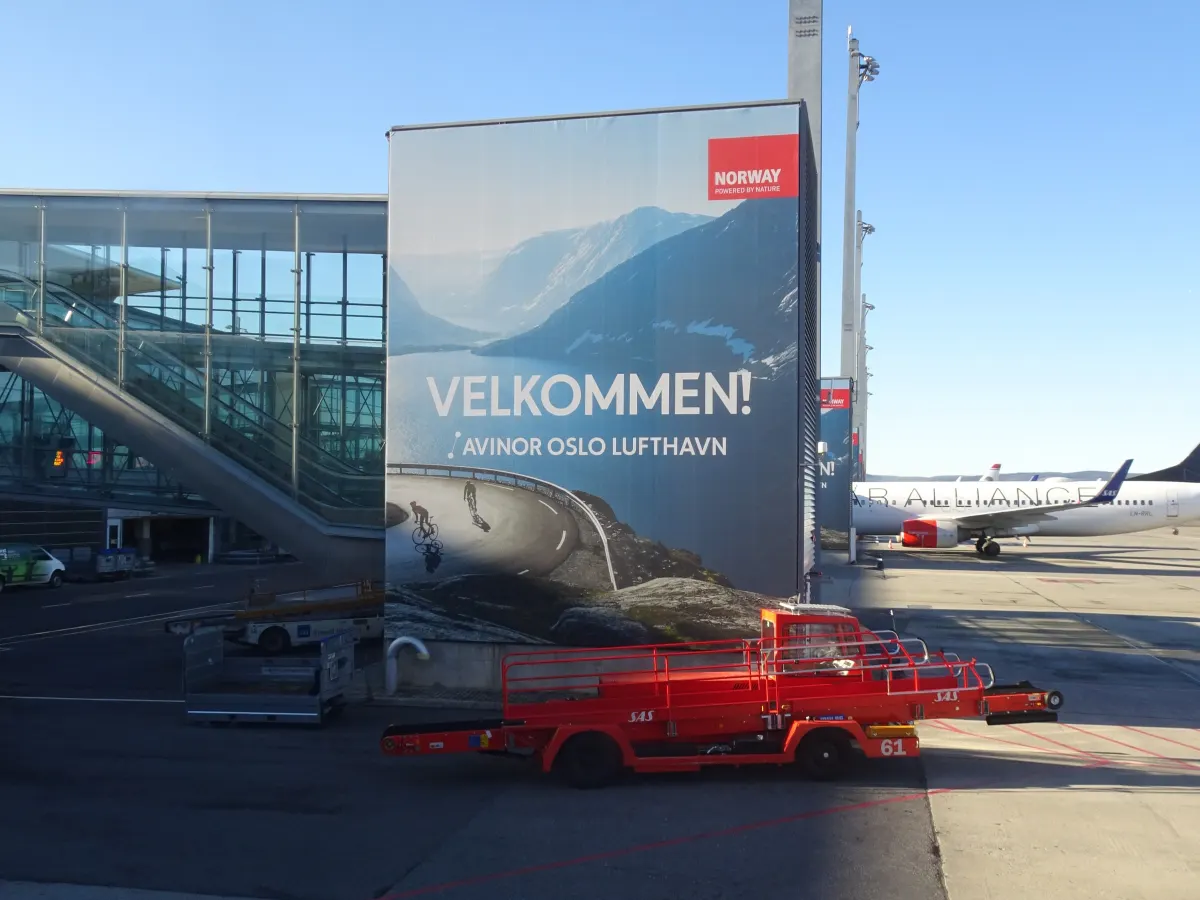
Most people buy their allowance at the tax-free shop on arrival, between the plane and the baggage belt. Wine and spirits are much dearer in the country itself: see Alcohol.
Svalbard
Svalbard is outside the Schengen area, so you need a passport, and perhaps a double-entry visa. See Visiting Svalbard.
From the airport
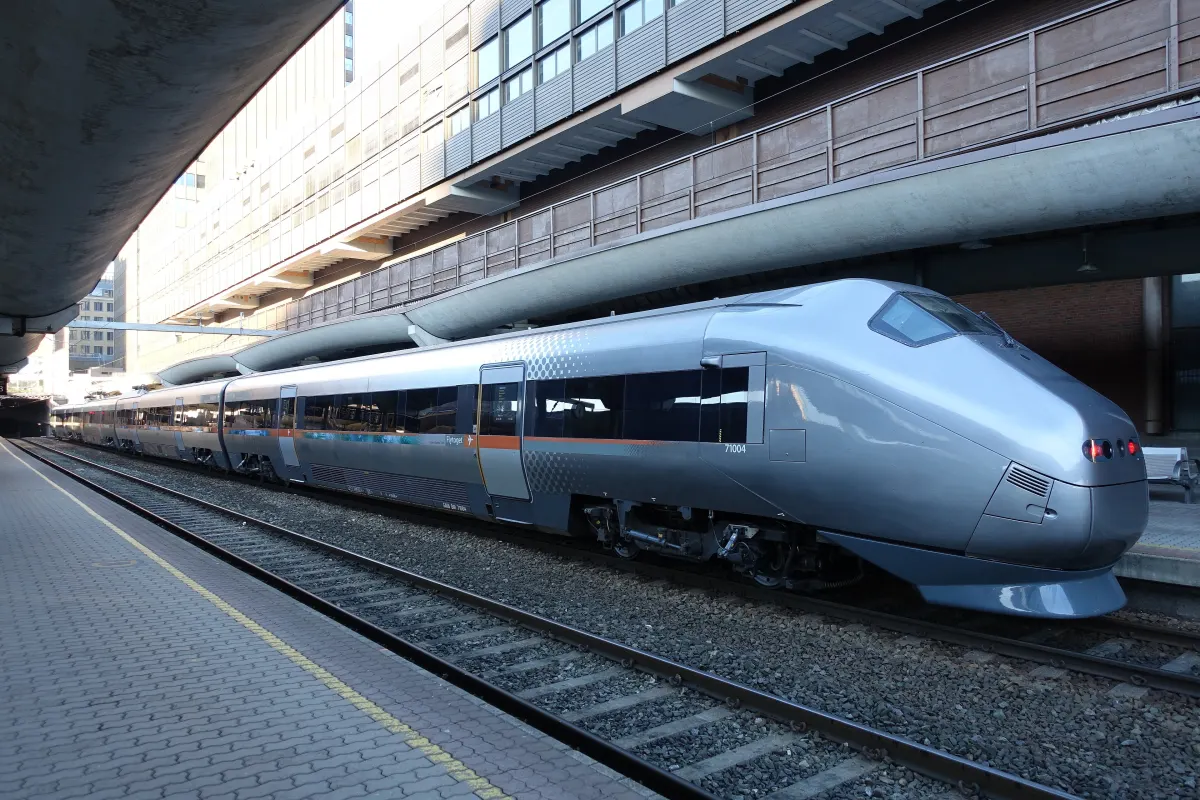
- Oslo (Gardermoen): the Flytoget airport express takes 19 minutes to the central station. Ordinary Vy trains take only a few minutes more, cost a good deal less, and go on north to Lillehammer too. Between 17 July and 3 August 2027 no trains can use Oslo S: see Getting around.
- Sandefjord Torp: far from Oslo, about two hours by bus, or a shuttle bus to the railway station and a train.
- Bergen: the light rail (Bybanen) takes about 45 minutes and costs the same as any city ticket. The airport bus is faster and dearer. Trondheim: train or bus, under 40 minutes. Stavanger and Tromsø: bus.
- Taxis are dear and set their own prices. Agree one before you get in, or use an app.
Arriving by land or sea
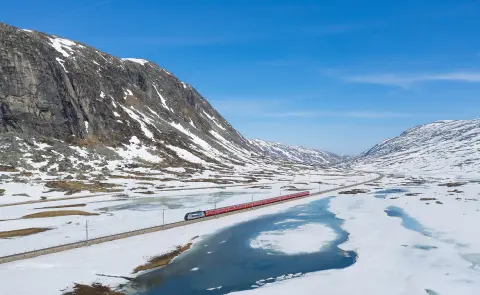
- Trains run from Stockholm and Gothenburg to Oslo, and from Stockholm to Narvik, by the Arctic line through Kiruna.
- Ferries cross from Copenhagen, Frederikshavn and Kiel to Oslo, from Hirtshals to Larvik, Kristiansand, Stavanger and Bergen, and from Strömstad to Sandefjord. There's no passenger ferry from Britain.


Comments