
Getting around Brazil: domestic flights, long-distance buses, Uber and 99, metros and hire cars
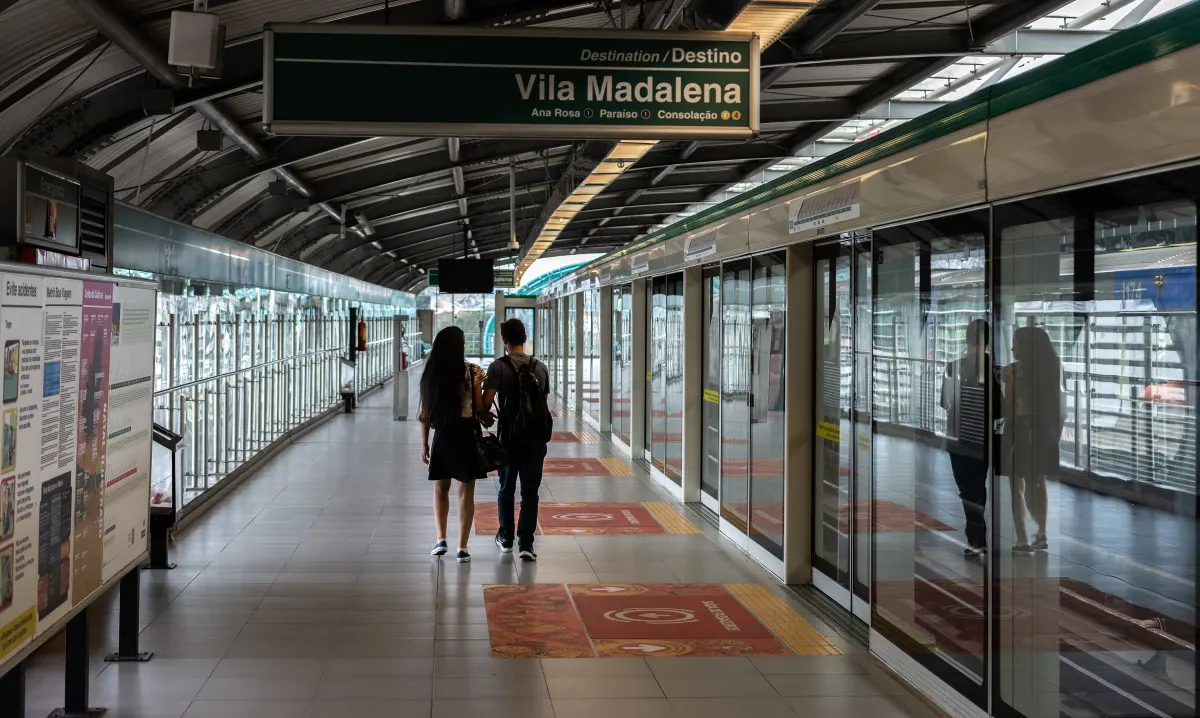
Brazil is bigger than Australia, so fly for the long legs and use buses or a car for the shorter ones. There are hardly any passenger trains. In the cities, a ride-hailing app is cheap and the safest way around, especially at night.
Flights
- The main domestic airlines are LATAM, GOL and Azul. Fares vary a lot: book early for Carnival, Easter, July and the days between Christmas and New Year.
- As a rough guide, allow 1 hour in the air between Rio and São Paulo, about 2 hours from either to Brasília, Salvador or Iguaçu, and about 4 from São Paulo to Manaus.
- Some airline websites ask for a CPF (Brazil's tax number). Choose the airline's site for your own country and enter your passport number instead, or book through another agent.
- Rio and São Paulo each have two main airports. Santos Dumont (SDU) is in the centre of Rio, and Congonhas (CGH) is in São Paulo. Check which one your ticket says.
- Checked bags often cost extra. Take your passport: you need photo ID for domestic flights.
Long-distance buses
- Buses go almost everywhere and leave from the bus station (rodoviária), often on the edge of town. Take a taxi or app ride there and back, not a walk.
- Classes: convencional (a basic seat), executivo (better), semi-leito (reclines a long way) and leito (nearly flat, for overnight trips). Some companies also sell a cama class. Dress warmly: the air conditioning can be icy.
- Buy at the station with your passport, or online from the bus company or a ticket site. Some refuse foreign cards or ask for a CPF.
- Examples: Rio to Paraty takes about 4½ hours, Rio to São Paulo about 6, and Salvador to Lençóis, for the Chapada Diamantina, 6 or 7.
- Robberies and crashes happen on the roads. Choose a well-known company, keep your valuables with you and wear your seat belt.
Uber, 99 and taxis
- Uber and 99 work in all the big cities and many smaller ones. Book only in the app, wait inside, and check the number plate, car and driver before you get in.
- Share your trip, keep the windows up, and watch the route. See Safety for express kidnapping.
- Use taxis from a rank or booked by your hotel: the UK government says don't hail them in the street. Make sure the meter's on.
- In traffic, a motorbike taxi in the app is faster but much riskier.
Metros and city transport
- Rio's metro links Ipanema, Copacabana, Botafogo, the centre and the Maracanã. The fare was R$7.90 in 2026, and you can tap a Visa, Mastercard or Elo card, or your phone, at the turnstile.
- São Paulo has Brazil's biggest network, and Brasília, Recife, Belo Horizonte, Fortaleza, Porto Alegre and Salvador have smaller ones. Buy a ticket if your card isn't accepted.
- They're busy at rush hour. Keep your phone out of sight, and take a car instead late at night.
Hiring a car
- You can drive for up to 180 days on a foreign licence. Carry the original with your passport. An International Driving Permit isn't always required, but carry one: the rules and hire desks vary, and you can't get one in Brazil. UK drivers with a paper licence may need the 1968 type.
- Alcohol limits are effectively zero, with roadside checks and, for serious cases, prison.
- Don't drive at night outside cities, and avoid arriving in a strange city after dark. Keep doors locked and windows up. Many drivers treat red lights as a stop sign at night.
- Check that your phone's map isn't taking you through a favela: people have been shot after following directions into one.
- Some toll roads have no booths ("free flow"), including the Rio–Santos coast road. Ask the hire company how the tolls are paid.
- A car is best for the Costa Verde around Paraty, the colonial towns around Ouro Preto and Inhotim, the southern canyons of Aparados da Serra, and Florianópolis.

Ouro Preto
A gold-rush colonial town in the hills of Minas Gerais, a UNESCO site, with steep cobbled streets and baroque churches decorated by the sculptor Alei…

Aparados da Serra and Itaimbezinho Canyon
Sheer canyons cutting 700 m down from the southern plateau, with waterfalls and walks along the rim.
Boats
In the Amazon, the rivers are the roads. Passenger boats run between Manaus, Santarém and Belém, taking several days; you sleep in a hammock, which you buy in the market first, or a cabin. Keep your bag locked and close. See The Amazon and the Pantanal for where travel isn't advised.
See also Money, Safety and 10 days from Rio to Iguaçu.




Comments
No comments yet.