
10 days in the Canary Islands: Tenerife, La Gomera and Lanzarote
Spring weather all year, a volcano higher than anything else in Spain, a forest older than the ice ages, and lava fields like another planet. Ten days is right for three islands. You'll want a hire car on each, though Tenerife has good buses.
Map of the route
Anaga and the north coast of Tenerife, about 35 km
La Laguna to Garachico by La Orotava, about 62 km
La Orotava to Teide, about 36 km
Garachico to Los Cristianos by Masca, about 77 km
Ferry from Los Cristianos to La Gomera, about 39 km
La Gomera: to Valle Gran Rey by Garajonay, and back by Agulo, about 114 km
Lanzarote: the north, about 79 km
Lanzarote: volcanoes and wine, about 60 km
Click a dot for the place. Labels show where you spend each night. The dashed line is the ferry. The flight from Tenerife to Lanzarote is not drawn. Route from OpenStreetMap (© OpenStreetMap contributors, ODbL).
Before you go
- When: any time. November to April is best for walking and busiest for rooms. July to September is warm, with a strong trade wind on Lanzarote.
- Book first: the Teide cable car and, if you want the summit, the permit; Timanfaya; and hire cars, which run short in winter and at Easter.
- Fly into Tenerife North if you can, and home from Lanzarote. The ferry to La Gomera takes cars. Between Tenerife and Lanzarote, fly with Binter or Canaryfly (about 50 minutes, from Tenerife North). The islands are an hour behind the rest of Spain.
- See also Arriving, for customs, and Safety, for the sea.
Day 1: La Laguna and Santa Cruz
Stay in La Laguna, a World Heritage town with bright houses and carved balconies. A tram runs down to Santa Cruz, for its white wave of a concert hall, or to the yellow sand of Las Teresitas.
Day 2: Anaga
The north-east tip is a ridge of mossy laurel forest with villages on the edge. Walk from Cruz del Carmen, or down to Taganana and swim (carefully) at Benijo. Some trails, such as El Pijaral, need a permit from Tenerife ON.
Day 3: La Orotava and the north coast
The wooden balconies of La Orotava, the botanic garden at Puerto de la Cruz, Icod, with its ancient dragon tree, and Garachico, half buried by lava in 1706, with rock pools to swim in when the sea is calm.
Day 4: Teide
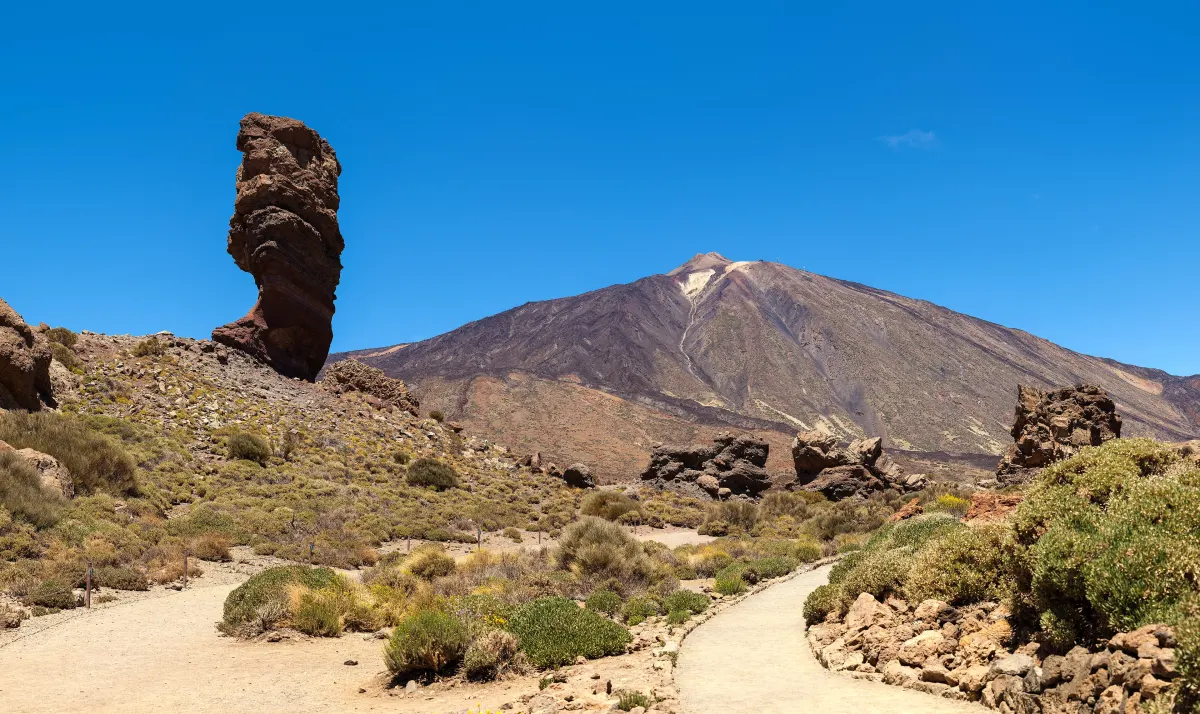
Drive up through the pines, above the clouds, into Teide National Park. Walk round the Roques de García, and take the cable car to 3,555 m. The last 200 m to the top needs a permit (€15 for non-residents in the daytime since January 2026, released on Mondays up to 56 days ahead). Bring warm clothes and water: it can be freezing with a fierce sun. Stay for the stars.

Teide National Park, Tenerife
Spain's highest mountain, the volcano Mount Teide, 3,715 m, rises from a vast crater of lava fields and colourful rocks in the middle of Tenerife.
Day 5: Masca and the west
Take the steep road to Masca early, and look at the cliffs of Los Gigantes. Walking down the Masca gorge must be booked and paid for. Sleep at Los Cristianos, or take the evening ferry to San Sebastián de la Gomera (about an hour).
Days 6 and 7: La Gomera
A round island of deep ravines. In the middle is Garajonay, a cloud forest of twisted laurels. Walk from Laguna Grande, up to Alto de Garajonay, or down to El Cedro. See the Roque de Agando, Agulo with its red cliffs and view of Teide, and the terraces of Valle Gran Rey. Listen for silbo, the whistled language, still taught in schools.
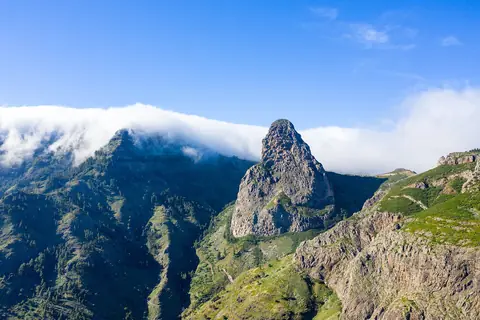
Garajonay National Park, La Gomera
Misty laurel forest, a survivor of ancient forests, covering the heights of La Gomera, a World Heritage site.
Day 8: To Lanzarote, and the north
Take the ferry back, and fly to Arrecife from Tenerife North. That airport is at La Laguna, more than an hour from the ferry, so leave plenty of time. If you arrive by midday, go to Haría, in its valley of palms.

Haría and the Valley of a Thousand Palms, Lanzarote
Lanzarote is often seen as a beach destination, but its volcanic landscapes make for wonderful walking.
Day 9: César Manrique's Lanzarote
The artist shaped the whole island: low white houses, and sights that grow out of the lava. See Jameos del Agua and the Cueva de los Verdes, in the same lava tube, the Mirador del Río, looking over to La Graciosa, and his own house, built in lava bubbles, at Tahíche. Teguise has a market on Sundays.
Day 10: Volcanoes and wine
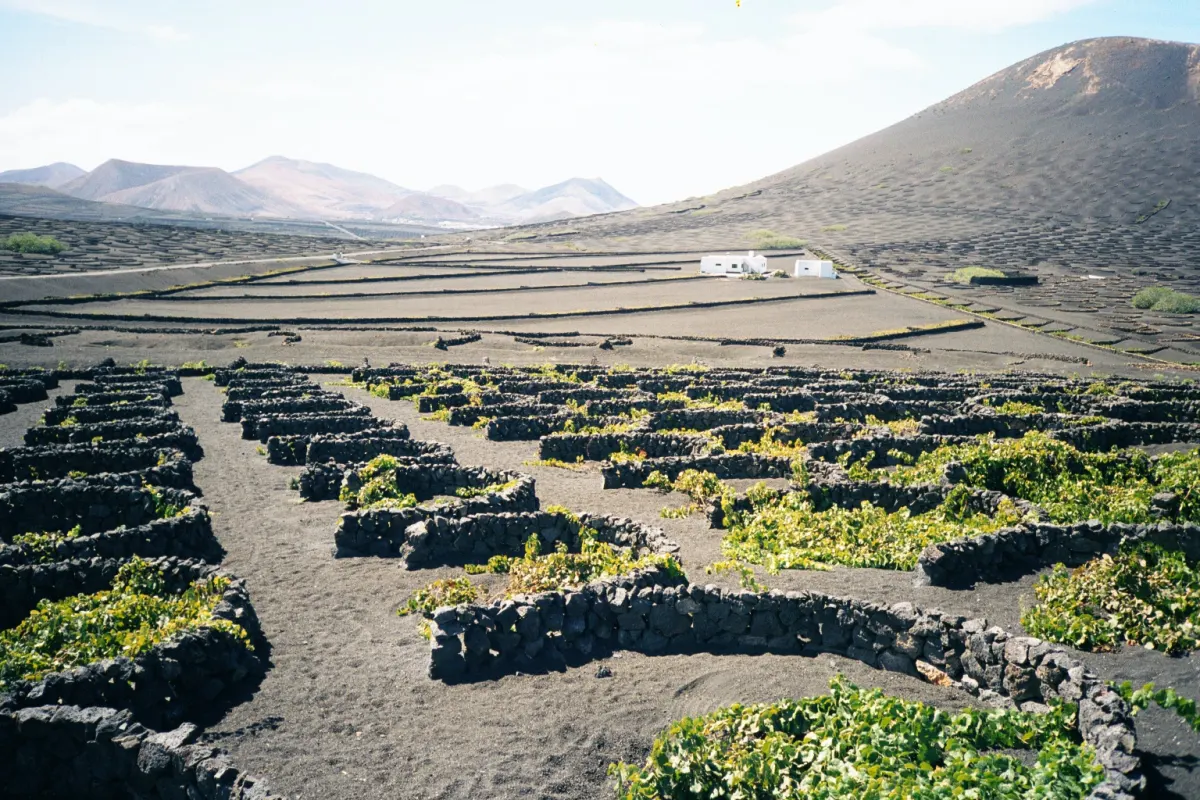
Timanfaya: the bus round the craters is the only way in, with a ticket for a set time, reported to be sold only online since June 2026. You may not walk off the paths. Then see the green lagoon at El Golfo, the salt pans at Janubio, and La Geria, where each vine grows in its own pit of black ash. Swim at Papagayo if there's time before your flight.

Timanfaya National Park, Lanzarote
A landscape of volcanoes and lava fields created by huge eruptions between 1730 and 1736, with craters in shades of red, orange and black.
With more time
- La Graciosa, an island with no tarred roads, 25 minutes by boat from Órzola.
- La Palma, for walkers: its great crater, the Caldera de Taburiente, and the new lava of 2021.
- Gran Canaria, for the dunes at Maspalomas, and Fuerteventura, for beaches and wind, a short ferry from Lanzarote.
Looking after the islands
Water and homes are short, and there have been big marches against mass tourism. Stay in licensed places, don't move or take stones, sand or plants, and keep to the paths. Fires are banned, and forests close at high risk.


Comments