
Walking the Camino de Santiago from Sarria: the last 115 km in six days, with stages, beds and stamps
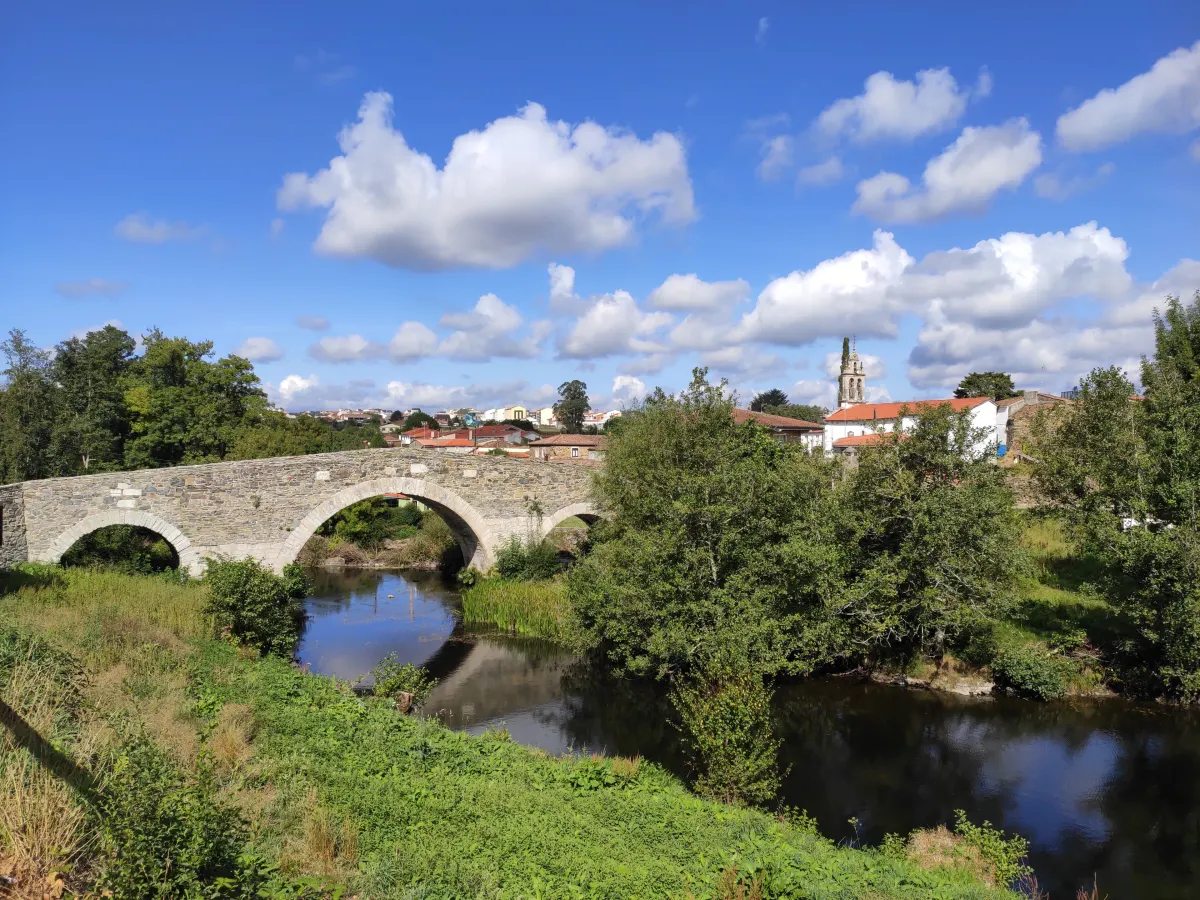
You don't need a month to walk the Camino de Santiago. From Sarria, in Galicia, it's about 115 km to the cathedral, just over the 100 km that earns a certificate, through oak woods, villages and farmland. It's by far the busiest stretch, sociable rather than lonely.
Map of the route
Day 1: Sarria to Portomarín, about 23 km
Day 2: Portomarín to Palas de Rei, about 26 km
Day 3: Palas de Rei to Melide, about 15 km
Day 4: Melide to Arzúa, about 16 km
Day 5: Arzúa to O Pedrouzo, about 20 km
Day 6: O Pedrouzo to Santiago, about 19 km
Click a dot for the place. Labels show where each day ends. The path is drawn along footpaths in OpenStreetMap and may differ a little from the waymarked route: follow the yellow arrows. Route from OpenStreetMap (© OpenStreetMap contributors, ODbL).
2027 is a Holy Year
St James's Day, 25 July, falls on a Sunday, so the cathedral's Holy Door is open from 31 December 2026 and through 2027. More than 530,000 pilgrims got the certificate in 2025, which wasn't one. Expect full beds and long queues from April to October, and worst of all in July and August. Book early, or go in March or November.
The Compostela
- To get it you must have walked at least 100 km on one recognised route (or cycled 200 km), including the last stage into Santiago, for religious or spiritual reasons. If you say it's for sport or tourism there's another certificate.
- Carry a credencial (pilgrim's passport), from a pilgrim association, church or hostel, and have it stamped at the start and end of each stage. Two stamps a day on the last 100 km is the usual rule. Bars, churches and hostels all have stamps.
- Collect it at the Pilgrim's Office, Rúa das Carretas 33, a short walk from the cathedral. Register online first to shorten the wait. Read the current rules on its site.
Getting to Sarria
By train or coach to Lugo and then a bus, or one of the few long-distance trains that stop at Sarria itself. From Santiago airport, take the coach to Lugo first. Come the day before.
Day 1: Sarria to Portomarín, 22 km
Up through chestnut woods and hamlets, past the marker for 100 km to go, and down to the river Miño. Portomarín was moved stone by stone when the valley was dammed in the 1960s.
Day 2: Portomarín to Palas de Rei, 25 km
A long climb, and then up and down. The churches at Vilar de Donas (a detour) and Eirexe are worth a stop.
Day 3: Palas de Rei to Melide, 15 km
A short day, through O Leboreiro and over the old bridge at Furelos. Melide is the place to eat pulpo, octopus with paprika and oil on a wooden plate.
Day 4: Melide to Arzúa, 14 km
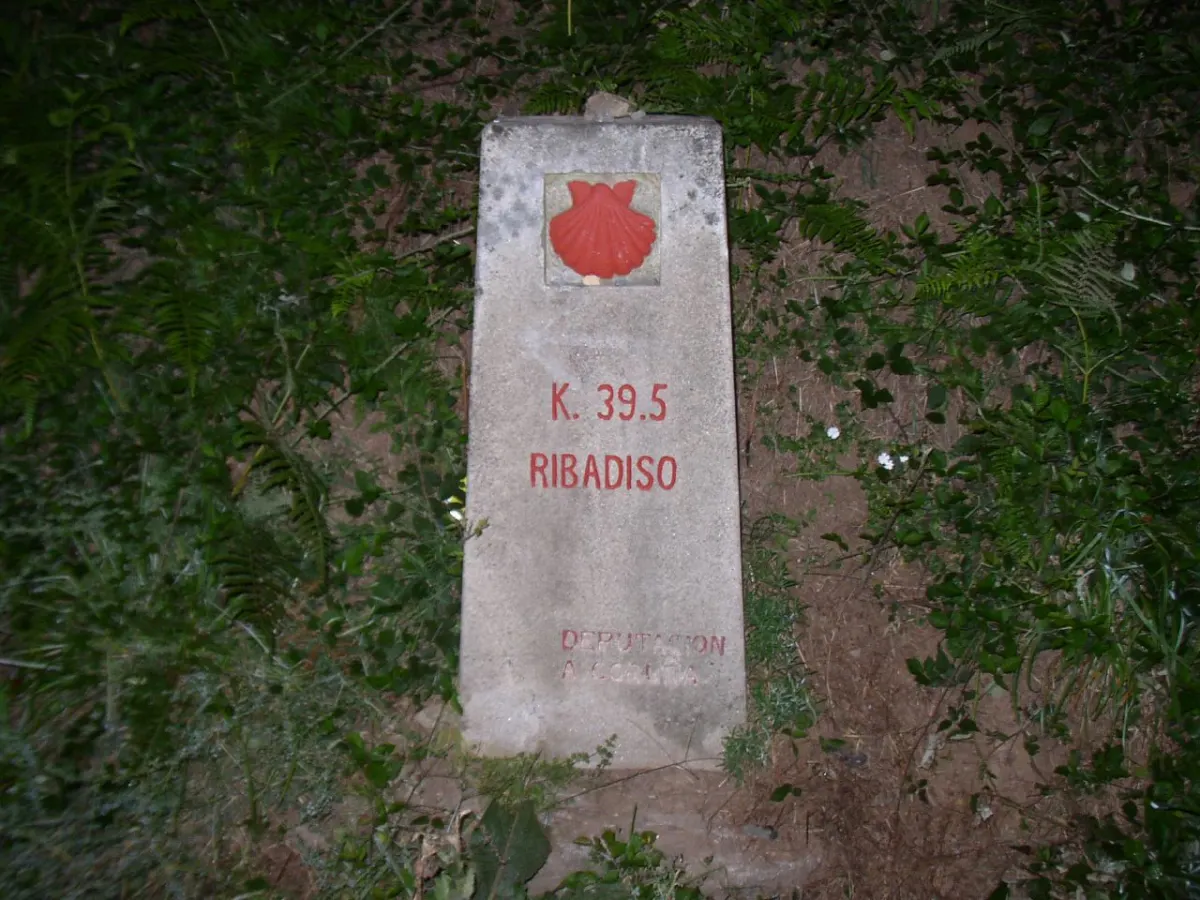
Stream after stream, and eucalyptus. Swim at Ribadiso, beside the medieval bridge. Arzúa is known for its soft cheese. Strong walkers do days 3 and 4 in one.
Day 5: Arzúa to O Pedrouzo, 19 km
An easy day on woodland paths, crossing the main road with care several times.
Day 6: O Pedrouzo to Santiago, 20 km
Round the airport, and up to Monte do Gozo, where pilgrims first see the towers. Then it's 5 km through the town to the Praza do Obradoiro. The pilgrims' Mass is usually at noon (check, and leave your pack outside), and the giant censer, the botafumeiro, swings only on feast days or when somebody pays.

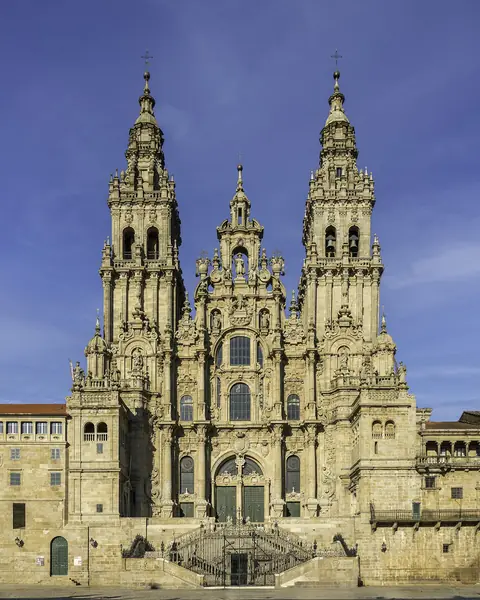
Cathedral of Santiago de Compostela
The great Romanesque cathedral at the end of the Camino de Santiago pilgrimage, said to hold the tomb of St James.
Camino de Santiago
The pilgrimage routes to the tomb of St James in Santiago de Compostela, walked by hundreds of thousands each year.
Where to sleep
- Public hostels of the Xunta: about €10 for a bunk, for walkers with a credencial. No booking: first come, first served. Bring a sleeping bag or liner.
- Private hostels: about €15 to €20, and you can book. Pensions and small hotels: €45 to €90 for a room.
- Earplugs help. Lights go out at 10, and you leave by 8.
Luggage
Couriers move your bag to the next place for about €4 to €6 a stage: the post office's Paq Mochila and several others. Fill in the label the night before. Then you need only a day pack.
What to bring and how to walk
- Shoes or light boots you've already worn in, two pairs of good socks, blister plasters, a rain jacket, a sun hat, a light fleece and flip-flops. It can rain in any month.
- Follow the yellow arrows and scallop shells. The stone posts count down the kilometres.
- There's a bar or café every few kilometres. Water from fountains is safe unless it says no potable.
- Start before 8 in summer. Lone walkers, women included, are common and mostly safe: if anyone bothers you, ring 112 or use the AlertCops app.
- The winter route over the Pyrenees from France (by Lepoeder) is closed from 1 November to 31 March: that's far from here, but matters if you want the whole Camino.
With more or less time
- Quieter last 100 km: the English Way from Ferrol (about 112 km), or the Portuguese Way from Tui (about 117 km).
- Walk on to the sea at Finisterre: three or four more days.
- Start from O Cebreiro, two days earlier, in the mountains. See also northern Spain by car.




Comments