
Driving in Spain: low-emission zones, tolls, speed limits, the V16 beacon, licences and parking
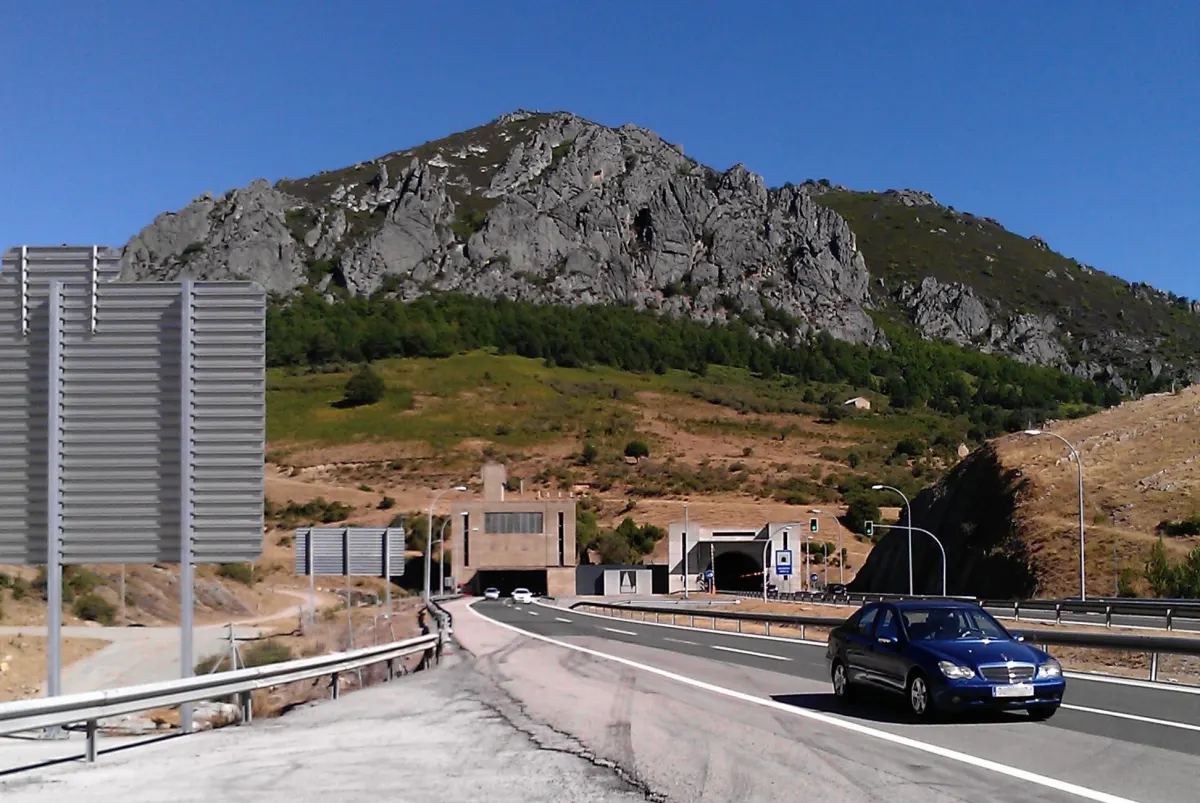
Spain's roads are good and, away from the coasts and cities, quiet. Most motorways are free. Hire a car for the Picos de Europa, the Pyrenees, rural Andalusia, Galicia, and most islands. Do without one in Madrid, Barcelona and Seville.
Licence and papers
- EU licences and UK photocard licences are accepted.
- With a licence from the USA, Canada, Australia, New Zealand and many other countries, carry an international driving permit as well as your own licence. Get it at home. Hire desks don't always ask, but the police can.
- You must be 18 to drive. Hire companies often want 21 or more, charge extra under 25, and need a credit card in the driver's name.
- Very cheap hire deals make their money on insurance and fuel. Check the fuel policy and the excess, and photograph the car.
Low-emission zones (ZBE)
- All towns of more than 50,000 people are meant to have a zona de bajas emisiones. A round sign with the words Zona de Bajas Emisiones marks the edge, and cameras read number plates.
- Spanish cars have a DGT environmental sticker (0, ECO, C or B). Nearly all hire cars have one good enough to enter.
- Foreign plates don't get the sticker. Some cities, including Barcelona, Zaragoza and Bilbao, want you to register the car online before you arrive. Madrid bars cars that would not qualify for a sticker, and in its central zones most visitors' cars may come in only to use a public car park. Read the city's own page.
- Old centres such as Granada's Albaicín, Toledo and Seville also have resident-only streets with cameras. Ask your hotel to register your plate.
Motorways and tolls
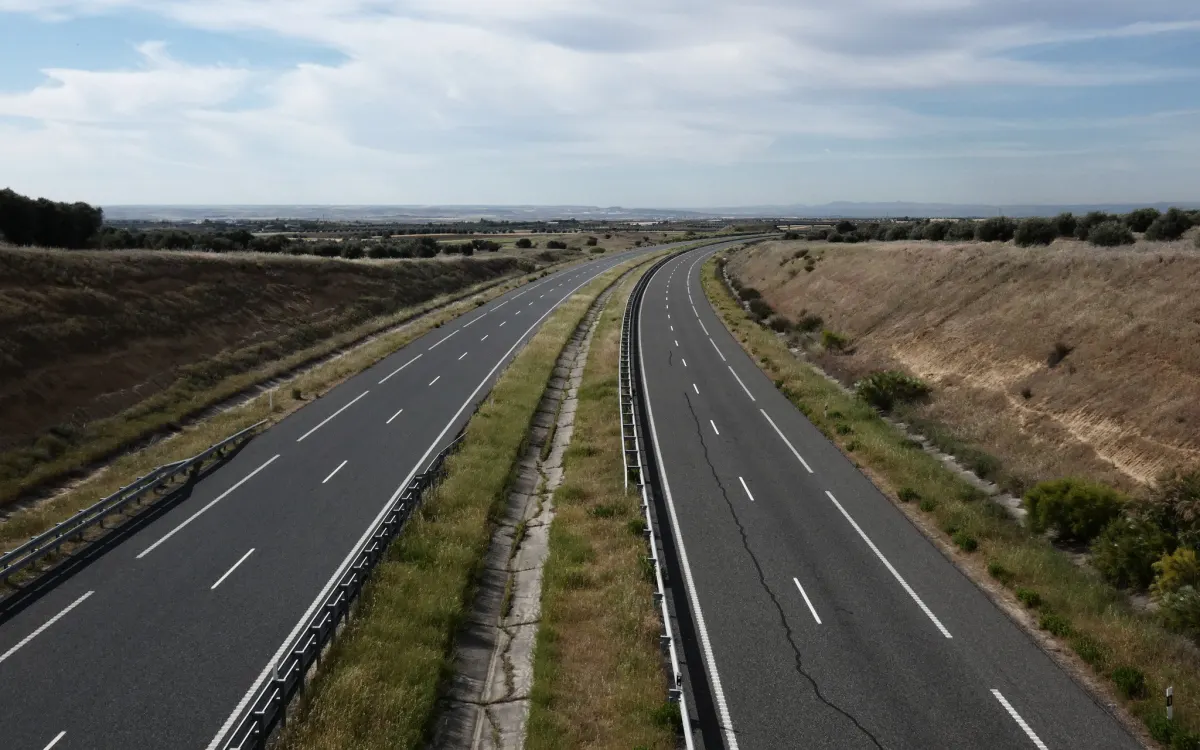
- A- roads (autovías) are free. AP- roads (autopistas) often charge, at barriers that take cards and cash. There's nearly always a free road beside them.
- Many tolls have gone: the AP-7 along most of the coast from France to Alicante and the AP-2 are free. The AP-68 became free on 11 November 2026 in Aragon, Navarre and La Rioja, but the Basque part still charges.
- Still tolled in 2026: AP-7 Málaga to Guadiaro (Costa del Sol) and Alicante to Vera, AP-46 near Málaga, AP-6 with AP-51 and AP-61 (Madrid to Segovia and Ávila), AP-9 in Galicia, AP-53, AP-66 and AP-71 (León), the AP-1 and AP-8 in the Basque Country, parts of the C-16 and C-32 in Catalonia, and the radial roads R-2 to R-5 round Madrid.
- Don't use lanes marked only VIA-T: they're for cars with a box.
Rules of the road
- Drive on the right. Traffic already on a roundabout has priority.
- Speed limits: motorways 120 km/h, other country roads 90, towns 50, and 30 in streets with one lane each way (20 where there's no kerb).
- Alcohol: 0.5 g per litre of blood, or 0.3 if you've had your licence less than two years. The government wants to cut it to 0.2, but hadn't passed the law in November 2026. Police test for alcohol and drugs at the roadside.
- Phones: don't touch one, even stopped at the roadside. Earphones are illegal.
- Children under 1.35 m need a proper seat in the back.
- Cyclists: leave at least 1.5 m, and you may cross a solid line to pass when it's clear.
- Fines can be demanded on the spot from visitors. They're halved if you pay within 20 days.
The V16 beacon
- Since 1 January 2026, cars registered in Spain must carry a connected V16 light, which you put on the roof if you break down, in place of warning triangles. Check there's one in your hire car, usually in the glove box, and how it switches on.
- If you bring a foreign car, you may still use triangles.
- Wear the reflective jacket before you get out. It must be inside the car, not in the boot.
Parking and theft
- Blue lines: pay and display, with a time limit. Green: mainly residents. Yellow: no parking. White: free.
- Leave nothing in sight, at beaches, viewpoints and motorway services above all. Hire cars are targets.
- If someone waves you down about a puncture or a bump, drive on to a lit petrol station. Highway pirates work in pairs, especially on the coast motorways near Barcelona and Valencia. Real police have uniforms or a lit sign, and never ask for your wallet.
Mountains and islands
- In winter, carry chains for the Pyrenees, Sierra Nevada and Picos de Europa. The DGT site lists closed passes.
- Roads you must book or leave the car for on busy days: the Lakes of Covadonga, Ordesa and Aigüestortes have buses or jeep taxis instead.
- Ibiza limits the cars on the island from 1 June to 30 September, in 2026 and 2027: hire early, and bring a car only with a permit. Formentera needs a permit too in summer, and hire cars from Ibiza can't go.
- Mallorca's Sa Calobra and Formentor roads are narrow, and Formentor is closed to private cars in the daytime in summer.
- In the Canaries, fuel is cheaper. Mountain roads are steep and slow: allow twice what the distance suggests.
Good trips by car: northern Spain, the Canaries, the white villages round Ronda, Mérida with Monfragüe, Cuenca with Teruel, and the Tabernas Desert.

Historic sites
Ronda and the Puente Nuevo
Ronda, Málaga
A dramatic hilltop town split in two by the El Tajo gorge, 100 m deep, spanned by the 18th-century Puente Nuevo bridge.
Natural features
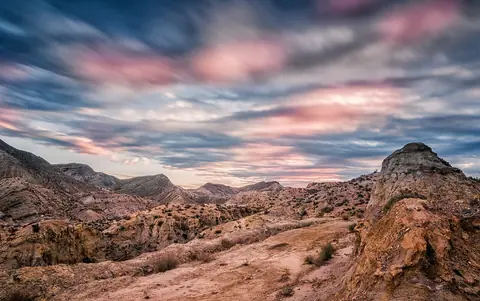
Tabernas Desert
Andalusia
Europe's only true desert, where spaghetti westerns like The Good, the Bad and the Ugly were filmed.



Comments