
Culture and etiquette in Spain: the siesta and Sundays, languages and regions, festivals and what to wear
Spain is informal, sociable and noisy, and people are patient with visitors who try a few words. The main things to know are when places close, and which region you're in.
Greetings and manners
- Say hola or buenos días (after lunch buenas tardes) when you go into a shop, lift or waiting room, and hasta luego when you leave.
- Two kisses, right cheek first, between women and between men and women who meet socially. Men shake hands. A handshake is always fine.
- People stand close, talk over each other and ask for things directly. It isn't rude. In a queue, ask ¿quién es el último? (who's last?).
- Meals are long. Staying at the table to talk, the sobremesa, is part of it, and nobody will bring the bill until you ask.
- For dinner at someone's home, bring pastries or wine, and arrive ten minutes late.
Siesta, Sundays and August
- Smaller shops close from about 2 to 5 pm and open again until 8 or 8.30. Supermarkets, big stores and city centres stay open. Few people sleep: they have lunch.
- Sunday: most shops and supermarkets are closed, except in central Madrid, some tourist areas and on special dates. Stock up on Saturday.
- August: Madrid and Seville empty, and family businesses close for weeks. The coast fills.
- Holidays: there are national, regional and town ones. If one falls on a Thursday or Tuesday, many people make a puente (bridge) to the weekend, and roads and hotels fill.
Languages and regions
- Spanish (castellano) is spoken everywhere. Catalan (Catalonia, the Balearics, and as Valencian in Valencia), Basque and Galician are official too, and often first on signs: Donostia is San Sebastián, Bizkaia is Biscay.
- They're languages, not dialects, and Basque is related to nothing else. A bon dia in Barcelona, kaixo in Bilbao or bos días in Santiago is appreciated.
- Independence, the Civil War and Franco are sore subjects. Listen rather than argue, and don't tell a Catalan or a Basque that it's all the same.
What to wear
- People dress neatly in town. Beachwear belongs on the beach: in Barcelona, Palma, Málaga and other towns you can be fined for walking the streets in a swimsuit or without a shirt.
- In churches, cover shoulders and knees. The Sagrada Família turns people away. Don't walk about during Mass.
- Topless sunbathing is legal and normal on most beaches.
Festivals
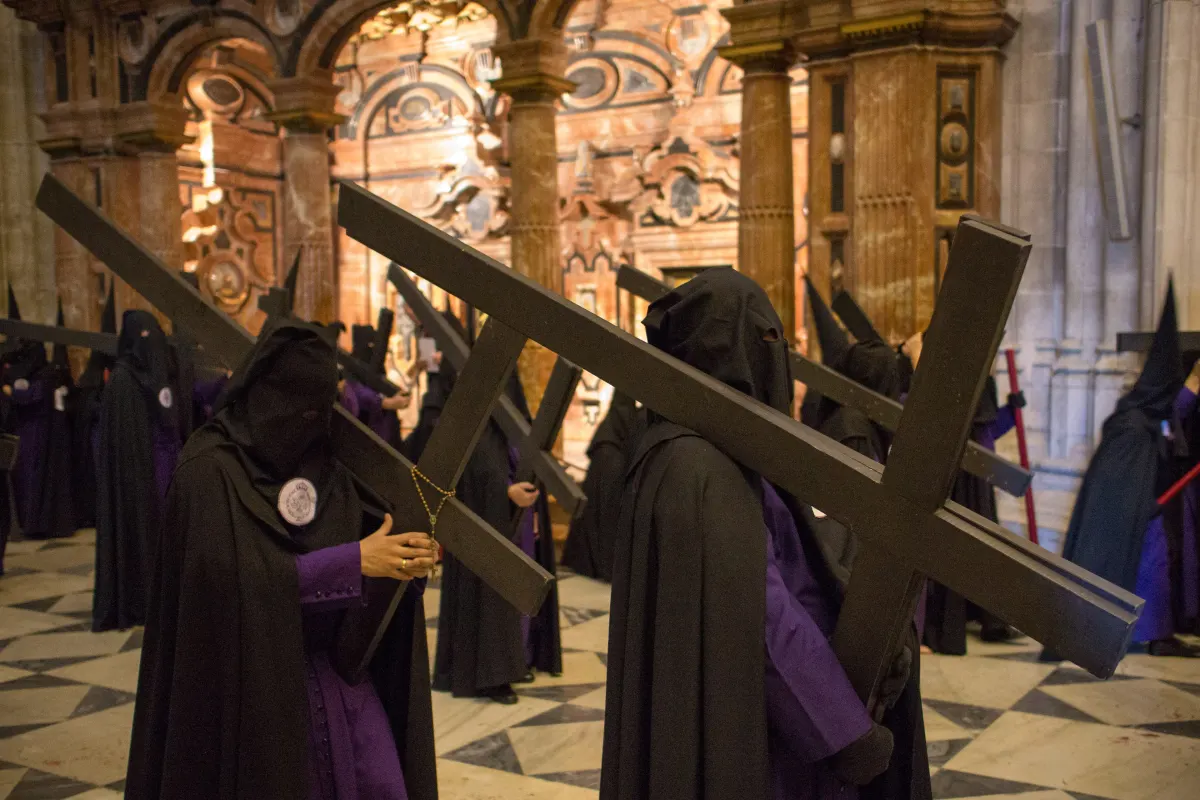
- Semana Santa (Holy Week, 21 to 28 March 2027) is solemn: robed nazarenos carry floats through Seville, Málaga, Granada, Valladolid and Zamora. Keep quiet when a float passes, don't cross the procession, and don't compare the pointed hoods with anything American. They're centuries older.
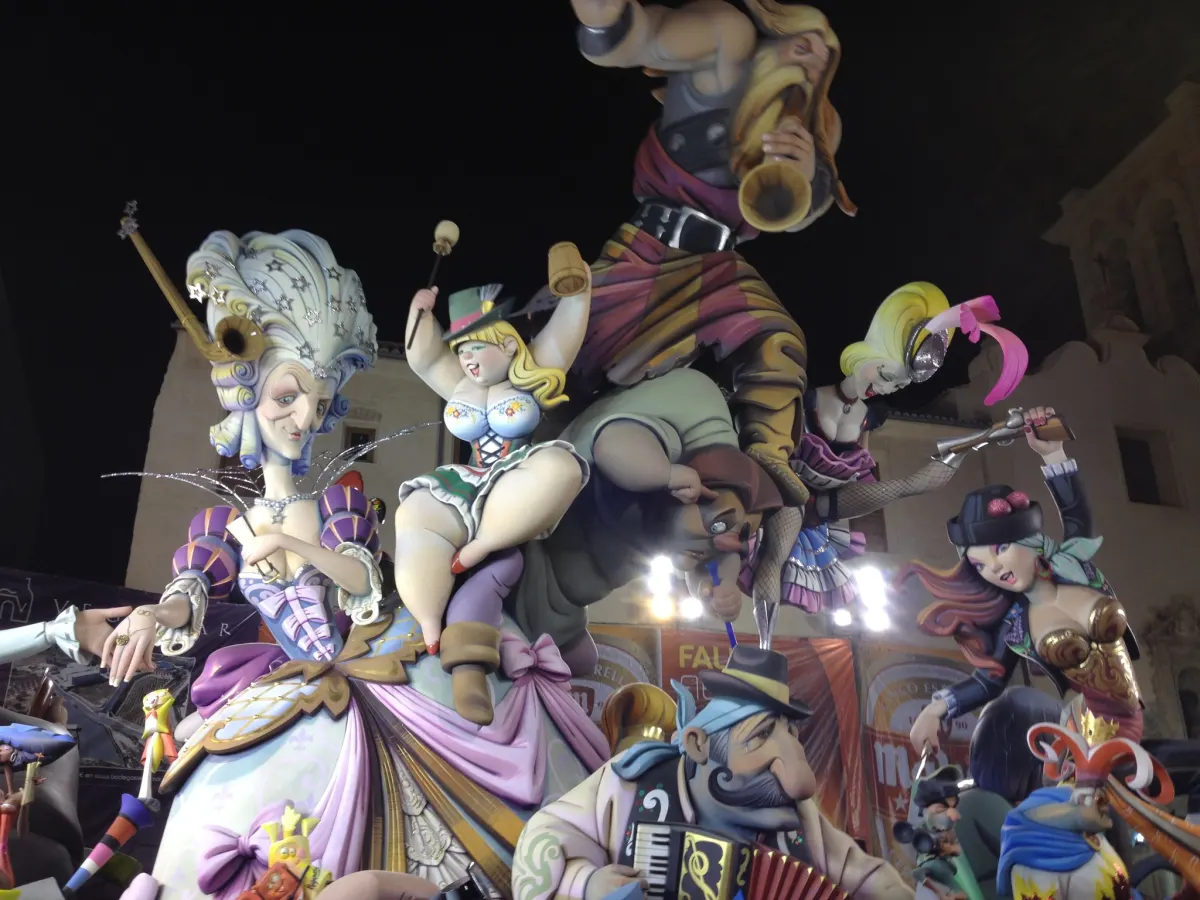
- Las Fallas, Valencia (up to 19 March): giant figures, burned on the last night, and very loud firecrackers. Feria de Abril, Seville (opening on the night of 12 April 2027): many tents are private, so look for the public ones.
- San Fermín, Pamplona (6 to 14 July): the bull runs kill and injure people. You must be 18, sober and inside the barriers by the set time, and you can't film while running. Watch from a balcony.
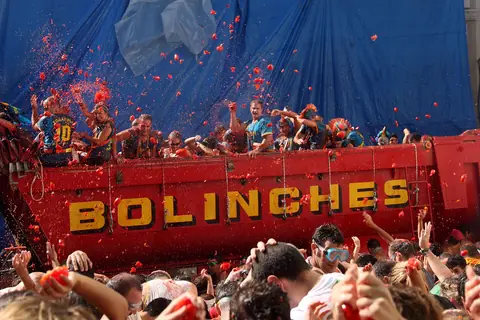
- La Tomatina, Buñol (last Wednesday of August): tickets only. Squash the tomato before you throw it, and stop at the second shot.
- On New Year's Eve, eat a grape at each of the twelve chimes. Presents come on 6 January, after the Kings' parades the evening before.
Bullfights
They're legal in most of Spain and disliked by many Spaniards. The bull is killed. Decide before you buy a ticket, as leaving in the middle is considered rude.
Noise, alcohol and smoking
- Spaniards are loud until late, but neighbours in flats aren't amused by suitcases and parties at 3 am. Keep it down on stairs and balconies.
- Drinking in the street (botellón) is banned in many cities, with fines. In parts of Magaluf, Playa de Palma and San Antonio (Ibiza), happy hours, pub crawls and shop sales of alcohol from 9.30 pm to 8 am are banned too.
- Smoking is banned indoors in public places, and on many beaches. A law to ban it on terraces and all beaches was approved by the government in July 2026, but hadn't passed parliament.
Being a good visitor
- High rents have turned people against mass tourism in Barcelona, the Balearics, Málaga and the Canaries. The anger is at policy, not at you, but the marches are real.
- It helps to stay in a licensed place, eat in local bars, go outside summer, and choose somewhere less full: Mérida, Cuenca, Teruel, Las Médulas or Salamanca, with its two cathedrals.
See also When to go and Food and drink.
Tours and activities
San Fermín, Pamplona
Pamplona, Navarre
A festival from 6 to 14 July, with the morning running of the bulls through the streets, street parties and everyone in white with red scarves.
Tours and activities
La Tomatina, Buñol
Buñol, Valencia
The world's biggest food fight, on the last Wednesday of August, when thousands throw tomatoes for an hour.

Comments