
Food and drink in Spain: meal times, tapas, the menú del día, regional dishes and special diets
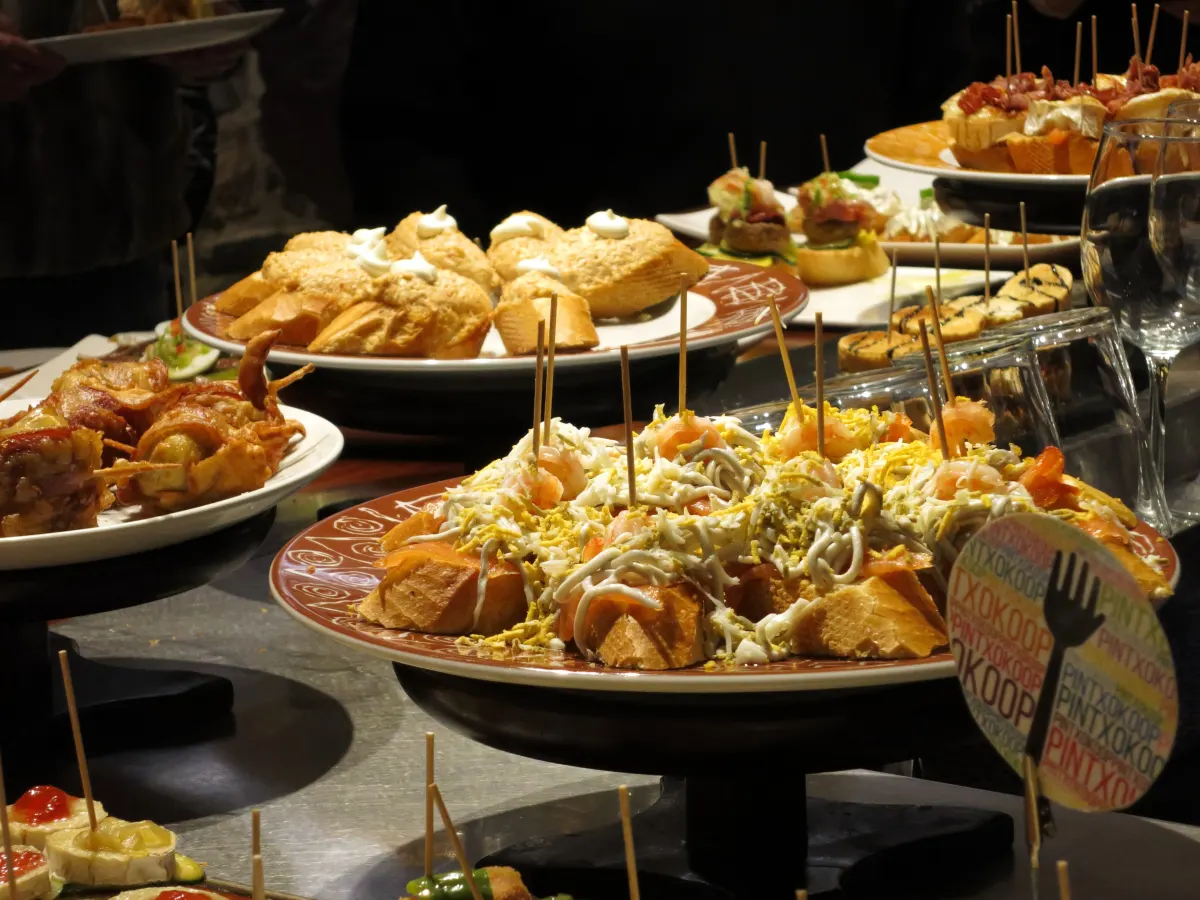
Spaniards eat late, eat out often, and share. Once you keep their hours, it's one of the best and cheapest places in Europe to eat.
When to eat
- Breakfast: coffee and toast (tostada), with olive oil and tomato in much of the country, before 11. Churros with chocolate are for a slow morning or the end of a night out.
- Lunch is the main meal: 2 to 4 pm. Kitchens often don't open before 1.30.
- Dinner: 9 to 11 pm, a little earlier in the Basque Country and in tourist places. A restaurant full at 7 is full of visitors.
- In between, bars have tapas. Many kitchens close on Sunday night and one day a week, often Monday.
- Book for Saturday night and Sunday lunch.
Menú del día
On weekdays at lunch, nearly every ordinary restaurant has a menú del día: a starter, a main course, dessert or coffee, bread, and often wine or water, at one price, usually €13 to €20. It's the best value in Spain. Ask for it, as it may not be on the English menu.
Tapas, pintxos and raciones
- A tapa is a small plate, a media ración half a big plate and a ración a big one to share. A few between you makes a meal.
- In Granada, León, Jaén and Almería a tapa comes free with each drink. In Seville, Madrid and Málaga you order and pay.
- In the Basque Country they're pintxos. Take cold ones from the bar, order hot ones from the blackboard, and remember what you had: you pay at the end. One or two in each bar, then move on.
- Stand at the bar, speak up when it's your turn, and drop paper napkins in the bin rather than on the floor, whatever the floor looks like.
What to try
- Everywhere: jamón ibérico (the best is de bellota, from acorn-fed pigs), tortilla, croquetas, patatas bravas, pimientos de padrón, olives and Manchego cheese.
- Andalusia: gazpacho and salmorejo, fried fish, grilled sardines on the beach at Málaga, and oxtail.
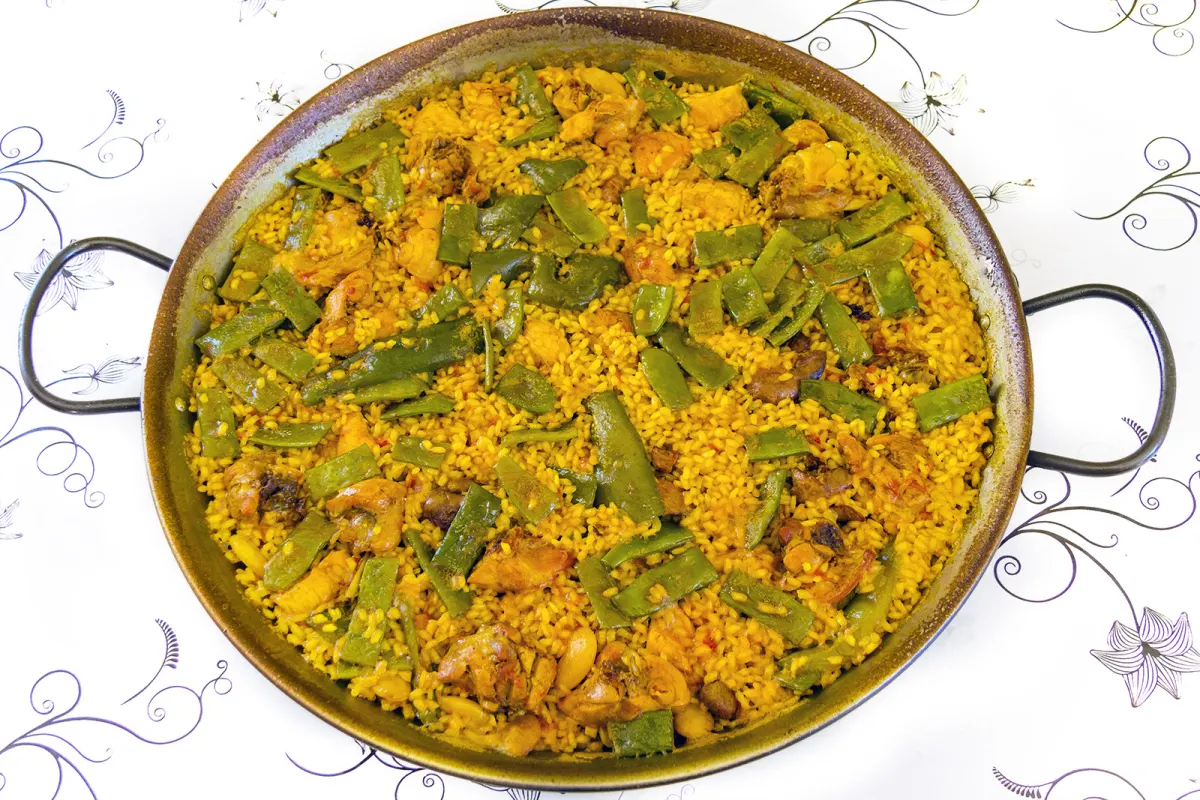
- Valencia: paella, a lunch dish, made to order for two or more, with chicken, rabbit and beans. If it's bright yellow and ready at once, walk on.
- Catalonia: pa amb tomàquet, fideuà, grilled calçots (January to March) and crema catalana.
- Basque Country and Navarre: bacalao al pil-pil, grilled turbot, txuleta steak and burnt cheesecake.
- Galicia: pulpo a la gallega, mussels, scallops, percebes and almond tarta de Santiago.
- Asturias: fabada bean stew, cachopo and Cabrales blue cheese, from the villages by the Cares gorge.
- Madrid and Castile: cocido, squid sandwiches, and roast suckling pig in Segovia.
- Canaries: papas arrugadas with mojo, and grilled cheese.
Drinks
- Coffee: café solo (espresso), cortado (with a little milk), café con leche. Con hielo brings a glass of ice in summer.
- Beer: a caña is a small draught, zurito in the Basque Country. Una clara is shandy.
- Wine: red from Rioja and Ribera del Duero, white from Rueda and Galicia (albariño), cava from Catalonia, and txakoli from the Basque coast. Dry sherry (fino, manzanilla) goes with fish in Andalusia.
- Cider in Asturias is poured from above the head, a mouthful at a time. Vermouth on Sunday before lunch.
- Sangria is mostly for visitors: locals drink tinto de verano.
- Tap water is safe. Bars and restaurants must offer it free, so ask for agua del grifo.
- The drinking age is 18.
Special diets
- Vegetarians: "no meat" may still mean ham or tuna. Say soy vegetariano / vegetariana: sin carne, sin jamón, sin pescado. Good choices are tortilla, padrón peppers, escalivada, pisto, salmorejo without the ham, and cheese. Cities have vegan restaurants.
- Gluten: well understood (sin gluten, celíaco), but fried food often shares the oil.
- Allergies: places that serve food must be able to tell you about the 14 main allergens. Soy alérgico / alérgica a…: frutos secos (nuts), marisco (shellfish), huevo (egg), leche (milk).
- Halal food is easiest in Granada, Barcelona, Madrid and Valencia.
See also Money and tipping.
Tapas
Small dishes to share with a drink. In Granada, Jaén and León, a free tapa still comes with each drink.

Pintxos bars in the Parte Vieja, San Sebastián
San Sebastián's old town is packed with bars whose counters are piled with pintxos, the Basque version of tapas: small works of art on bread or skewe…
Paella, Valencia
Valencia's rice dish, the original made with chicken, rabbit and green beans, cooked in a wide pan with a crispy bottom (socarrat).

Comments