
State laws that differ in the USA: cannabis, alcohol, driving, gambling, smoking and guns
Each of the 50 states makes its own laws, and federal law applies on top everywhere. Something sold openly in one state can mean jail an hour's drive away. Breaking either kind of law can also end your visit and stop you coming back.
Cannabis
- In November 2026 adults of 21 and over could possess a small amount in 24 states and Washington DC: Alaska, Arizona, California, Colorado, Connecticut, Delaware, Illinois, Maine, Maryland, Massachusetts, Michigan, Minnesota, Missouri, Montana, Nevada, New Jersey, New Mexico, New York, Ohio, Oregon, Rhode Island, Vermont, Virginia and Washington. Most have licensed shops, where you show your passport and usually pay cash. DC has none for recreational use, and Virginia's are due from July 2027.
- Elsewhere it's illegal, or allowed only for local medical patients. In some states, such as Idaho, Kansas, South Carolina and Texas, people are still arrested for small amounts.
- It's still illegal under federal law, apart from some medical products. Never take it on a plane, across a state line or the border, or into a national park, national forest, federal building or most casinos and reservations.
- Foreigners take an extra risk: using it, working with it, or admitting to it can be a reason to refuse you entry, even if it was legal in that state.
- You can't smoke it in most public places, hotel rooms or cars. Driving after using it is drink-driving. Edibles take up to two hours to work: start small.
- Hemp gummies and drinks with THC, long sold in petrol stations, are being banned: lab-made kinds such as delta-8 lost their federal legality on 12 November 2026, and nearly all the rest are due to on 11 December 2026. State laws vary too. Never bring CBD or THC products through customs.
Alcohol
- The age for buying and drinking is 21 in every state. Carry your passport: a foreign driving licence is sometimes refused. Giving alcohol to someone under 21 is a crime in most cases.
- Hours and places vary. Some states sell spirits, and sometimes wine, only in state or special shops (Pennsylvania and Utah, for example), some limit Sunday sales, and several, mostly in the South, have dry counties with none at all. In Utah, supermarket beer is limited to 5% and mixed drinks are measured.
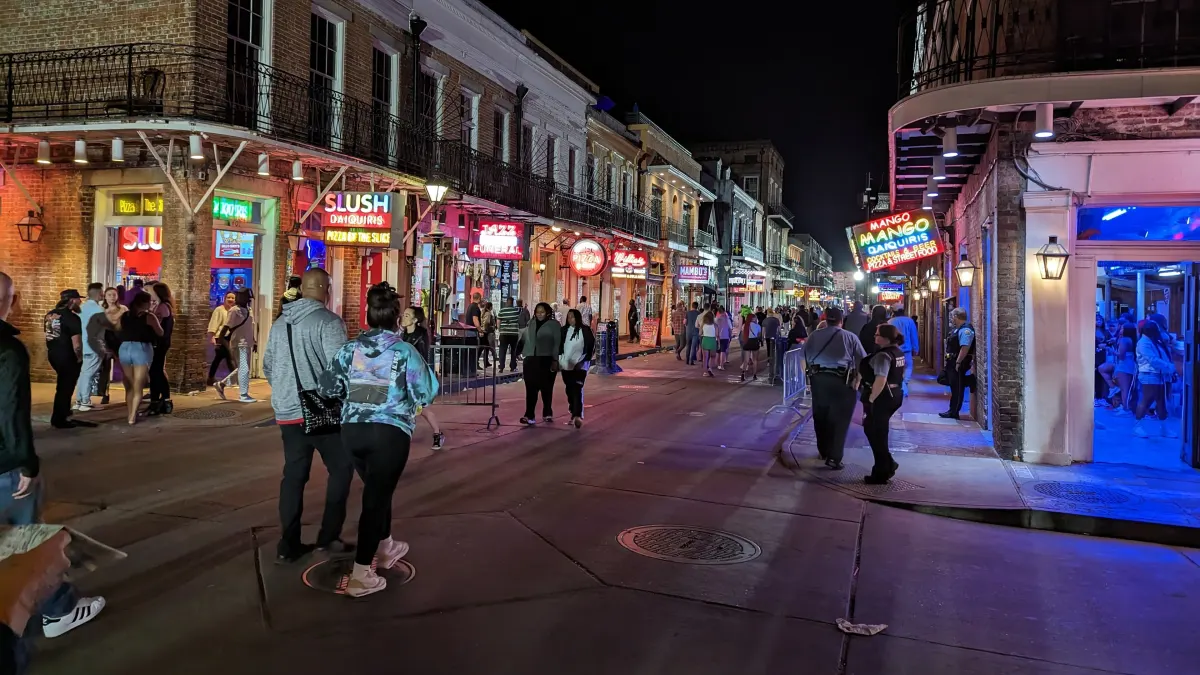
- Drinking in the street or on the beach is illegal in most places. Exceptions include New Orleans, Las Vegas (not from glass on the Strip), Savannah's historic district and Beale Street in Memphis.
- In a car, an open bottle, even a recorked one, must go in the boot, and in many states passengers can't drink either.
Driving
- The alcohol limit for drivers is 0.08%, and 0.05% in Utah. For drivers under 21 it's nearly zero. A conviction can mean jail, and can bar you from using an ESTA.
- Phones: more than 30 states and DC ban holding one at all, and nearly all ban texting.
- Right on red, U-turns, radar detectors, motorcycle helmets and lane-splitting (legal in California) all vary.
- Child seats are required everywhere, with different ages and heights: see Accessibility and families.
- In New Jersey attendants fill the tank for you, by law.
Smoking, vaping and gambling
- The age for tobacco and vapes is 21 everywhere. Some states, including California and Massachusetts, ban flavoured ones. Smoking is banned inside restaurants and bars in most states, and on many beaches and in parks.
- Gambling: 21 in Nevada, New Jersey and most casinos, and 18 in some tribal ones. Online sports betting is legal in most states, but not all, such as California and Texas. Hawaii and Utah have no legal gambling. Winnings can be taxed.
Guns and weapons
More than half the states let adults carry a hidden handgun without a permit. Most short-term visitors are barred by federal law from having guns or ammunition, with exceptions such as a hunting licence. Shooting ranges that hire guns to tourists will check your documents. The rules for pepper spray and knives vary too, and neither can go in your cabin bag.
Pregnancy
Abortion is banned or heavily restricted in many states, mostly in the South and the Midwest, which can also affect how hospitals treat miscarriages and emergencies. If you're pregnant, look up the laws of the states you'll visit, and check that your insurance covers you.
Other things that catch people out
- Jaywalking is no longer a crime in California, Nevada, Virginia or New York City, but you can be fined in many other places.
- Drones are banned in national parks and near airports, and must be registered with the aviation authority (the FAA) if they weigh 250 g or more. Foreign visitors have to follow its rules too.
- Littering fines can be US$1,000. Collecting wood, shells, cactus or fossils is often illegal.
- You can film the police in public, but keep back and don't interfere.
- The death penalty and very long sentences exist, and a minor offence can mean a night in jail.
- Hawaii bans sunscreens with oxybenzone or octinoxate, to protect its reefs.
- Under US sanctions, you can't go on an ordinary tourist trip to Cuba from the USA.
See also Safety and Driving and road trips.


Comments
No comments yet.