
Driving and road trips in the USA: licences, hire cars, insurance, tolls, fuel and distances
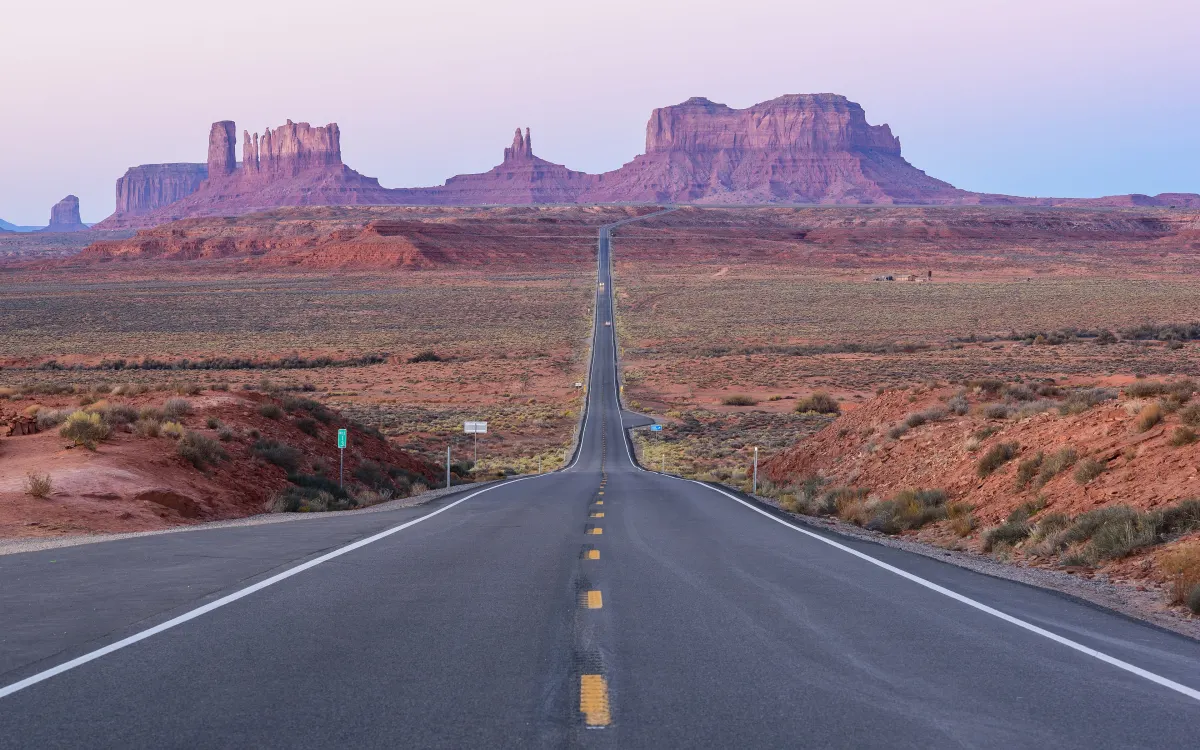
A road trip is the best way to see most of the USA: the roads are good, the cars are automatic, and the national parks can hardly be reached any other way. The hard parts are the distances, choosing insurance, and paying tolls that no longer take cash.
Licences and hire cars
- You can drive as a visitor on your own full licence. Whether you also need an International Driving Permit (IDP) depends on the state and the hire company. Get the 1949 version at home before you leave if your licence isn't in English, or if your states or company ask for one. The USA doesn't issue them to visitors.
- Most companies hire to drivers of 21 and over, with a daily surcharge for those under 25. The main driver needs a credit card in their own name.
- One-way fees can be high, and cars usually can't go into Mexico. Many companies forbid unpaved roads: check if you're planning Monument Valley's loop or other dirt roads.
- Electric cars are common to hire. Fast chargers are plentiful on the coasts and motorways, but far apart in the deserts and the plains.
Insurance
- The liability cover the law requires is tiny in many states. A serious crash could cost you millions, so make sure your rental has extra liability cover (SLI or LIS), usually US$1 million or more. Packages booked from abroad often include it.
- Damage to the car (CDW or LDW) is separate. Some credit cards and travel policies cover it, but read the conditions.
- Photograph the car when you collect and return it.
Rules that surprise visitors
- Drive on the right. Seat belts are needed almost everywhere.
- You can turn right on a red light after stopping, unless a sign says not to. In New York City it's forbidden unless a sign allows it.
- At a four-way stop, everyone stops, and goes in the order they arrived.
- Stop for a school bus with flashing red lights, in both directions unless the road is divided. Fines are heavy.
- Move over a lane, or slow down, for emergency vehicles on the roadside.
- Speed limits are in miles per hour: usually 25 to 35 in towns, 55 to 65 on highways, and 65 to 80 on interstates (80 mph is 129 km/h).
- The alcohol limit is 0.08%, and 0.05% in Utah. More than 30 states ban holding a phone while driving. Don't have an open alcohol container in the car: see State laws.
- Carpool (HOV) lanes, marked with diamonds, are for cars with two or three people. Express lanes charge a toll.
- Even-numbered interstates run east to west, odd ones north to south, and exits are usually numbered by the mile.
If the police stop you
Pull over to the right, stop the engine, stay in the car with the window down and your hands on the wheel, and don't reach for documents until you're asked. Be polite. Don't offer to pay on the spot.
Tolls
- Most toll roads and bridges, including the Golden Gate Bridge and Florida's Turnpike, are cashless: a camera reads your plate or a transponder.
- Ask the hire company how tolls work. Their toll programmes are easy, but many charge a daily fee on top, sometimes for the whole rental. In Florida, if you fly to Orlando International, ask about the free Visitor Toll Pass. You can also set your map app to avoid tolls.
- Driving into Manhattan below 60th Street brings a congestion charge. Don't take a car into Manhattan anyway.
Fuel
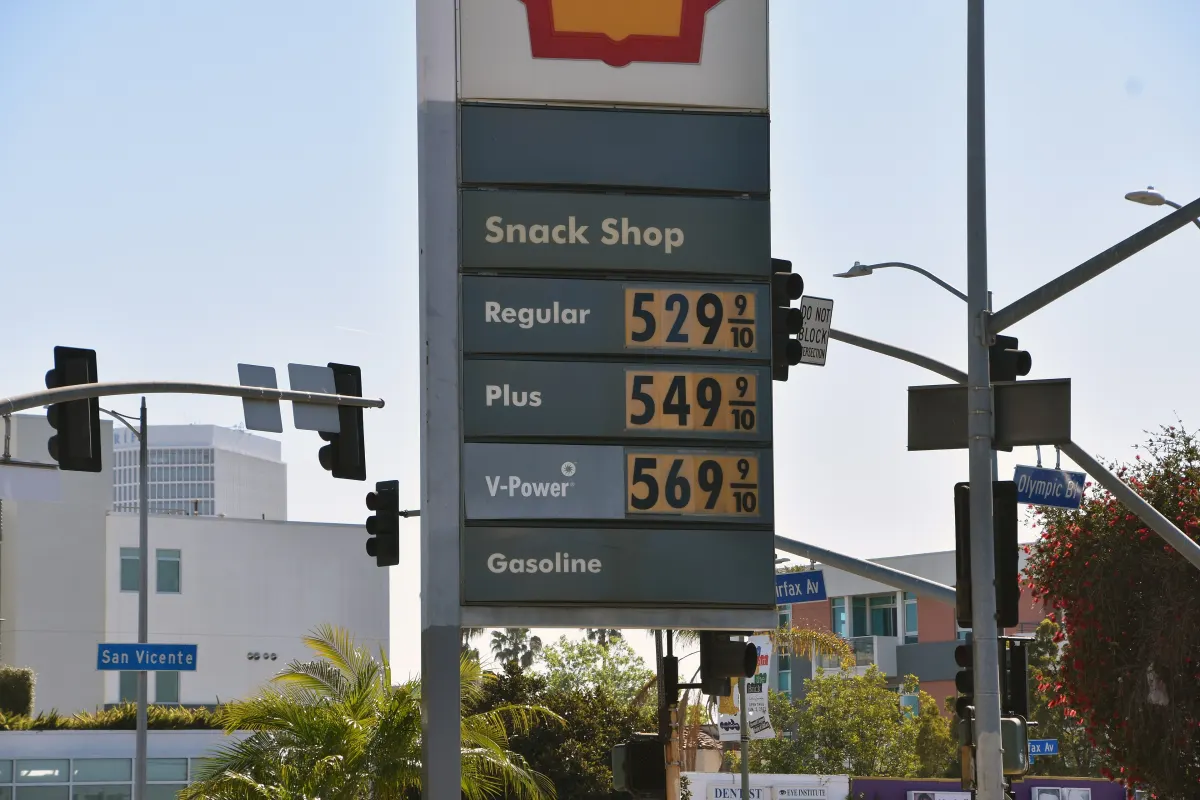
- Petrol (gas) is sold by the US gallon (3.79 litres). The national average was about US$3.70 a gallon in late November 2026, after a year when it passed US$4. It's dearest in California, Hawaii and Washington, and cheapest in the South.
- Pumps often ask for a ZIP code, which foreign cards don't have. Go inside and prepay the cashier. Some stations charge more for credit cards.
- "Regular" is right for most hire cars. Green handles are often diesel.
- Fill up at half a tank in the deserts and mountains: there are stretches of 100 miles (160 km) without a station.
Distances
- San Francisco to Los Angeles: about 380 miles (610 km), 6 hours inland; two full days by Highway 1.
- Las Vegas to the Grand Canyon's South Rim: about 280 miles (450 km), 4½ hours.
- Miami to Key West: about 160 miles (260 km), 3½ to 4 hours.
- New York to Chicago: about 790 miles (1,270 km), 12 to 13 hours.
- Coast to coast: about 2,800 miles (4,500 km), at least five long days, and better three weeks.
Don't plan more than five hours a day. There's often no phone signal in the parks and deserts, so download offline maps. Dial 511 in most states for road conditions.
Parking and break-ins
- City hotels can charge US$50 or more a night for parking. Read every line of a street sign, look for street-cleaning days, and never park by a fire hydrant or a red kerb.
- Leave nothing in the car, not even in the boot, and above all not your passport. San Francisco and trailhead car parks are known for break-ins.
Desert, mountain and winter driving
- In the desert, carry several litres of water per person. If you break down, stay with the car. Never drive through flood water.
- In winter, high roads close for months, including Tioga Road in Yosemite and Going-to-the-Sun Road in Glacier. You may have to carry or fit snow chains in the western mountains, though many hire companies don't allow them.
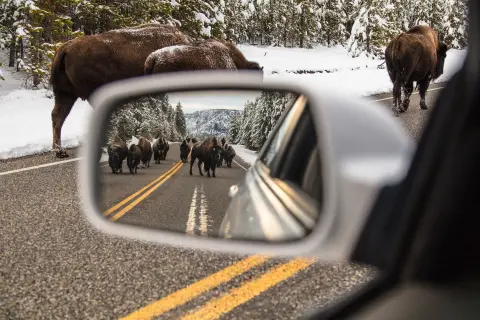
- Watch for deer, elk and cattle at dusk and dawn.
RVs
Hiring a motorhome (RV) saves on hotels, but adds mileage, fuel, insurance and campsite fees. Park campsites are booked up to six months ahead. Some roads have size limits: since June 2026 vehicles over 35 ft 9 in long, 7 ft 10 in wide or 11 ft 4 in high can't use the road through Zion to the east, and many hire RVs are taller than that.
Great drives
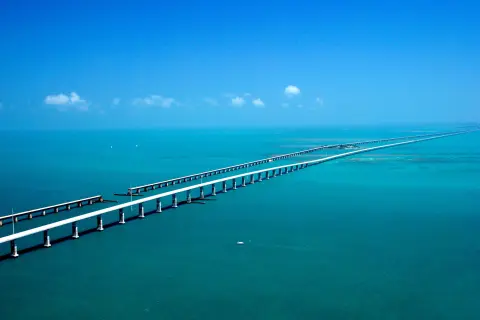
Try Big Sur and Highway 1 in California, Route 66, the Blue Ridge Parkway, the Road to Hāna on Maui, the Seward Highway in Alaska, or the Overseas Highway through the Florida Keys.
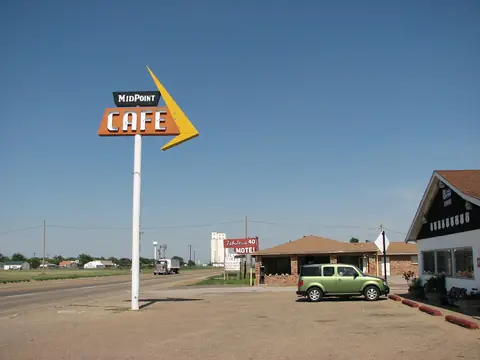
Route 66
The 'Mother Road', with neon motels, diners and ghost towns.

Blue Ridge Parkway
A 469-mile scenic road through the Appalachians, best in October's autumn colour, with Asheville a good stop.
Seward Highway and Turnagain Arm
One of the great drives in America: the Seward Highway runs about 200 km from Anchorage to Seward, beginning with a stretch squeezed between the moun…
Itineraries by car: California's coast, the south-west's parks and Florida.

Comments
No comments yet.