
Dhaka for visitors: where to stay, Old Dhaka, the sights and when they're closed, and traffic
Dhaka is one of the biggest and most crowded cities in the world: noisy, dusty, friendly and exhausting. Two or three days are enough for most people. Choose your area and your timing well, as traffic is the main problem: a few kilometres can take an hour or more.
Where to stay
- Gulshan, Banani and Baridhara, in the north, are the diplomatic and business areas, with embassies, international hotels, restaurants and cafés. They're the usual choice for foreign visitors, with more security, but far from the old city.
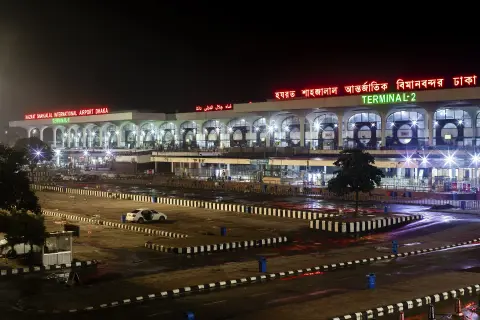
- Uttara, near the airport and on the metro, is practical for early or late flights.
- Motijheel, Paltan and Old Dhaka are closer to the sights, with cheaper hotels, but noisier, and near places where protests are held.
- Hotels register guests from your passport and visa, and some cheaper ones don't accept foreigners. Unmarried couples may be refused a room: see Culture and etiquette.
Old Dhaka in a day
- Start early and take a guide for a first visit: the lanes are crowded and hard to navigate. A Friday morning is quieter for traffic, but some places and shops are closed.
- Lalbagh Fort, the unfinished 17th-century Mughal fort, is the best-known sight. It's usually closed on Sundays and at lunchtime, but hours change, so check.
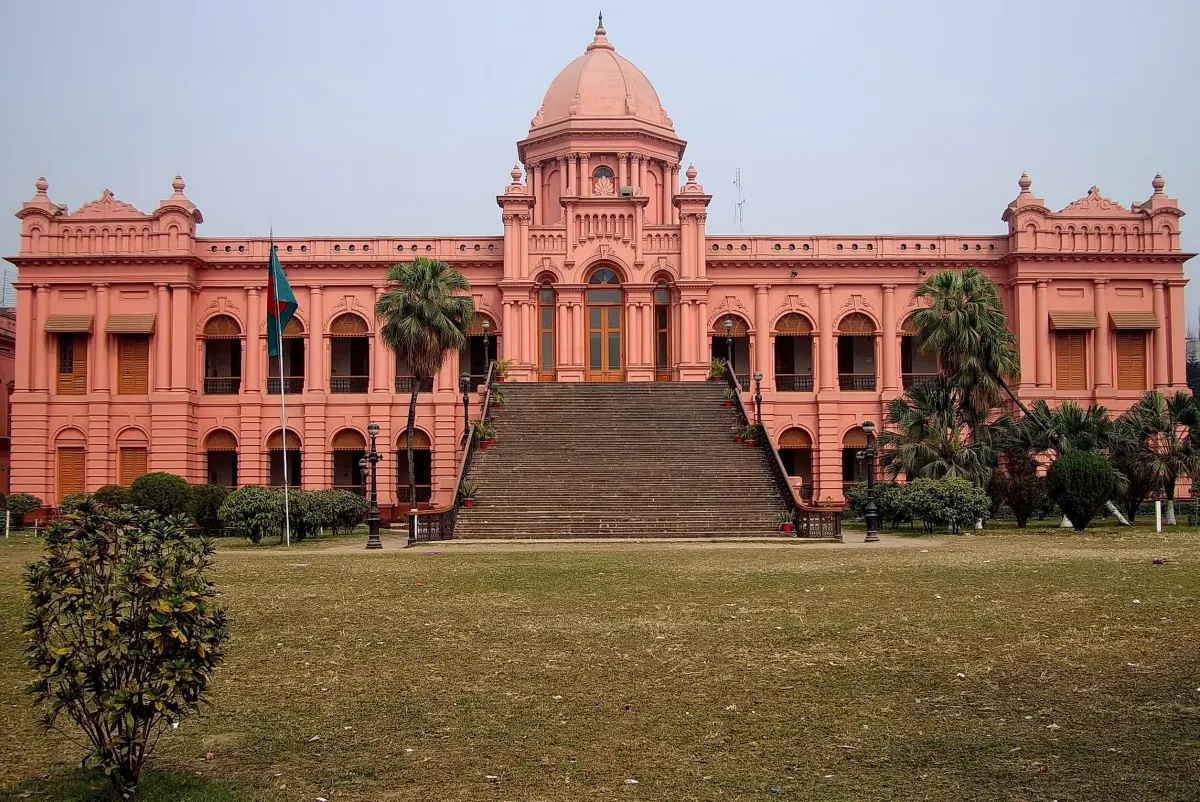
- Ahsan Manzil, the pink palace by the river, is a museum, usually closed on Thursdays and on public holidays.
- The Star Mosque (Tara Masjid) is decorated with mosaic stars. Non-Muslims are normally welcome in the courtyard outside prayer times; ask first. The Armenian Church and the Hindu Street (Shankhari Bazar) are nearby.
- Sadarghat, the river port, is the place to see big launches and small wooden boats. A short trip in a rowing boat across the Buriganga is a memorable ride, but the river is badly polluted: choose a boat that isn't overloaded and keep your hands in.
- Finish with kacchi biryani in one of the old biryani houses, and see Food and drink.
Other sights
- The Liberation War Museum, in Agargaon, tells the story of the 1971 war and is the museum to see if you visit only one. It's near the Agargaon metro station.
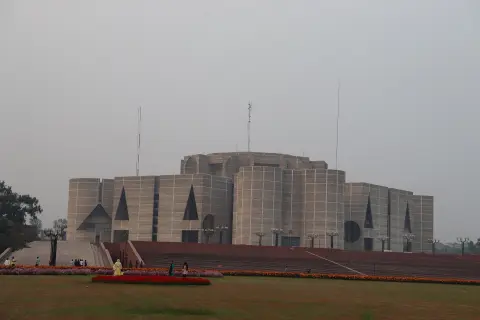
- The National Parliament (Jatiya Sangsad Bhaban), by the architect Louis Kahn, is admired by architecture fans. You can only look at it from outside unless you arrange a visit in advance. Don't photograph guards.
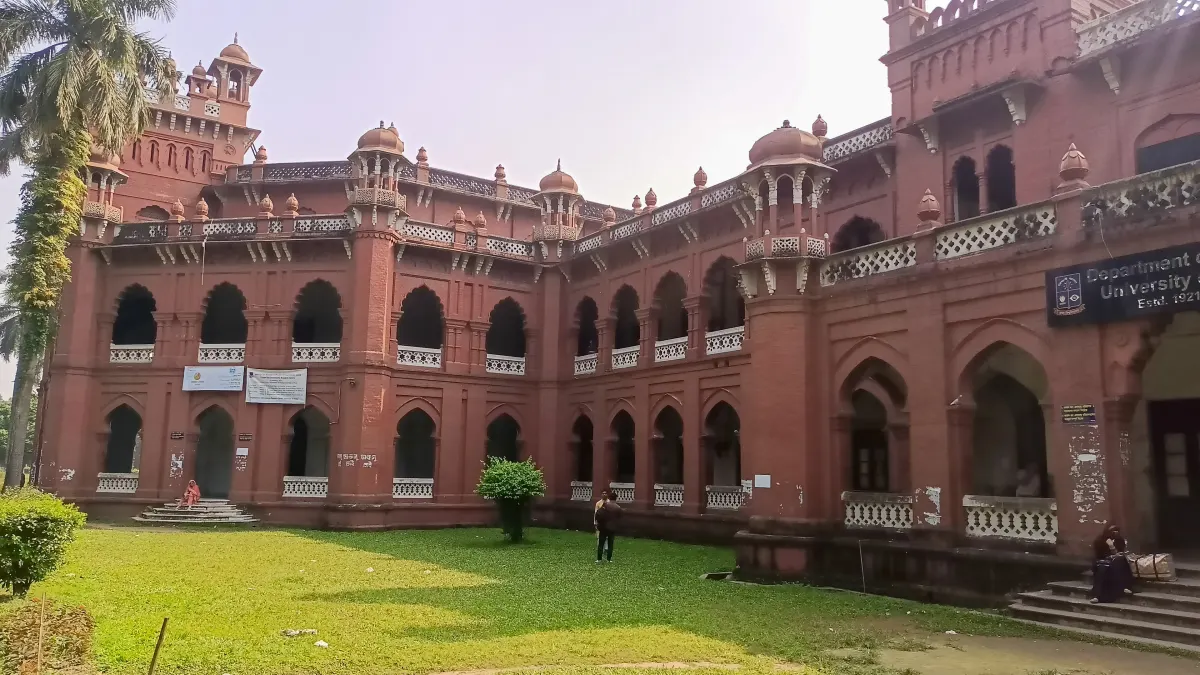
- Dhaka University and Curzon Hall are near Shahbag, and the streets fill in February, when the Ekushey book fair is held.
- New Market and Gausia sell saris and fabric, and bargaining is expected. Avoid when there are protests nearby.
- Baitul Mukarram, the national mosque, is a place to see from outside, and protests often start there after Friday prayers.
Day trips
- Sonargaon and Panam Nagar, the old capital with a street of abandoned merchants' houses, and the folk art museum, about 30 km to the southeast. Allow a half-day to a day, depending on traffic.
- Savar, the National Martyrs' Memorial, to the northwest, is a moving place.
- The great Buddhist monastery at Paharpur (Somapura Mahavihara) is too far for a day: allow two days for the north.
- Take a car with a driver, and avoid Dhaka's entrance roads during the evening rush.
Getting around in Dhaka
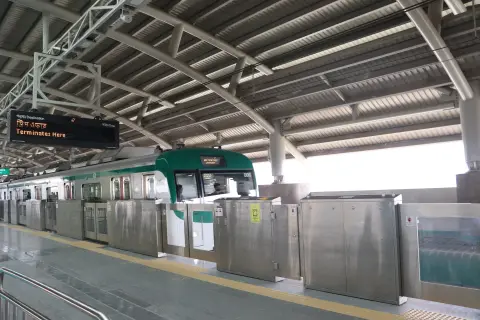
- Use the metro (Uttara–Agargaon–Shahbag–Motijheel) when it suits you, an app car at other times, and a rickshaw for short hops. See Getting around.
- Roads are worst from about 8 to 11 a.m. and from 4 to 9 p.m. Plan at most two or three places a day. On Friday, the weekly holiday, traffic is light until after prayers.
- Pavements are broken and drivers don't stop, so cross with local people, and wear sturdy shoes.
Opening days
- The weekend is Friday and Saturday. Government offices, banks and some sights are closed on Friday, and shops often close in the morning. Museums have their own closing day: see the sights above, and ring or check on the day.
- Foreigners pay more than Bangladeshis at state-run sights, typically a few hundred taka, and you need cash. Prices on the internet don't agree, so treat them as a guide.
Health and safety in the city
- Air pollution is severe from November to March. Carry a good mask and check the air quality: see Health.
- Go by car after dark, keep your phone out of sight, and watch your bag in traffic. Women should avoid being alone in quiet places, and crowded streets and buses can be unpleasant.
- Dhaka has the best hospitals in the country, but standards vary: ask your embassy or insurer which to use.

Comments
No comments yet.