
Arriving in Bangladesh: visas, visa on arrival, the arrival card, land borders with India and customs
Most visitors need a visa for Bangladesh. Some nationalities can get one on arrival at the airport, but it's at the immigration officers' discretion, so a visa from an embassy before you go is the safest choice. Before you book, read Safety and politics now.
A visa in advance
- Apply to the Bangladesh embassy or high commission for the country you live in. The application form is filled in online and then handed in with your passport. Ask for a multiple-entry visa if you plan to leave and come back.
- Your passport should be valid for at least six months. The UK government points out that a visa is valid from the date it's issued, not the date you travel, and that your passport needs two blank pages.
- A few nationalities, including Bhutan, the Maldives, Fiji, Jamaica and some other Commonwealth countries, don't need a visa for shorter stays. Check with an embassy. People of Bangladeshi origin, and their spouses and children, can ask for a "No Visa Required" stamp.
- Bangladesh approved a new visa policy in 2026 which mentions an electronic visa, but at the time of writing there was no working official e-visa for tourists that we could confirm. Be wary of websites that sell one.
- Israeli passport holders are refused entry.
Visa on arrival
- The official visa on arrival page of the police Special Branch lists people from countries without a Bangladesh embassy, and nationals of countries that include the United States, Canada, Australia, New Zealand, European countries, Russia, China, Japan, South Korea, Singapore, Malaysia, Indonesia, Brunei, Turkey, Egypt and the Gulf states. Business visitors and some other people also qualify. Indian citizens aren't on the list. The page can also be read as limiting this to people travelling from a country without a Bangladesh embassy, which is another reason to get a visa in advance if you can.
- It's a single-entry visa for up to 30 days. The UK government says you may be given 15 to 30 days, and that it's not guaranteed. Canada and Australia also warn that you could be refused, and that the rules can change at short notice. The airline can refuse to let you board, too.
- Bring a passport valid for six months, a return or onward ticket, the address and phone number of your hotel with a printed booking, and at least US$500 in cash or a credit card, which the official page asks for.
- The fee is paid in cash in US dollars, euros or pounds. It's reported as US$51 for a single entry, including taxes; bring the exact amount, and ask an embassy first, as the fee depends on your nationality.
- You can register in advance on the visa on arrival website, which the UK government mentions. Guides say you should do this at least 72 hours before you arrive. It speeds things up, but it isn't an approval.
- The official page tells you to use the same port for arrival and departure. Print everything, as a copy on your phone may not be accepted. Allow for a wait of an hour or two.
The arrival and departure card
- Foreign visitors fill in an arrival card and a departure card. Since August 2026 you can do it online at edcard.specialbranch.gov.bd; print the confirmation to show at immigration. Paper cards have still been available. The online form covers people arriving by air.
- It isn't a visa. Official reports didn't set a time limit for filling it in.
Staying longer
- You can ask for an extension at the Department of Immigration and Passports in Agargaon, Dhaka (dip.gov.bd), but it takes time, so don't leave it until the last day.
- Don't overstay. The 2026 visa policy is reported to fine you Tk 1,000 a day for the first 15 days, Tk 2,000 a day up to 90 days, and Tk 3,000 a day after that, and long overstays can be prosecuted. Some websites, including the government's, still show lower, older figures.
- Get an entry stamp: it's checked when you leave.
Arriving in Dhaka
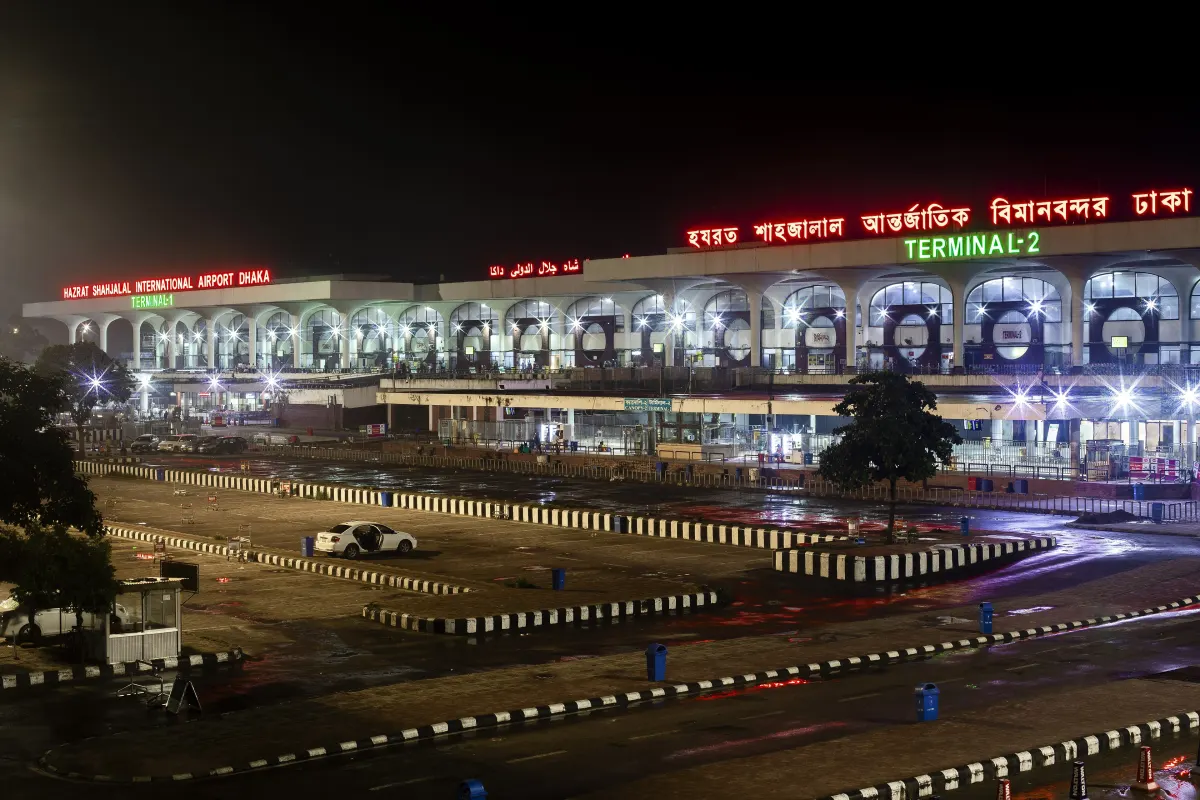
- Most flights land at Hazrat Shahjalal International Airport, north of the centre. Its new Terminal 3 hasn't opened at the time of writing. Some international flights use Chattogram (Chittagong) or Sylhet.
- The UK and Canadian governments warn of theft, of people who offer to carry your bags, and of taxi overcharging. Book a car through your hotel in advance, or use an app: see Getting around. Ignore people who approach you with transport or luggage help.
- Security at the airport can be slow, and strikes or protests can block the airport road, so leave early for your flight home.
Land borders with India
- Check the latest position before you plan a crossing. Relations between the two countries have been strained since 2024, and which land crossings are open, and to whom, changes. The Indian tourist visas for Bangladeshis were restarted in mid-2026 and the Akhaura crossing (for Agartala) reopened to passengers, but the rules for other foreigners aren't always announced.
- Benapole–Petrapole, between Khulna and Kolkata, is the main crossing and the one that other foreigners have used. It opens in the day only. Guides and travellers have used visa on arrival there too, but it depends on the officers, and travellers report that other crossings, such as Burimari–Changrabandha, have turned foreigners away. Don't count on Tamabil–Dawki (for Meghalaya) or Banglabandha–Fulbari without checking. Ask an embassy and get a Bangladesh visa, and an Indian one that lists the crossing, in advance.
- The Kolkata–Dhaka, Kolkata–Khulna and Siliguri–Dhaka trains (the Maitree, Bandhan and Mitali expresses) have been suspended since July 2024. Talks about starting them again were still going on in autumn 2026. Visa on arrival isn't given on trains.
- The Indian side charges foreigners a fee to use Petrapole.
- Don't go near the border away from the crossings: the UK government warns that people have been shot crossing illegally. The border with Myanmar is closed to visitors in practice, with fighting on the other side.
Customs and money
- Declare large amounts of cash. Official guidance and the advice of other governments don't agree on the limit: Bangladesh's central bank says you don't need to declare up to US$10,000 or Tk 10,000 in taka, and Australia says US$5,000. If you're carrying more than US$5,000, declare it, and keep the form. See Money.
- Don't bring drugs, or medicines you can't show a prescription for. Alcohol is restricted: see Culture and etiquette.
- If you come from, or have passed through, a country with yellow fever, you need a vaccination certificate.
- Drones and professional cameras may need permission.
Rules here change often, sometimes at a day's notice. Check with the embassy, and with your own government's travel advice, just before you go (for example the UK's entry requirements page).

Comments
No comments yet.