
Health in Oman: heat, water, sun, insects, hospitals and insurance
Oman has good hospitals and clean towns, and most visitors have no trouble worse than sunburn. The serious risks are the heat, the water and the road. Ask a travel clinic for advice at least eight weeks before you go, and take out insurance, because private care is expensive and you may have to pay before you leave.
Heat
- In summer (May to September), the coast and the interior pass 40 °C, and the air on the coast is humid even at night. The UK says that extreme heat has killed walkers in Oman, through dehydration and heat exhaustion.
- Walk early, rest from late morning to mid-afternoon, and don't hike in summer at all except in the high mountains.
- Drink before you're thirsty: at least three or four litres a day when walking, with some salt or rehydration salts. Keep several litres of water per person in the car in case you break down.
- Heat stroke (confusion, hot dry skin, fainting) is an emergency: cool the person with water and shade, and call 9999.
- Use strong sunscreen, a hat and sunglasses, even in winter.
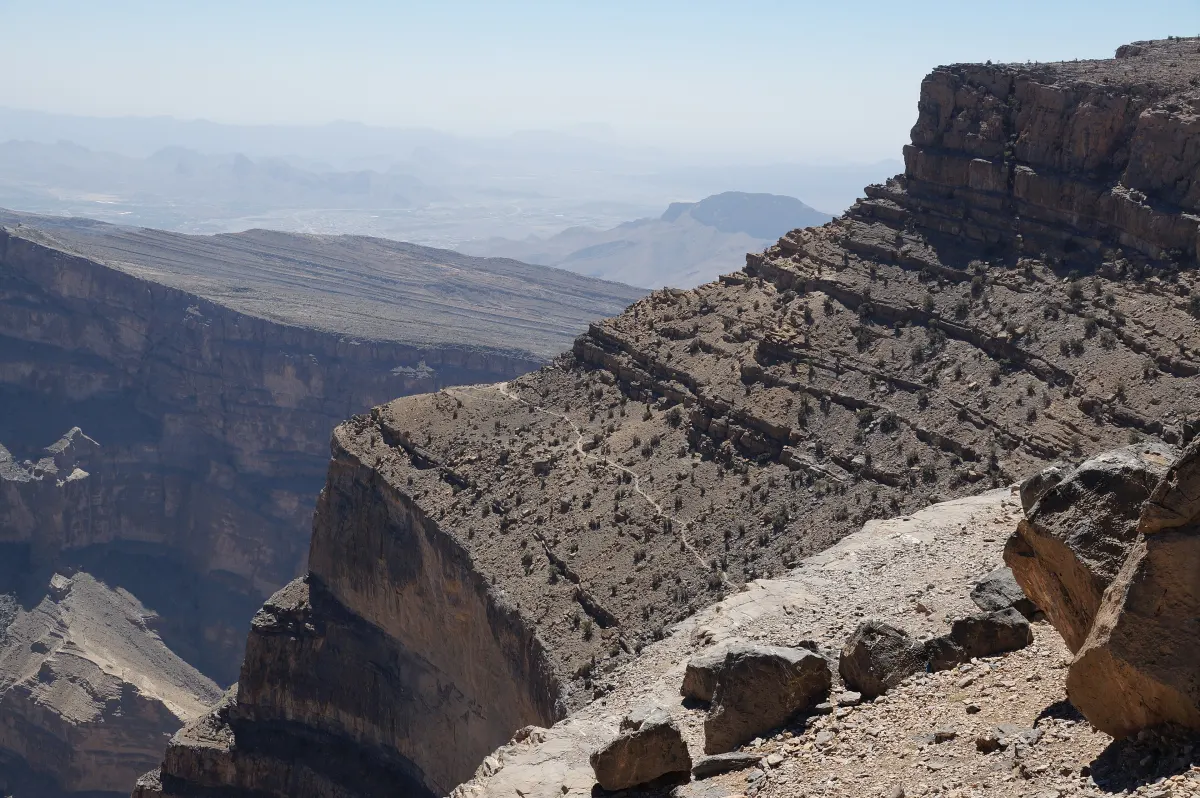
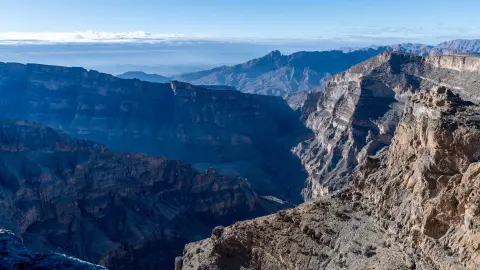
- In December and January, nights in the mountains and the desert are cold: bring warm layers. Altitude can make you feel rough on Jebel Shams, at about 3,000 metres.
Water and food
Tap water in the towns is treated, but most people drink bottled or filtered water, and you should outside the towns. Food is usually safe. If you get a bad stomach, drink plenty, with rehydration salts; see a doctor if you have a fever or blood, or if it lasts more than a couple of days.
In the water
- Wadi pools: don't dive, as depths change with the rain; don't swim after rain, and get out if the water goes brown. See Wadis, dunes and camping.
- The sea has strong currents. In the khareef (June to September) the south coast is far too rough to swim in. Jellyfish and sea urchins are the usual stings; shuffle your feet in shallow water so you don't step on a stingray.
- On boats, check that there are life jackets for everyone.
Insects and animals
- Dengue is present, and malaria occurs rarely, above all in Musandam, says Australia. Use repellent, cover up at dusk, and stay where there are screens or air-conditioning.
- MERS, a lung illness, is linked to camels: wash your hands, don't drink raw camel milk, and don't touch sick animals. Riding one at a desert camp is a low risk if you wash your hands afterwards.
- Rabies: if an animal bites or scratches you, wash the wound with soap for 15 minutes and see a doctor at once.
- Snakes and scorpions live in the rocks: don't put your hands where you can't see, wear shoes after dark, and shake out your boots when camping.
Medicines
- Pharmacies are good and common in towns. Some medicines that are ordinary elsewhere are illegal or need approval in Oman, including strong painkillers, some sleeping tablets and ADHD medicines, and CBD. Check with Oman's Ministry of Health well before you travel, and carry your prescription and a doctor's letter in English, with medicines in their original boxes.
- Drug laws make no difference between a large and a small amount: see Safety in Oman.
Vaccinations
Check that your routine ones are up to date. Hepatitis A and typhoid are often advised; hepatitis B and rabies for some trips. A yellow fever certificate is needed only if you arrive from a country with a risk of it.
Hospitals and insurance
- Care in Muscat and the bigger towns is good, with English widely spoken. Visitors normally use private hospitals or the emergency department of a public one, and pay. In the mountains and deserts there may be only a basic clinic, hours away.
- You may have to pay up front, and the UK says that people who can't pay can be stopped from leaving Oman. Oman also asks visitors to have health insurance: see Arriving in Oman.
- Check that your policy covers hiking, 4x4 driving and evacuation, and whether it covers you in areas your government warns about.
Emergency
Call 9999 for an ambulance, police or fire. In the desert or mountains, give your location from your phone (a map pin or coordinates), and stay with your vehicle.


Comments
No comments yet.