
Salalah in the khareef: 4 days in green Dhofar, with waterfalls, beaches and frankincense (route map)
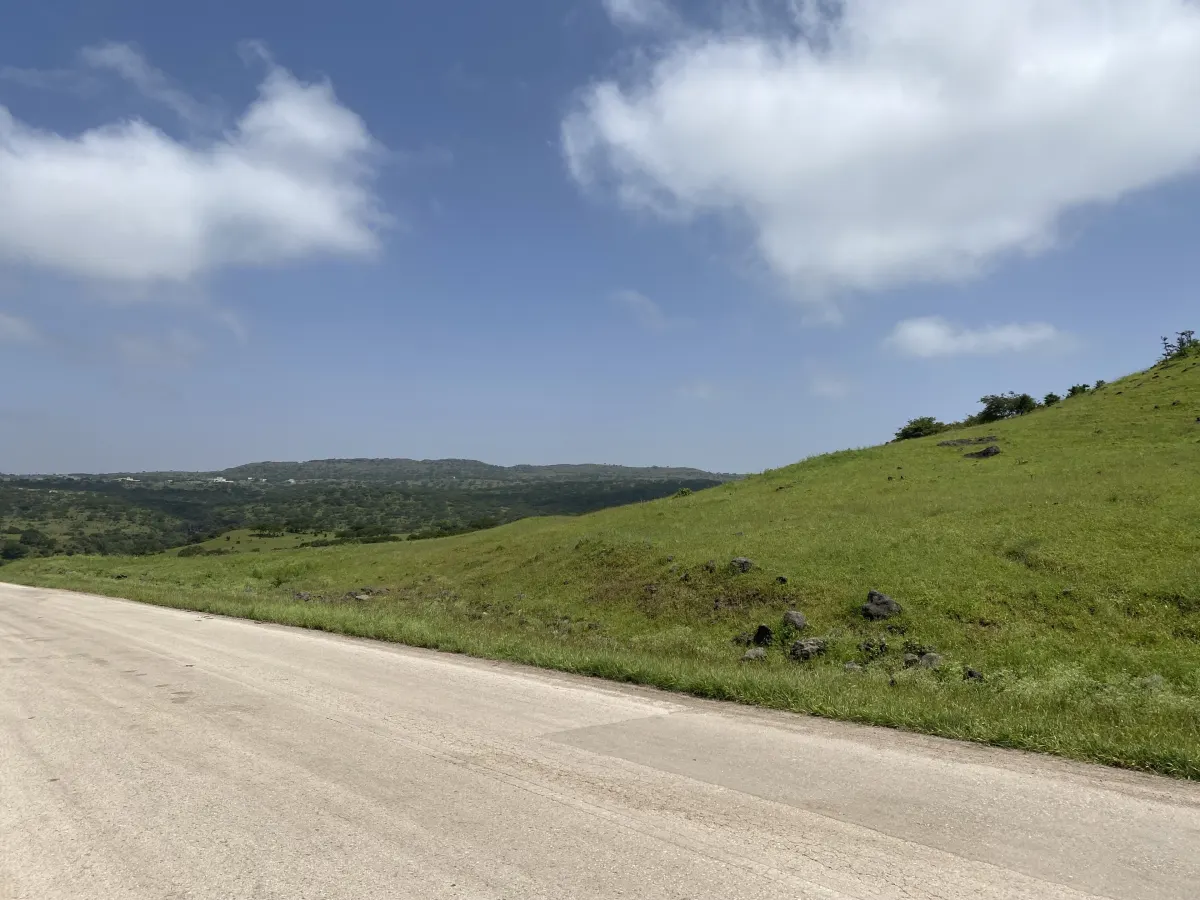
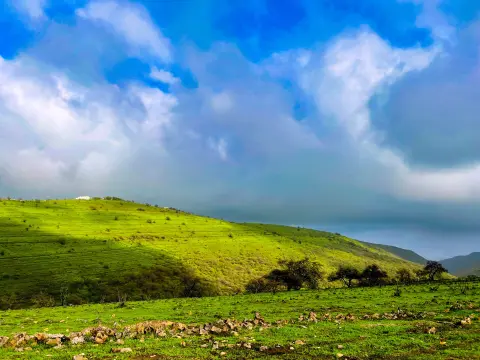
From late June to September, when the rest of Arabia is baking, mist and drizzle turn the hills behind Salalah green, waterfalls pour into wadis, and families from across the Gulf drive for days to walk in the rain. Four days is enough for the town and the hills on both sides. Out of season the same sights are dry and sunny, with clear seas and no crowds.
Check the travel advice first
- France (29 October 2026) advises against travel to the Salalah region except for compelling reasons, and Canada and the USA have warnings for the whole country. The UK and Germany don't warn about Salalah, and Australia's only regional warning is for the area within 30 km of the Yemen border.
- The port at Raysut, west of the city, was hit by drones in March 2026. Keep away from it, and don't photograph it.
- Don't go west of the Fazayah and Mughsail area on the coast road, towards Rakhyut, Dhalkut and Sarfait near the Yemen border.
- Read Safety in Oman and check your insurance.
Map of the route
Day 1: Salalah and Al Baleed, about 10 km
Day 2: Ayn Razat, Wadi Darbat and Khor Rori, about 120 km
Day 3: Mirbat and Jebel Samhan, about 120 km
Day 4: Mughsail and Fazayah, about 70 km
Click a dot for the place. All four days are day trips from Salalah. The map stops at Fazayah: do not drive on towards the Yemen border. Route from OpenStreetMap (© OpenStreetMap contributors, ODbL).
Before you go
- When: the khareef runs from about 21 June to 21 September (2026's dates), and it's greenest from mid-July to late August. September and October are green and quieter. See Weather in Oman.
- Getting there: fly (about an hour and a half from Muscat), or drive 1,000 km across the desert, which takes one very long day, or better two. See Getting around Oman.
- Car: rent one. An ordinary car is enough for the main sights; a 4x4 helps on muddy tracks. Drive slowly in fog with your lights on: roads are slippery, and camels and cattle wander on them.
- Book rooms months ahead for July and August, when prices double or more. Pack a rain jacket and shoes with grip.
Day 1: Salalah
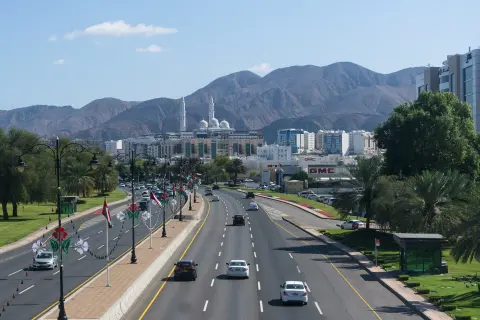
Start at the Al Baleed archaeological park, the ruins of the medieval port of Zafar, which exported frankincense across the Indian Ocean. It's part of the UNESCO World Heritage Site Land of Frankincense, and has the Museum of the Frankincense Land. Then drink from a green coconut at the fruit stalls by the banana plantations, and spend the evening in the Al Husn (Haffa) souq, where sellers burn frankincense for you to smell. The pale, almost green-white resin, called hojari, is the finest.
Day 2: Wadi Darbat and the eastern springs
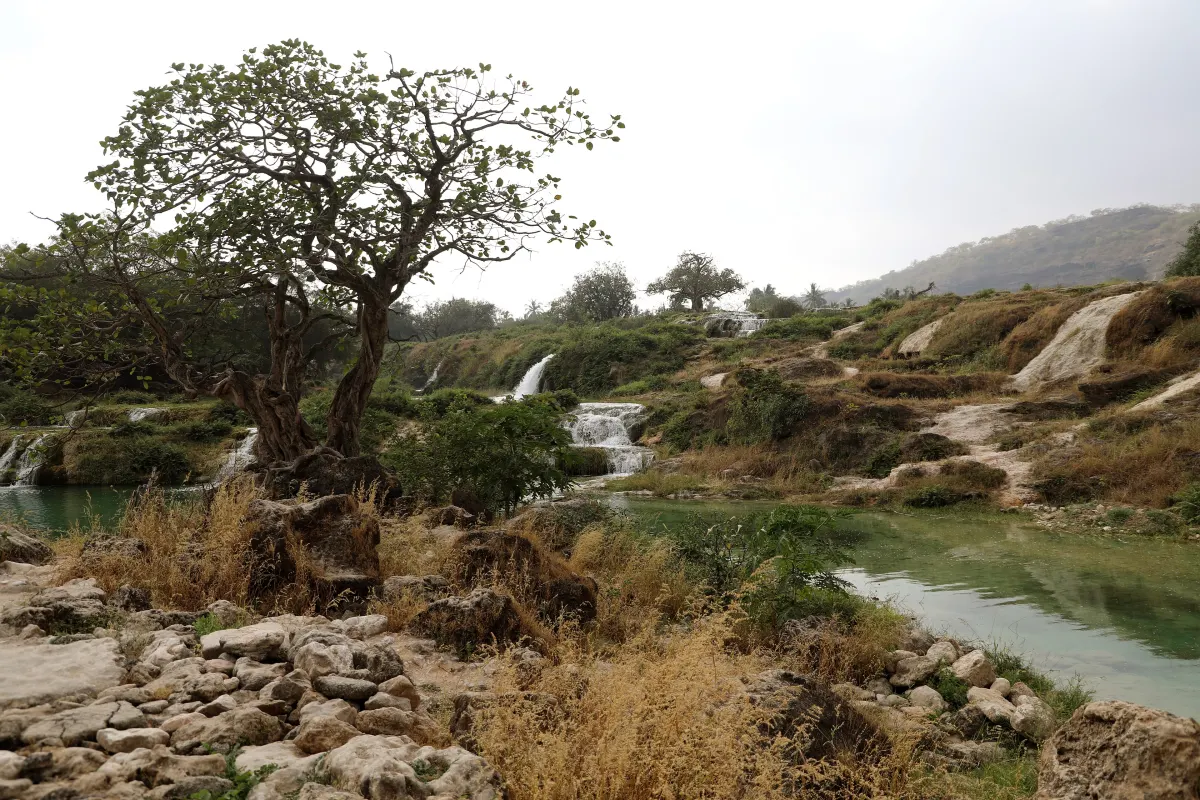
Drive up into the green hills to Ayn Razat, a spring with gardens below the cliffs, and on to Wadi Darbat, where a river winds through meadows with grazing camels and cows, and, after good rain, waterfalls drop over the cliff below. Keep behind the barriers, and don't swim: there's a parasite risk in still water, and people have drowned in the pools. Down on the coast, see the old town and castle of Taqah, and the ruins of Sumhuram at Khor Rori, a 2,000-year-old frankincense port above a lagoon full of birds.
Day 3: Mirbat and Jebel Samhan
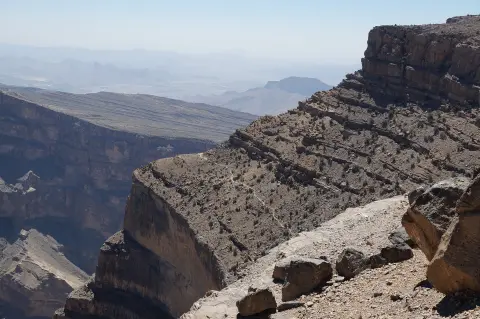
Drive east along the coast to Mirbat, an old trading town with a castle, merchants' houses and a fishing harbour. Then climb the hill road behind it to the Jebel Samhan viewpoint, where, above the clouds, the plateau drops more than a thousand metres to the coastal plain. On the way is the Tawi Atayr sinkhole, one of the largest in the world, seen from a platform. In the khareef the view may be all fog, and at other times it's spectacular.
Day 4: Mughsail and the west
Drive west to Mughsail, a long beach under cliffs. At Marneef Cave, beyond it, the sea shoots up through blowholes in the rock, with the most force in the khareef: stay behind the railings. If it's clear, carry on over the hairpin road to the turning for Fazayah beach, a string of white coves below cliffs, then turn back. In the hills on the way you can see frankincense trees. Don't swim in the sea in the khareef: the waves and currents kill people every year.
With more time
- Drive north to Wadi Dawkah, a protected valley of frankincense trees in the desert behind the mountains, in an hour: the mist stops there at once.
- Outside the khareef, go to Hasik for the wild eastern coast, or on a boat trip from Mirbat or Salalah to look for dolphins and whales.
- Visit an Empty Quarter camp near Thumrait, with a guide and in winter only.
Comments
No comments yet.