
Culture and etiquette in Oman: dress, mosques, the Grand Mosque, Ramadan and hospitality
Omanis are famously polite, calm and generous, and they're used to visitors. Most Omanis are Ibadi Muslims, a moderate tradition that is neither Sunni nor Shia, and the country is tolerant of other faiths. Modest clothes, a quiet voice, and a few words of Arabic will open almost every door.
What to wear
- Cover shoulders and knees in towns, souqs, villages and malls, men and women alike: loose trousers or a long skirt and a T-shirt that covers your upper arms. The UK says clothes should cover the tops of the arms and legs to below the knee. Offending public decency can be punished by law, though visitors are usually just asked to cover up.
- Women don't need to cover their hair, except in mosques, but a light scarf is handy.
- Swimwear is for hotel pools and hotel beaches. On public beaches and in wadis, swim covered up: see Wadis, dunes and camping.
- Don't wear army-style camouflage: it's illegal.
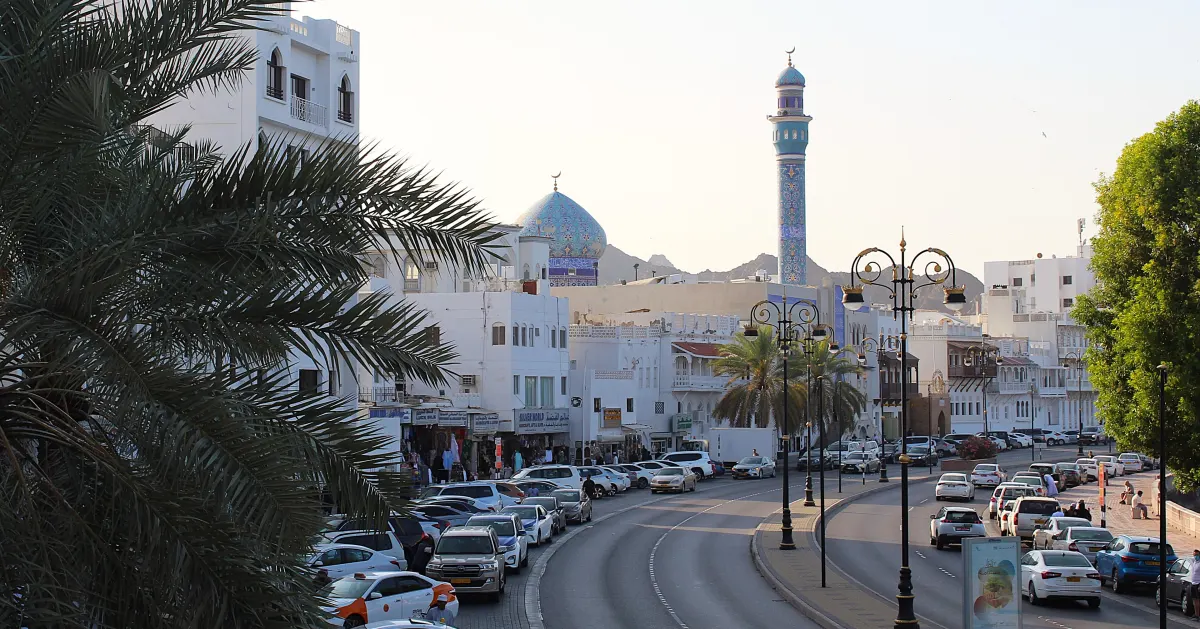
- Omani men wear the dishdasha, a long robe, usually white, with a small tassel at the neck, and a kuma (embroidered cap) or a massar (turban). Please don't wear a khanjar as fancy dress.
The Sultan Qaboos Grand Mosque
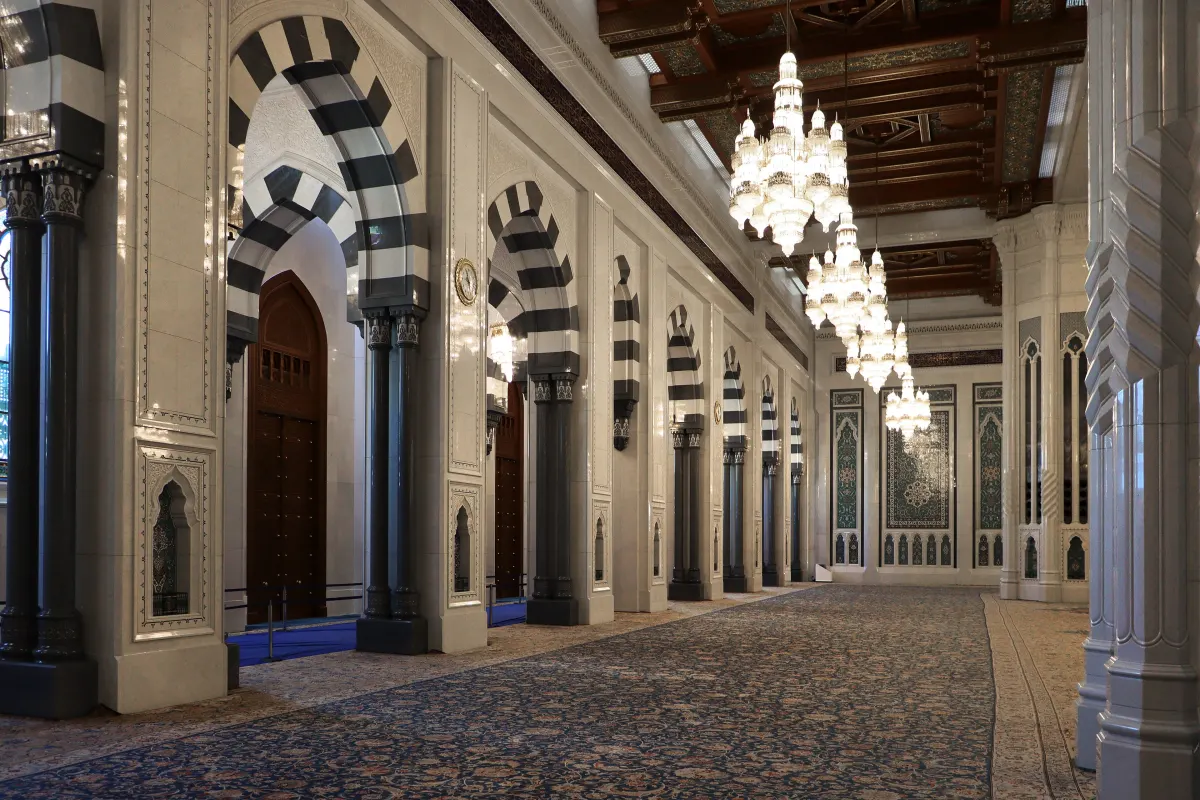
The Sultan Qaboos Grand Mosque in Muscat is the one mosque in the city that every visitor goes to, and one of very few in Oman open to non-Muslims.
- Hours: non-Muslims may visit every day except Friday, from 8:30 to 11:00 am, says the mosque's website; the tourism board says from 8:00. Come early: coaches arrive by 9:30, and they stop letting people in before 11. Hours may change in Ramadan.
- Cost: a fee of 8 rials for tourists was announced in January 2025, and was reported to have been dropped again within weeks. The tourism board's website still lists it, while recent guides say entry is free. Ask, and have cash ready. Muslims coming to pray don't pay.
- Women must cover arms and legs to the wrists and ankles, and hair, with nothing tight or see-through. You can hire an abaya and scarf at the entrance for a couple of rials, but don't count on your size.
- Men must wear long trousers and a shirt that covers the arms, not shorts.
- Take your shoes off before the prayer halls, keep to the walkways over the carpet, speak quietly, and don't photograph people praying.
- Look for the huge hand-woven carpet, the chandelier and the courtyards. Near the exit, volunteers at an information centre offer coffee and dates, and will answer any questions about Islam and Oman.

Sultan Qaboos Grand Mosque, Muscat
Oman's main mosque, completed in 2001, with a huge Persian carpet and a Swarovski chandelier.
Other mosques
Most other mosques are for Muslims only, so don't go in without an invitation. Don't walk in front of someone praying.
Greetings and hospitality
- Say as-salaam alaikum (peace be upon you), and shukran (thank you). Omanis take time to ask about your health and your family before getting to business.
- Shake hands only with your right hand. A man should wait for an Omani woman to offer hers, and a woman may do the same with men. A hand on your heart is a polite alternative.
- If you're offered coffee and dates, accept: sit, take them with your right hand, and shake the cup when you've had enough. See Omani food and drink.
- Take off your shoes before you go into a home. Don't point the soles of your feet at anyone.
- Keep your temper: raised voices and rude gestures are shameful, and can be an offence.
- Don't criticise the Sultan, the government or religion.
Couples
Holding hands is usually fine for married couples, but kissing and hugging in public isn't. By law an unmarried man and woman can't share a hotel room, and same-sex relations are illegal. In practice many hotels don't ask tourists, but some do: check with yours first. See Safety in Oman.
Photographs
Ask before you photograph people, and never photograph women without clear permission. In villages such as Misfat al Abriyyin, people are tired of cameras: don't look into houses. Don't photograph government or military buildings, airports, ports or police.
Ramadan and Eid
- Ramadan is expected to run from about 8 February to 9 March 2027 (it depends on the moon). In daylight, don't eat, drink, smoke or chew gum in public, including in your car, and don't play loud music. Restaurants close until sunset, except some in hotels, and sights, shops and offices keep shorter hours.
- It's still a good time to travel: the sights are quiet, and the evenings are lively. Drivers are tired and hungry near sunset, so keep off the roads then.
- Eid al-Fitr follows Ramadan, and Eid al-Adha comes in about mid-May 2027. Everything closes for several days, Omanis travel, and hotels fill. Markets just before Eid, such as the Friday goat market at Nizwa, are at their busiest.
Weekends and opening hours
The weekend is Friday and Saturday. Friday morning is for prayers, and most things are closed until the afternoon, except the Nizwa animal market, which starts soon after dawn and is over by mid-morning. Shops and souqs usually close for a long break in the middle of the day, from about 1 to 4 pm, and stay open late into the evening.




Comments
No comments yet.