
Omani food and drink: shuwa, majboos, mishkak, halwa, kahwa and what else to try
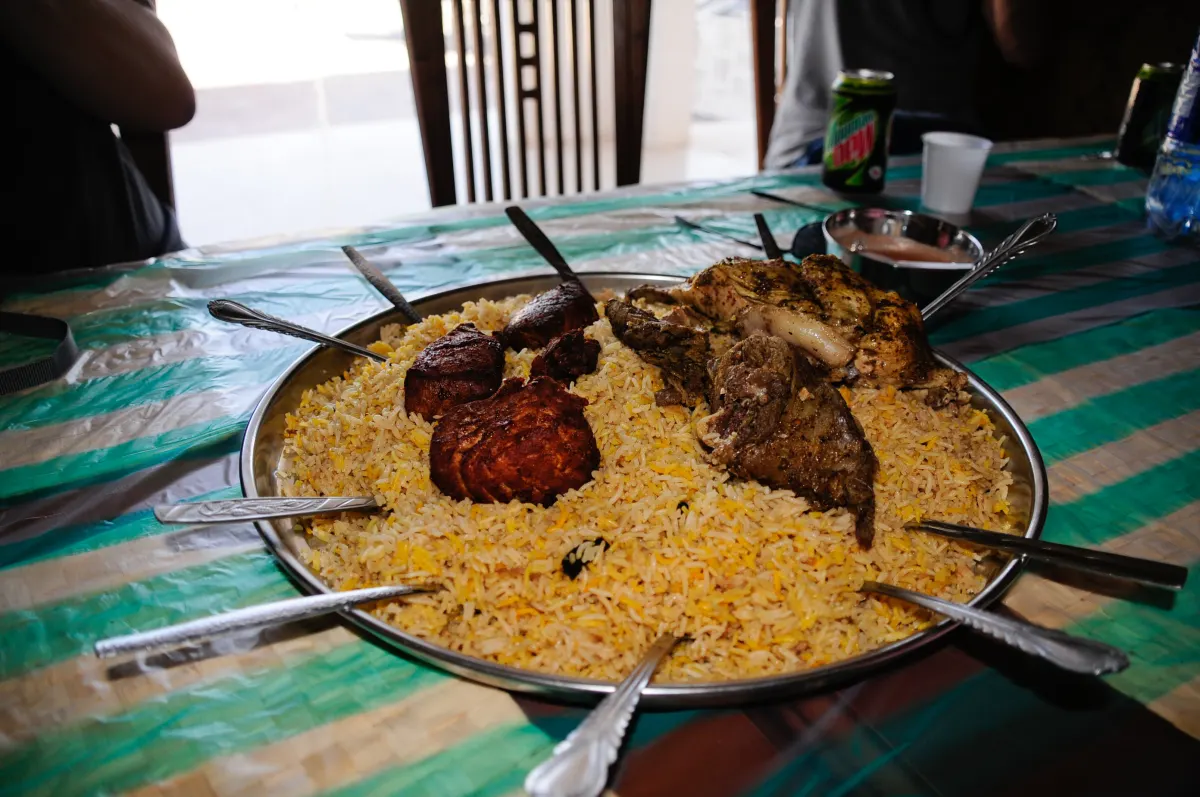
Omani food is milder and more fragrant than you might expect: rice with slow-cooked meat and spices, fish straight from the sea, warm flatbread, dates, and endless small cups of coffee. Centuries of trade with India, Zanzibar and Iran show in the cooking, and so do the many people from South Asia who live there.
What to try
- Shuwa: lamb or goat rubbed with spices, wrapped in banana or palm leaves, and cooked for a day or two in an underground oven. Families make it at Eid, and some restaurants and hotels serve it at weekends.
- Majboos and qabuli: rice cooked in spiced broth with chicken, goat or fish.
- Mishkak: skewers of marinated beef, chicken or squid grilled over charcoal by the roadside in the evening, with a tamarind or chilli sauce. Cheap, smoky and one of the best things to eat in the country.
- Fish: kingfish, tuna, hamour (grouper) and squid, grilled, fried or in coconut curry, and lobster on the south coast in season. Mashuai is a whole kingfish roasted on a spit, with lemon rice.
- Harees and arsia: wheat or rice pounded with meat until smooth, served at celebrations and in Ramadan.
- Bread: khubz rakhal, paper-thin and crisp, is eaten at breakfast with honey, cheese or egg.
- Chai karak (strong milky tea with spices) and paratha filled with egg and crisps from the coffee shops: Oman's favourite snack, often brought out to your car.
In Dhofar
Salalah's food has an African and Yemeni touch. Look for madhbi, meat grilled on hot stones, stew with camel meat, grilled fish by the beach, and the stalls selling green coconuts, bananas and papaya from the plantations.
Coffee, dates and sweets
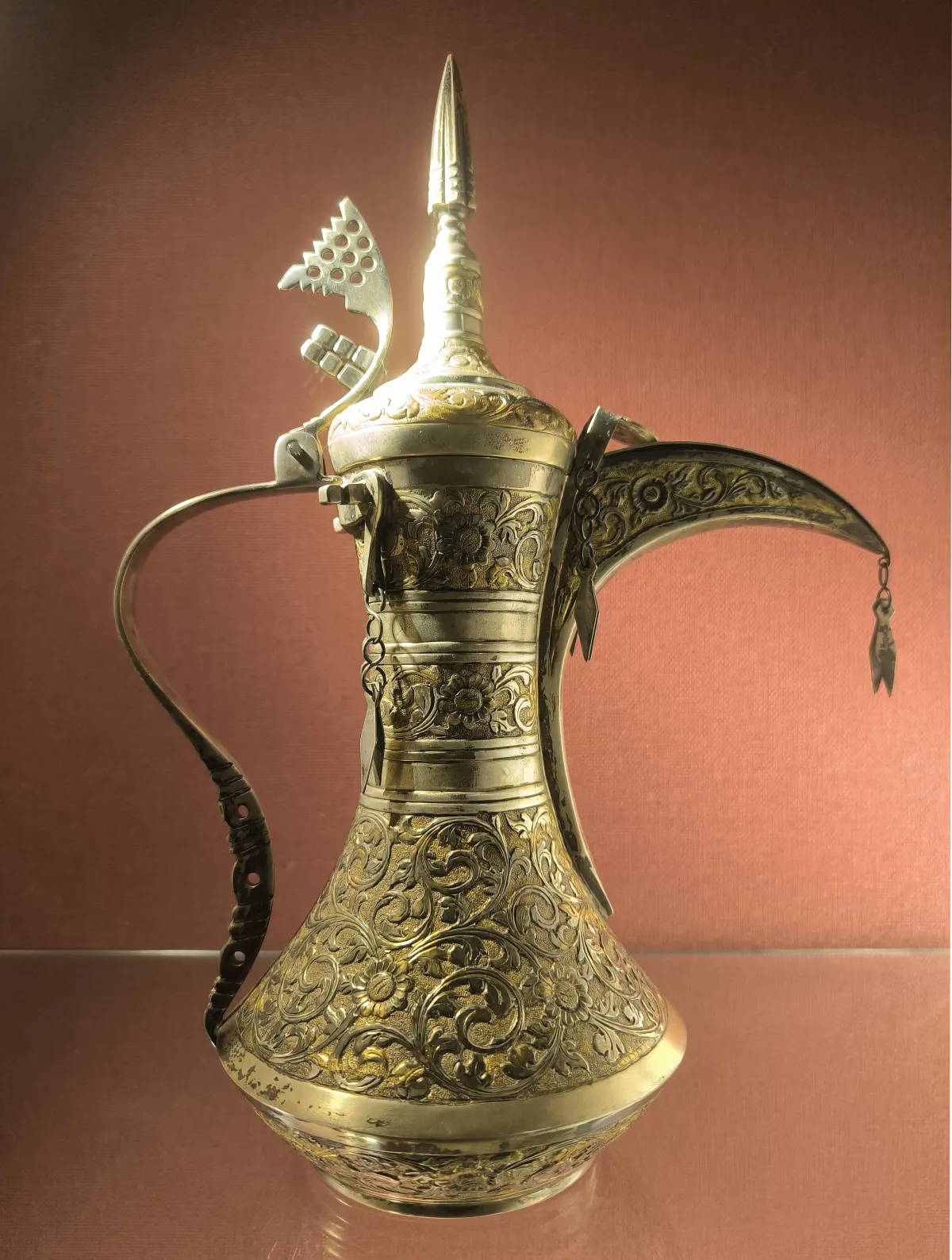
- Kahwa: light coffee with cardamom, sometimes with rosewater or saffron, poured from a long-spouted pot into small cups and offered with dates. Take the cup with your right hand, and shake it gently from side to side when you've had enough; otherwise it will be refilled. One to three cups is polite.
- Halwa: a soft, sticky sweet of sugar, ghee, starch, rosewater, saffron and nuts, stirred for hours in a copper pot. Every town has its favourite shop.
- Dates are everywhere, in dozens of kinds, fresh in summer and dried the rest of the year.
- Rosewater from Jebel Akhdar, distilled in spring, flavours sweets and coffee.
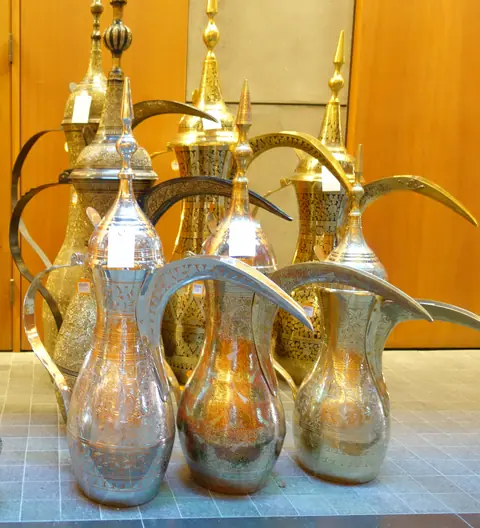
Omani kahwa
Omani coffee, light, bitter and spiced with cardamom and rosewater, poured from a dallah into small cups and served with dates or halwa to every guest.
Where to eat
- Coffee shops and small Indian, Pakistani, Turkish and Yemeni restaurants are the cheapest and busiest places. Many Omani families sit in closed rooms or on the floor: ask for the family section if you'd like privacy. Women on their own are welcome in both.
- Omani restaurants, where you sit on cushions around a shared tray, are in Muscat, Nizwa and Salalah.
- Desert camps and mountain hotels usually include dinner, as there's nowhere else to eat nearby.
- Lunch is the main meal, and many places close for prayers and on Friday mornings.
Eating politely
Eat with your right hand. When food is shared from one tray, eat from the part in front of you. If you're invited to a home, take your shoes off, accept at least a little of what's offered, and bring sweets or fruit rather than alcohol.
Vegetarian food
Indian and Lebanese restaurants make it easy: dal, vegetable curries, falafel, hummus, salads and bread. Traditional Omani dishes nearly all have meat or fish, and rice is often cooked in meat stock, so ask.
Alcohol and pork
Alcohol is served only in licensed hotels, restaurants and bars, and it's expensive. There are no shops where tourists can buy it, apart from duty free at the airport. Drinking in public is an offence: see Safety in Oman. Pork is rare and sold only in a few places to non-Muslims.
During Ramadan
Restaurants close in daylight, except some hotel dining rooms, and eating, drinking or smoking in public (including in your car) is against the law. After sunset the cities come alive. See Culture and etiquette.



Comments
No comments yet.