
Two weeks in Mongolia: the Gobi Desert and central Mongolia
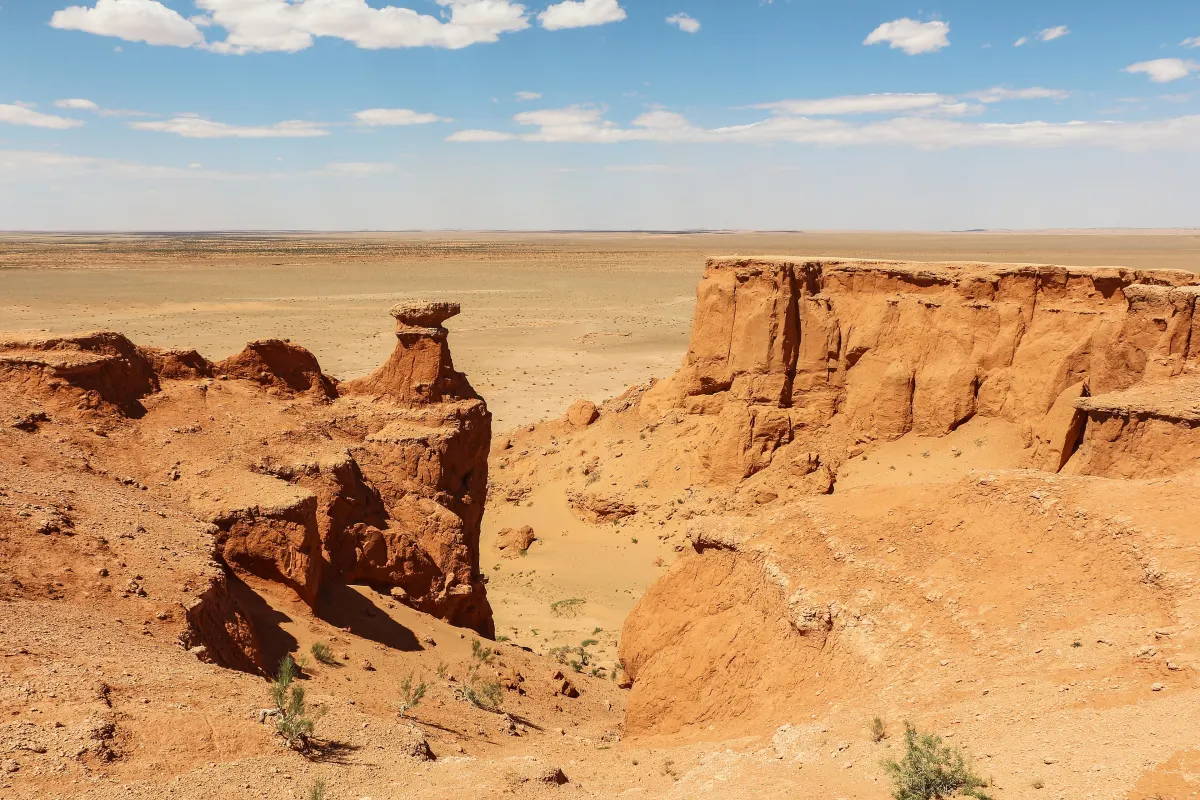
Two weeks lets you make the classic loop from Ulaanbaatar south through the Gobi Desert and back through the green Orkhon Valley and Kharkhorin. It's a lot of driving, often 200 to 300 km a day, much of it on rough tracks, so go with a tour company and a good driver (see Getting around Mongolia). June and September are the most comfortable months for the Gobi; July and August are hot, and spring brings dust storms. To save two days of driving, you can fly between Ulaanbaatar and Dalanzadgad.
Day 1: Ulaanbaatar
See Gandan monastery and the National Museum of Mongolia, and buy supplies for the trip. Take out cash: see Money in Mongolia.
Day 2: Baga Gazriin Chuluu
Drive south onto the steppe to Baga Gazriin Chuluu, a range of granite rocks with the ruins of a small monastery, and spend the night in a ger camp or with a family.
Day 3: Tsagaan Suvarga
Continue south to Tsagaan Suvarga, the "white stupa": eroded cliffs of pink, white and orange layers, once the bed of an ancient sea, best in the evening light.
Day 4: Yolyn Am
Drive to Dalanzadgad, the capital of the South Gobi, and on into the Gobi Gurvansaikhan National Park to Yolyn Am, a narrow gorge where ice can last into early summer. Walk up the gorge and look out for ibex and lammergeiers.
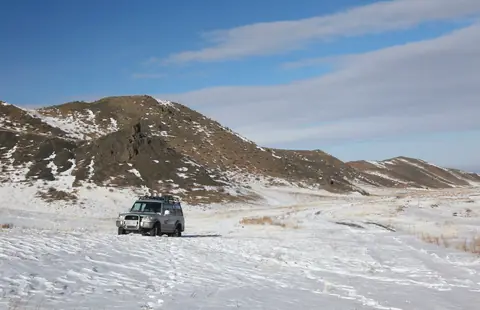
Yolyn Am (Vulture's Gorge), Gobi
A deep, narrow gorge in the Gurvan Saikhan Mountains of the Gobi Desert, in Gobi Gurvansaikhan National Park.
Days 5 and 6: Khongoryn Els
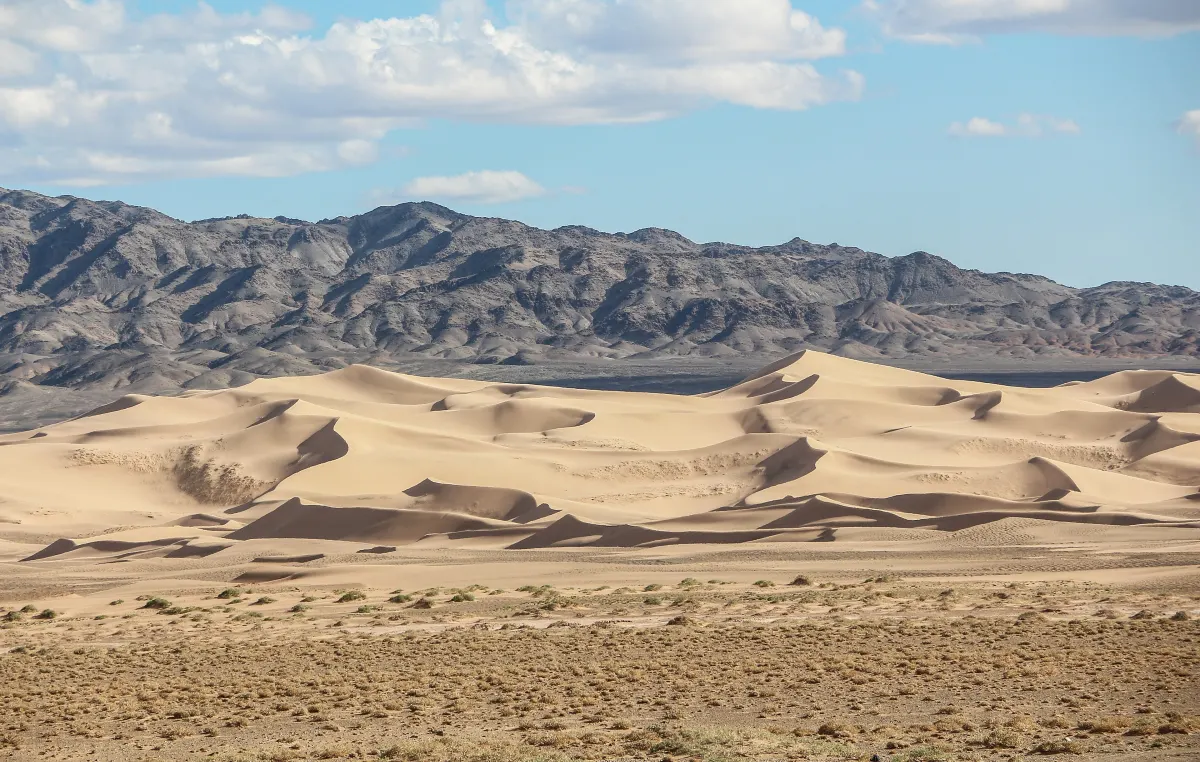
Drive west to Khongoryn Els, the "singing dunes", which stretch for about 100 km and rise to around 300 m in places. Ride a Bactrian camel with a camel-herding family, and climb the dunes in the late afternoon, when the sand is cooler and the light is best. Stay two nights.

Gobi Desert and Khongoryn Els
The Gobi isn't all sand, but Khongoryn Els are huge 'singing dunes', up to 300 m high and 100 km long, which hum when the sand slides.
Day 7: Bayanzag, the Flaming Cliffs
Drive north-east to Bayanzag, the red "Flaming Cliffs", where the first dinosaur eggs were found in the 1920s. Watch the sunset from the cliffs. Don't take fossils: it's illegal.
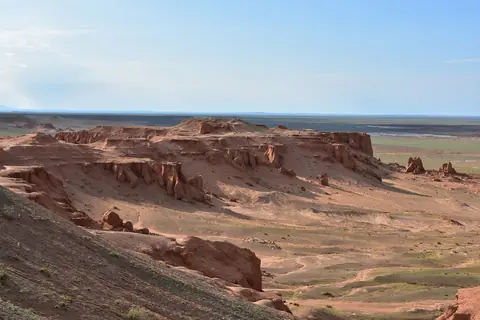
Flaming Cliffs (Bayanzag), Gobi
Red-orange sandstone cliffs in the Gobi Desert that glow at sunset, named by the American explorer Roy Chapman Andrews, who found the first known din…
Day 8: Ongi monastery
Drive north to the ruins of Ongi monastery on the Ongi River, once one of Mongolia's biggest, destroyed in 1939 and now partly rebuilt.
Day 9: Kharkhorin
A long drive north to Kharkhorin, near the site of Karakorum, the Mongol Empire's capital, to see Erdene Zuu, the oldest surviving Buddhist monastery in Mongolia.

Erdene Zuu Monastery, Kharkhorin
Mongolia's oldest surviving Buddhist monastery, founded in 1585 near the ruins of Karakorum, Genghis Khan's capital, surrounded by a wall topped with…
Day 10: The Orkhon Waterfall
Drive up the Orkhon Valley to the Orkhon Waterfall, and spend the night with a herding family. Try airag if it's offered. See Staying in gers and with nomad families.
Day 11: Tsenkher hot springs
Cross the hills to the hot springs at Tsenkher, in Arkhangai, where ger camps have pools fed by the springs, a welcome soak after days on the road.
Day 12: Elsen Tasarkhai
Drive east via Tsetserleg, a pleasant provincial town with a monastery museum, to the sand dunes of Elsen Tasarkhai.
Day 13: Hustai National Park
Continue to Hustai National Park to see the takhi, the wild Przewalski's horses, in the evening.
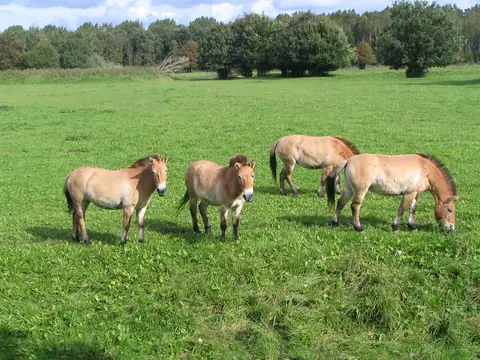
Hustai (Khustain Nuruu) National Park
Steppe and hills where the takhi, Przewalski's horse, the last truly wild horse species, has been brought back to the wild.
Day 14: Ulaanbaatar
A short drive back to Ulaanbaatar, about 100 km.
Before you go
- There are few shops or fuel stations in the Gobi, and no signal in many places. Bring cash, snacks, water, sun protection and warm clothes for the nights.
- Livestock disease outbreaks and fuel shortages in 2026 have affected some areas, including parts of Dundgovi; ask your tour company about current restrictions.
- For a shorter trip, see 7 days in central Mongolia.
Map of the route
Ulaanbaatar to Baga Gazriin Chuluu, about 277 km
Baga Gazriin Chuluu to Tsagaan Suvarga, about 230 km
Tsagaan Suvarga to Dalanzadgad and Yolyn Am, about 236 km
Yolyn Am to Khongoryn Els, about 216 km
Khongoryn Els to Bayanzag, about 155 km
Bayanzag to Ongi monastery, about 215 km
Ongi to Kharkhorin, about 262 km
Kharkhorin to the Orkhon Waterfall, about 96 km
The waterfall to Tsenkher hot springs, about 98 km
Tsenkher to Tsetserleg, Elsen Tasarkhai and Hustai, about 448 km
Hustai to Ulaanbaatar, about 95 km
Click a dot for the place. Labels show where you spend each night. Lines follow mapped roads and tracks and are approximate: drivers often take other tracks across the steppe. Route from OpenStreetMap (© OpenStreetMap contributors, ODbL).


Comments
No comments yet.